Department of Microbiology, Faculty of Medicine, Khon Kaen University, Khon Kaen, Thailand.
HPV & EBV and Carcinogenesis Research Group, Khon Kaen University, Khon Kaen, Thailand.
PLoS One. 2021 Sep 14;16(9):e0257460. doi: 10.1371/journal.pone.0257460. eCollection 2021.
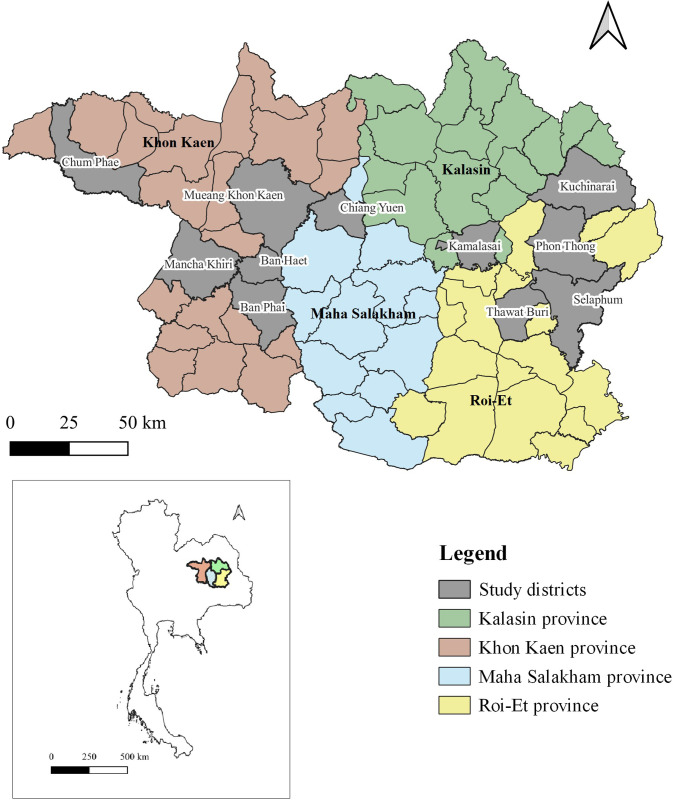
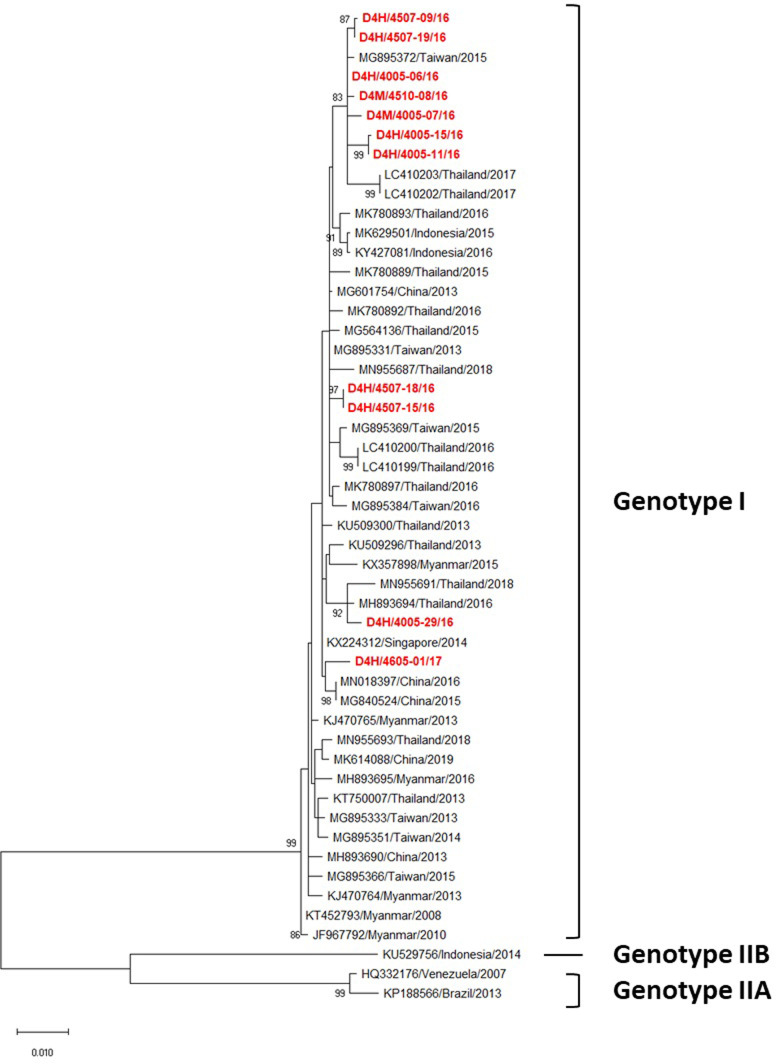
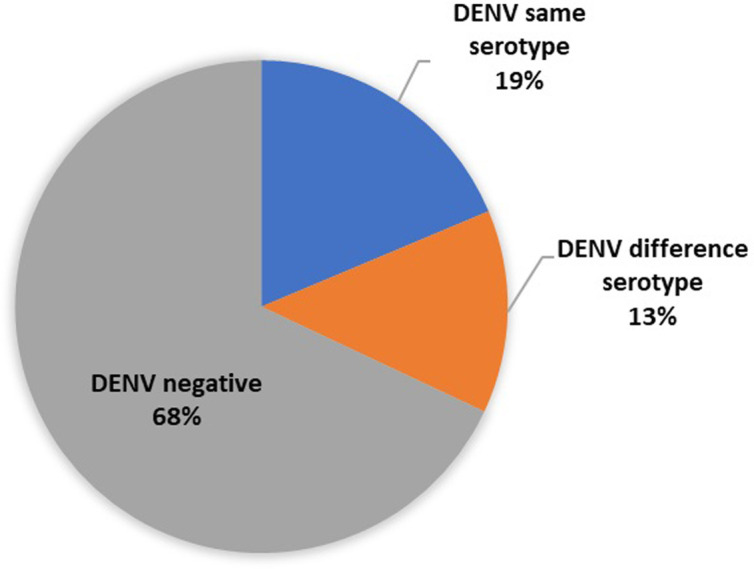
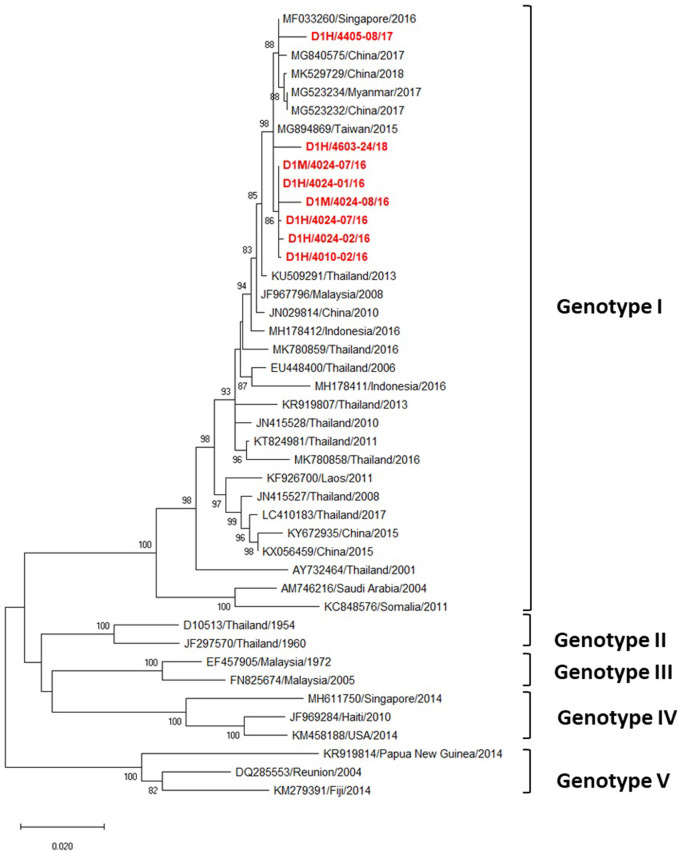
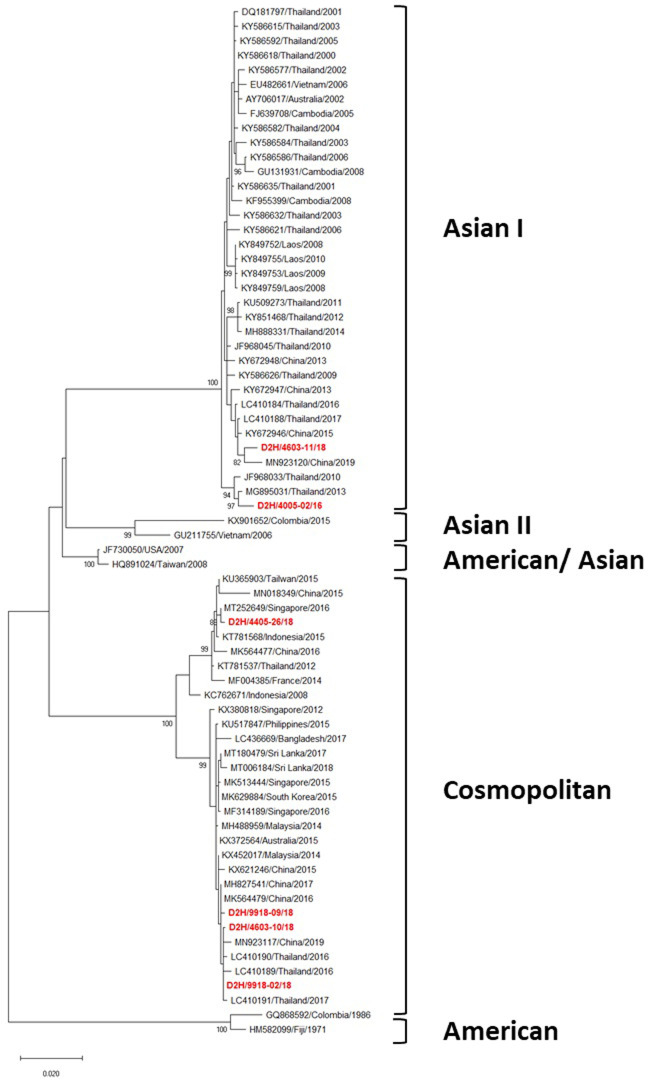
Dengue is hyperendemic in most Southeast Asian countries including Thailand, where all four dengue virus serotypes (DENV-1 to -4) have circulated over different periods and regions. Despite dengue cases being annually reported in all regions of Thailand, there is limited data on the relationship of epidemic DENV infection between humans and mosquitoes, and about the dynamics of DENV during outbreaks in the northeastern region. The present study was conducted in this region to investigate the molecular epidemiology of DENV and explore the relationships of DENV infection in humans and in mosquitoes during 2016-2018. A total of 292 dengue suspected patients from 11 hospitals and 902 individual mosquitoes (at patient's houses and neighboring houses) were recruited and investigated for DENV serotypes infection using PCR. A total of 103 patients and 149 individual mosquitoes were DENV -positive. Among patients, the predominant DENV serotypes in 2016 and 2018 were DENV-4 (74%) and DENV-3 (53%) respectively, whereas in 2017, DENV-1, -3 and -4 had similar prevalence (38%). Additionally, only 19% of DENV infections in humans and mosquitoes at surrounding houses were serotypically matched, while 81% of infections were serotypically mismatched, suggesting that mosquitoes outside the residence may be an important factor of endemic dengue transmission. Phylogenetic analyses based on envelope gene sequences showed the genotype I of both DENV-1 and DENV-4, and co-circulation of the Cosmopolitan and Asian I genotypes of DENV-2. These strains were closely related to concurrent strains in other parts of Thailand and also similar to strains in previous epidemiological profiles in Thailand and elsewhere in Southeast Asia. These findings highlight genomic data of DENV in this region and suggest that people's movement in urban environments may result in mosquitoes far away from the residential area being key determinants of DENV epidemic dynamics.
登革热在包括泰国在内的大多数东南亚国家高度流行,这些国家在不同时期和地区都曾出现过四种登革热病毒血清型(DENV-1 至 DENV-4)。尽管泰国所有地区每年都会报告登革热病例,但关于人类与蚊子之间流行的 DENV 感染的关系,以及在东北地区暴发期间 DENV 的动态,相关数据有限。本研究在该地区进行,旨在调查 DENV 的分子流行病学,并探讨 2016-2018 年期间人类和蚊子中 DENV 感染的关系。共招募了来自 11 家医院的 292 名登革热疑似患者和 902 只个体蚊子(在患者家中和附近房屋),并使用 PCR 检测 DENV 血清型感染情况。共有 103 名患者和 149 只个体蚊子呈 DENV 阳性。在患者中,2016 年和 2018 年主要的 DENV 血清型分别为 DENV-4(74%)和 DENV-3(53%),而 2017 年 DENV-1、-3 和 -4 的流行率相似(38%)。此外,只有 19%的患者和周围房屋中蚊子的 DENV 感染在血清型上相匹配,而 81%的感染在血清型上不匹配,这表明居住点以外的蚊子可能是地方性登革热传播的一个重要因素。基于包膜基因序列的系统进化分析显示,DENV-1 和 DENV-4 的基因型均为 I 型,DENV-2 的泛型和亚洲 I 型同时流行。这些菌株与泰国其他地区同期的菌株密切相关,与泰国和东南亚其他地区以往的流行病学特征中的菌株也相似。这些发现强调了该地区 DENV 的基因组数据,并表明人类在城市环境中的流动可能导致远离居住地的蚊子成为 DENV 流行动态的关键决定因素。