Liu Ting, Chen Minglong, Fu Jintao, Sun Ying, Lu Chao, Quan Guilan, Pan Xin, Wu Chuanbin
School of Pharmaceutical Sciences, Sun Yat-sen University, Guangzhou 510006, China.
College of Pharmacy, Jinan University, Guangzhou 510632, China.
Acta Pharm Sin B. 2021 Aug;11(8):2326-2343. doi: 10.1016/j.apsb.2021.03.003. Epub 2021 Mar 10.
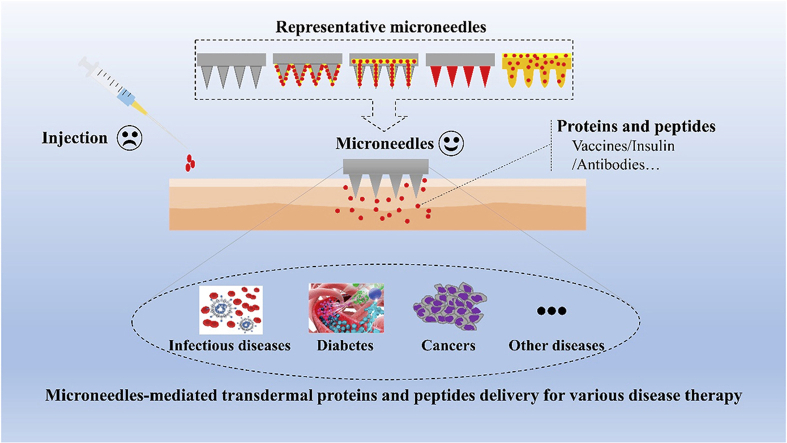
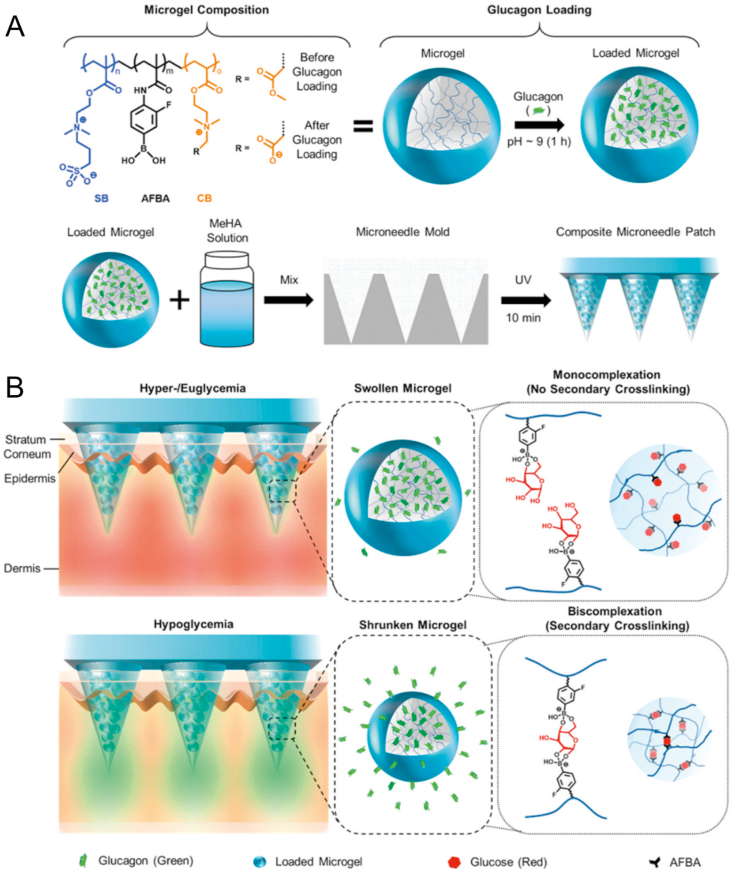
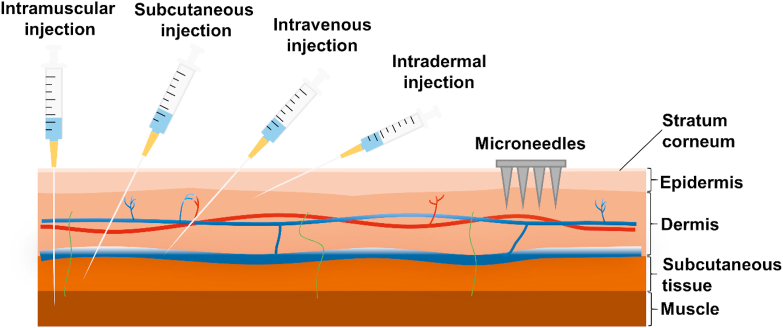
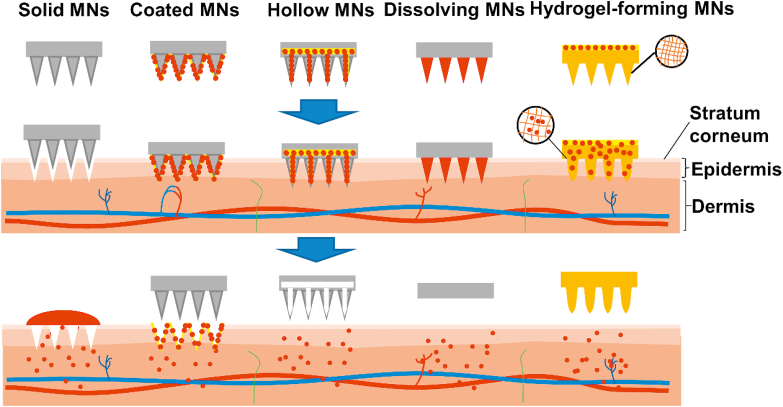
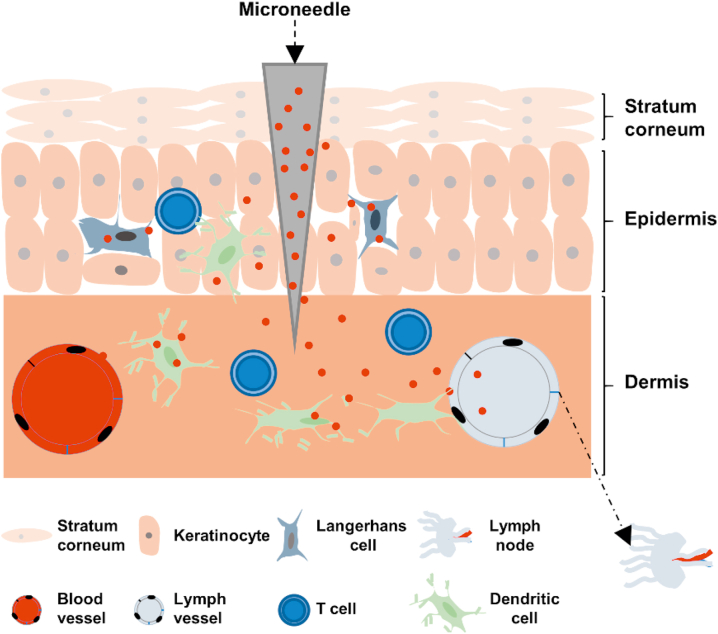
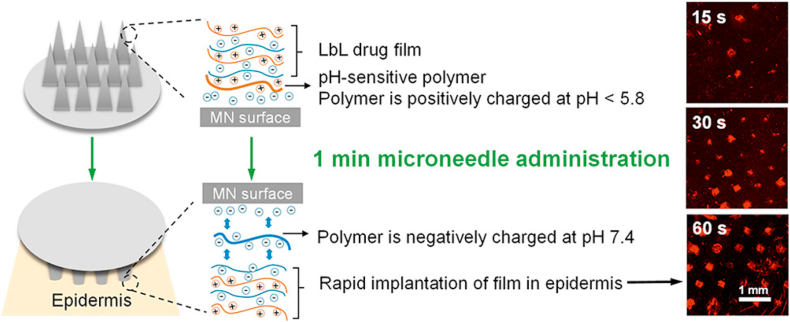
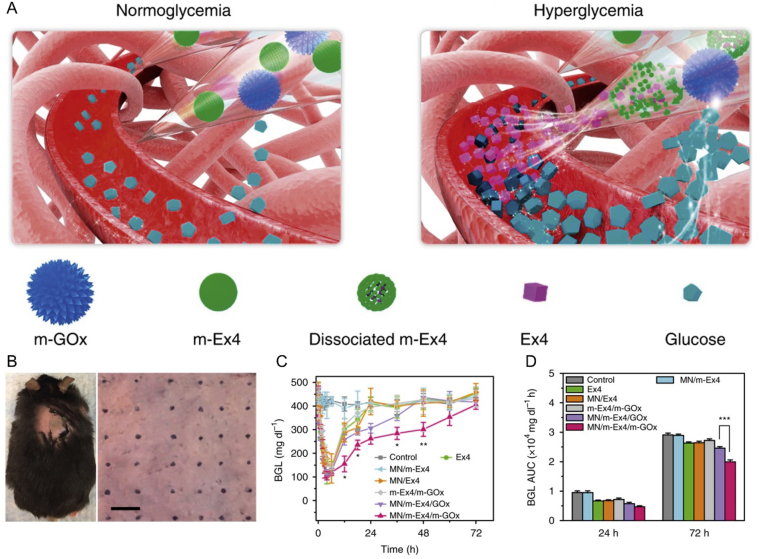
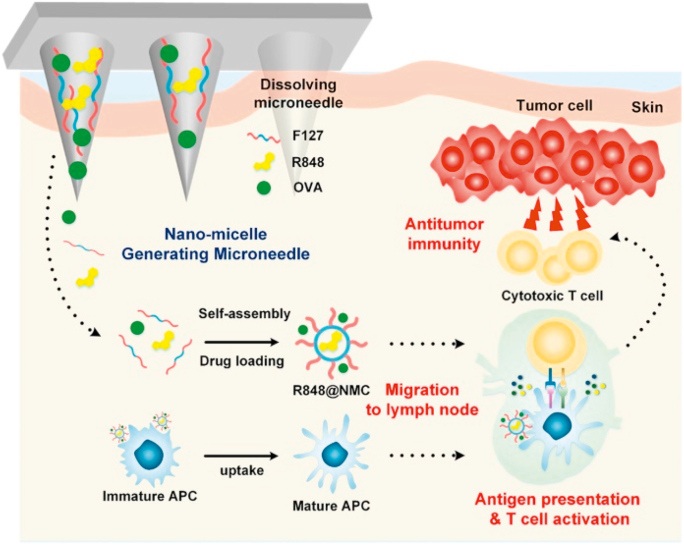
Proteins and peptides have become a significant therapeutic modality for various diseases because of their high potency and specificity. However, the inherent properties of these drugs, such as large molecular weight, poor stability, and conformational flexibility, make them difficult to be formulated and delivered. Injection is the primary route for clinical administration of protein and peptide drugs, which usually leads to poor patient's compliance. As a portable, minimally invasive device, microneedles (MNs) can overcome the skin barrier and generate reversible microchannels for effective macromolecule permeation. In this review, we highlighted the recent advances in MNs-mediated transdermal delivery of protein and peptide drugs. Emphasis was given to the latest development in representative MNs design and fabrication. We also summarize the current application status of MNs-mediated transdermal protein and peptide delivery, especially in the field of infectious disease, diabetes, cancer, and other disease therapy. Finally, the current status of clinical translation and a perspective on future development are also provided.
由于蛋白质和肽具有高效能和高特异性,它们已成为治疗各种疾病的重要治疗方式。然而,这些药物的固有特性,如分子量较大、稳定性差和构象灵活性,使其难以进行制剂和递送。注射是蛋白质和肽类药物临床给药的主要途径,这通常导致患者依从性较差。作为一种便携式、微创设备,微针可以克服皮肤屏障并产生可逆的微通道,以实现有效的大分子渗透。在本综述中,我们重点介绍了微针介导的蛋白质和肽类药物经皮递送的最新进展。重点关注了代表性微针设计和制造的最新发展。我们还总结了微针介导的蛋白质和肽经皮递送的当前应用状况,特别是在传染病、糖尿病、癌症和其他疾病治疗领域。最后,还介绍了临床转化的现状以及对未来发展的展望。