Applied Physiology & Nutrition Research Group, School of Physical Education and Sport, Rheumatology Division, Faculdade de Medicina FMUSP, Universidade de Sao Paulo, São Paulo, SP, Brazil.
Laboratorio de Investigacao Medica em Envelhecimento (LIM-66), Servico de Geriatria, Hospital das Clinicas HCFMUSP, Faculdade de Medicina, Universidade de Sao Paulo, Sao Paulo, Brazil.
J Cachexia Sarcopenia Muscle. 2021 Dec;12(6):1871-1878. doi: 10.1002/jcsm.12789. Epub 2021 Sep 14.
Strength and muscle mass are predictors of relevant clinical outcomes in critically ill patients, but in hospitalized patients with COVID-19, it remains to be determined. In this prospective observational study, we investigated whether muscle strength or muscle mass are predictive of hospital length of stay (LOS) in patients with moderate to severe COVID-19 patients.
We evaluated prospectively 196 patients at hospital admission for muscle mass and strength. Ten patients did not test positive for SARS-CoV-2 during hospitalization and were excluded from the analyses.
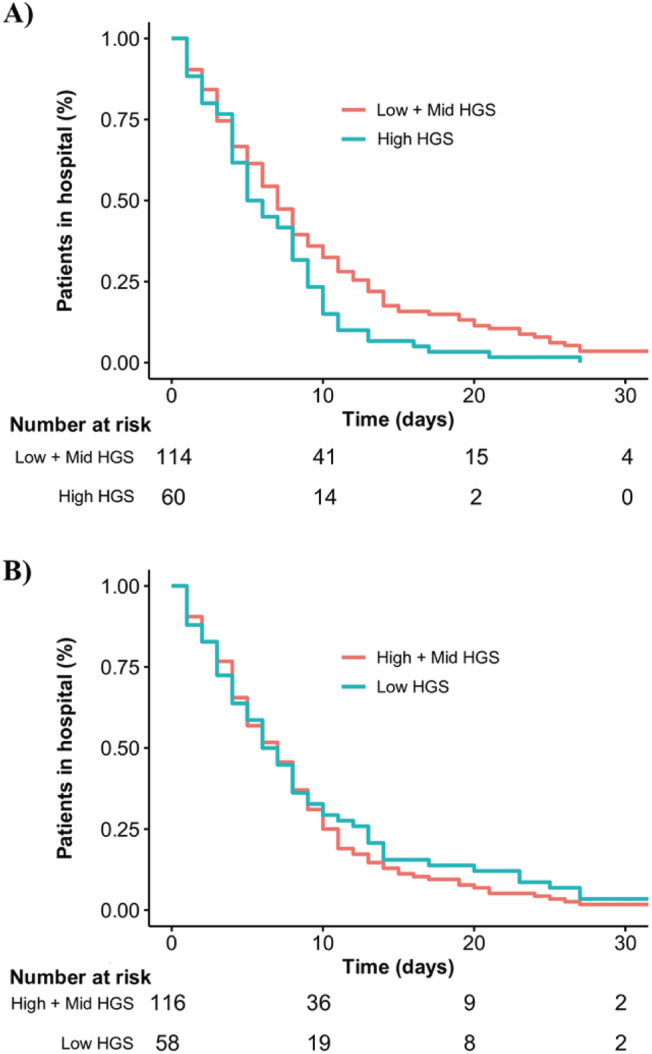
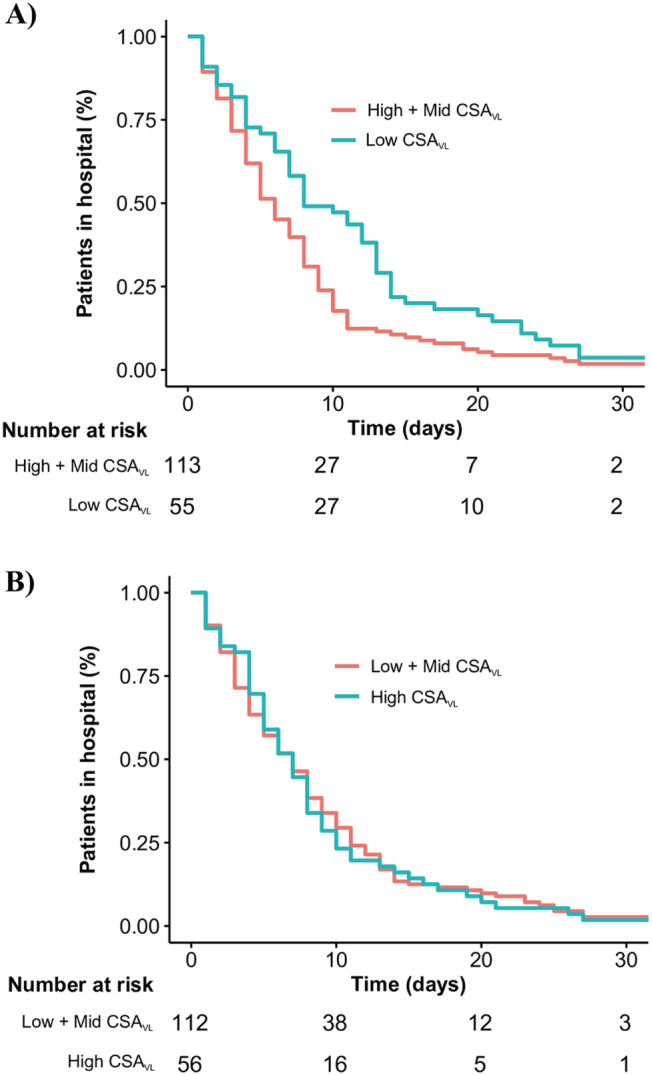
The sample comprised patients of both sexes (50% male) with a mean age (SD) of 59 (±15) years, body mass index of 29.5 (±6.9) kg/m . The prevalence of current smoking patients was 24.7%, and more prevalent coexisting conditions were hypertension (67.7%), obesity (40.9%), and type 2 diabetes (36.0%). Mean (SD) LOS was 8.6 days (7.7); 17.0% of the patients required intensive care; 3.8% used invasive mechanical ventilation; and 6.6% died during the hospitalization period. The crude hazard ratio (HR) for LOS was greatest for handgrip strength comparing the strongest versus other patients (1.47 [95% CI: 1.07-2.03; P = 0.019]). Evidence of an association between increased handgrip strength and shorter hospital stay was also identified when handgrip strength was standardized according to the sex-specific mean and standard deviation (1.23 [95% CI: 1.06-1.43; P = 0.007]). Mean LOS was shorter for the strongest patients (7.5 ± 6.1 days) versus others (9.2 ± 8.4 days). Evidence of associations were also present for vastus lateralis cross-sectional area. The crude HR identified shorter hospital stay for patients with greater sex-specific standardized values (1.20 [95% CI: 1.03-1.39; P = 0.016]). Evidence was also obtained associating longer hospital stays for patients with the lowest values for vastus lateralis cross-sectional area (0.63 [95% CI: 0.46-0.88; P = 0.006). Mean LOS for the patients with the lowest muscle cross-sectional area was longer (10.8 ± 8.8 days) versus others (7.7 ± 7.2 days). The magnitude of associations for handgrip strength and vastus lateralis cross-sectional area remained consistent and statistically significant after adjusting for other covariates.
Muscle strength and mass assessed upon hospital admission are predictors of LOS in patients with moderate to severe COVID-19, which stresses the value of muscle health in prognosis of this disease.
在危重症患者中,力量和肌肉质量是相关临床结局的预测因素,但在 COVID-19 住院患者中,这一点仍有待确定。在这项前瞻性观察研究中,我们研究了肌肉力量或肌肉质量是否可以预测中度至重度 COVID-19 患者的住院时间( LOS )。
我们前瞻性评估了 196 名入院时的肌肉质量和力量。在住院期间,有 10 名患者未检测到 SARS-CoV-2 阳性,因此被排除在分析之外。
该样本包括男女患者( 50%为男性),平均年龄( SD )为 59 岁(±15 岁),体重指数为 29.5(±6.9 ) kg/m 。当前吸烟患者的患病率为 24.7%,更常见的并存疾病包括高血压( 67.7%)、肥胖症( 40.9%)和 2 型糖尿病( 36.0%)。平均( SD ) LOS 为 8.6 天( 7.7 ); 17.0%的患者需要重症监护; 3.8%使用有创机械通气;住院期间有 6.6%的患者死亡。与其他患者相比,握力最强的患者 LOS 的粗危险比( HR )最大( 1.47 [95%CI : 1.07-2.03 ; P = 0.019 )。当根据性别特异性平均值和标准差对握力进行标准化时,也发现握力与较短的住院时间之间存在关联( 1.23 [95%CI : 1.06-1.43 ; P = 0.007 )。最强壮的患者 LOS 较短( 7.5 ± 6.1 天),而其他患者为 9.2 ± 8.4 天。也存在与股外侧肌横截面积相关的关联证据。对于具有更大性别特异性标准化值的患者,识别出较短的住院时间( 1.20 [95%CI : 1.03-1.39 ; P = 0.016 )。还获得了与股外侧肌横截面积最低值相关的较长住院时间的证据( 0.63 [95%CI : 0.46-0.88 ; P = 0.006 )。股外侧肌横截面积最低的患者 LOS 较长( 10.8 ± 8.8 天),而其他患者为 7.7 ± 7.2 天。在调整其他协变量后,握力和股外侧肌横截面积的关联强度和统计学意义仍然一致。
入院时评估的肌肉力量和质量是中度至重度 COVID-19 患者 LOS 的预测因素,这强调了肌肉健康在该疾病预后中的重要性。