Department of Pharmacology and Experimental Neuroscience, College of Medicine, University of Nebraska Medical Center, Omaha, NE, USA.
Department of Pharmaceutical Sciences, College of Pharmacy, University of Nebraska Medical Center, Omaha, NE, USA.
J Neuroimmune Pharmacol. 2021 Dec;16(4):796-805. doi: 10.1007/s11481-021-10011-w. Epub 2021 Sep 15.
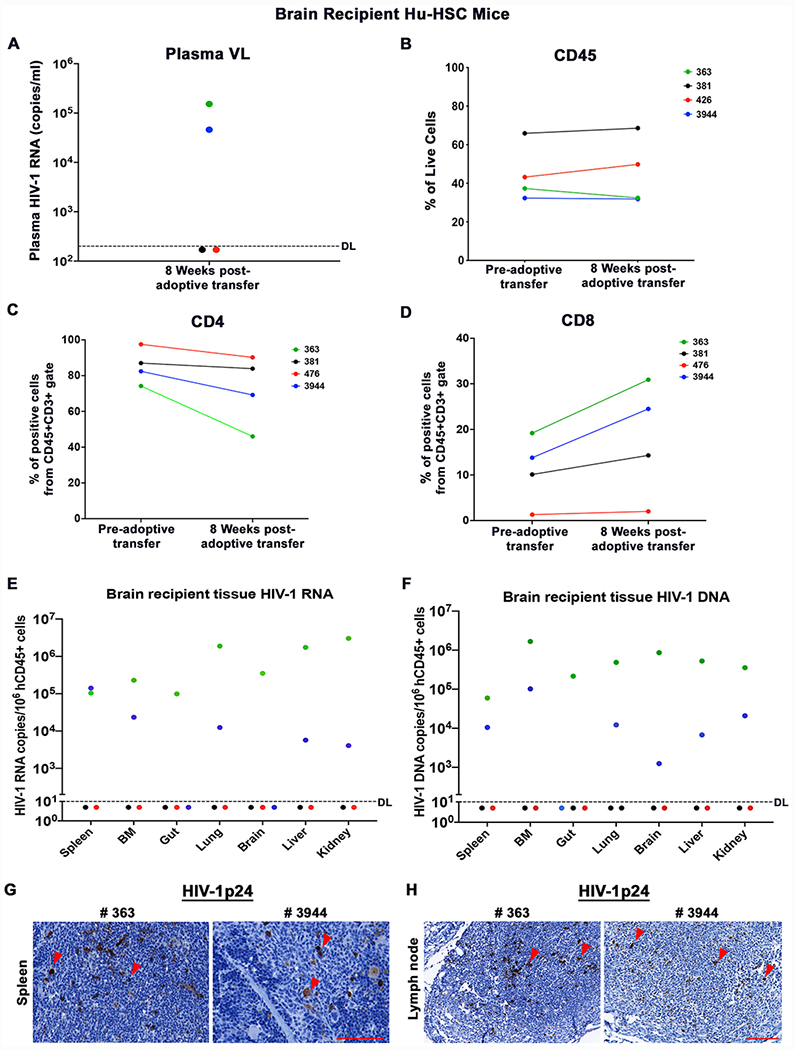
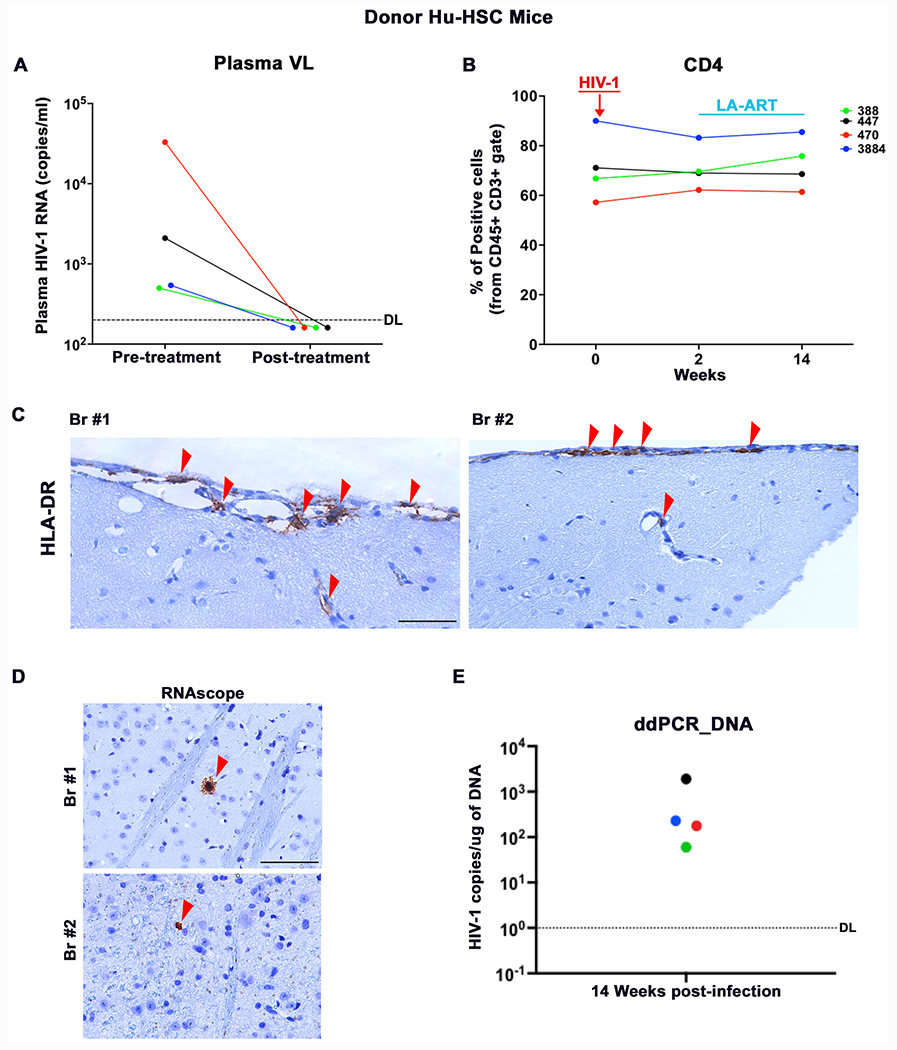
Defining the latent human immunodeficiency virus type 1 (HIV-1) burden in the human brain during progressive infection is limited by sample access. Human hematopoietic stem cells (hu-HSCs)-reconstituted humanized mice provide an opportunity for this study. The model mimics, in measure, HIV-1 pathophysiology, transmission, treatment, and elimination in an infected human host. However, to date, brain HIV-1 latency in hu-HSC mice during suppressive antiretroviral therapy (ART) was not studied. To address this need, hu-HSC mice were administered long acting (LA) ART 14 days after HIV-1 infection was established. Animals were maintained under suppressive ART for 3 months, at which time HIV-1 infection was detected at low levels in brain tissue by droplet digital polymerase chain reaction (ddPCR) test on DNA. Notably, adoptive transfer of cells acquired from the hu-HSC mouse brains and placed into naive hu-HSC mice demonstrated viral recovery. These proof-of-concept results demonstrate replication-competent HIV-1 reservoir can be established in hu-HSC mouse brains that persists during long-term ART treatment. Hu-HSC mice-based mouse viral outgrowth assay (hu-MVOA) serves as a sensitive tool to interrogate latent HIV-1 brain reservoirs.
在进行性感染期间,定义潜伏的人类免疫缺陷病毒 1 型 (HIV-1) 在人类大脑中的负担受到样本获取的限制。人造血干细胞 (hu-HSCs) 重建的人源化小鼠为此研究提供了机会。该模型在一定程度上模拟了 HIV-1 发病机制、传播、治疗和受感染人体宿主中消除的情况。然而,迄今为止,在接受抑制性抗逆转录病毒治疗 (ART) 的 hu-HSC 小鼠中,尚未研究脑 HIV-1 潜伏。为了满足这一需求,hu-HSC 小鼠在 HIV-1 感染建立后 14 天接受长效 (LA)ART。动物在抑制性 ART 下维持 3 个月,此时通过 ddPCR 测试在 DNA 上检测到脑组织中 HIV-1 感染水平较低。值得注意的是,从 hu-HSC 小鼠脑组织中获得的细胞的过继转移并放入幼稚的 hu-HSC 小鼠中证明了病毒的恢复。这些概念验证结果表明,复制能力的 HIV-1 储库可以在接受长期 ART 治疗的 hu-HSC 小鼠大脑中建立并持续存在。基于 hu-HSC 小鼠的小鼠病毒扩增测定 (hu-MVOA) 可作为一种敏感的工具来研究潜伏的 HIV-1 脑储库。