Wang Sutian, Zhang Kunli, Yao Yuchang, Li Jianhao
State Key Laboratory of Livestock and Poultry Breeding, Guangdong Key Laboratory of Animal Breeding and Nutrition, Institute of Animal Science, Guangdong Academy of Agricultural Sciences, Guangzhou, China.
Institute of Animal Health, Guangdong Academy of Agricultural Sciences, Guangdong Provincial Key Laboratory of Livestock Disease Prevention Guangdong Province, Guangzhou, China.
Front Cell Dev Biol. 2021 Sep 3;9:738932. doi: 10.3389/fcell.2021.738932. eCollection 2021.
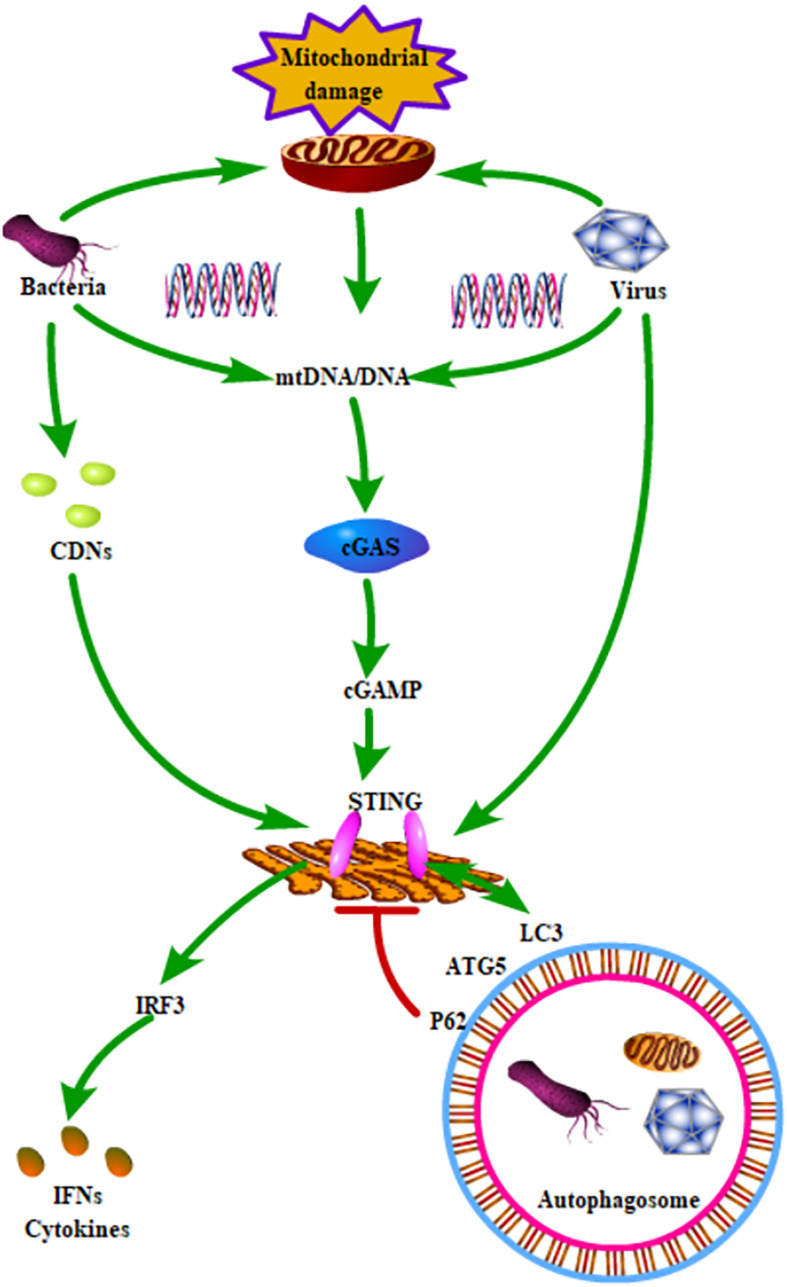
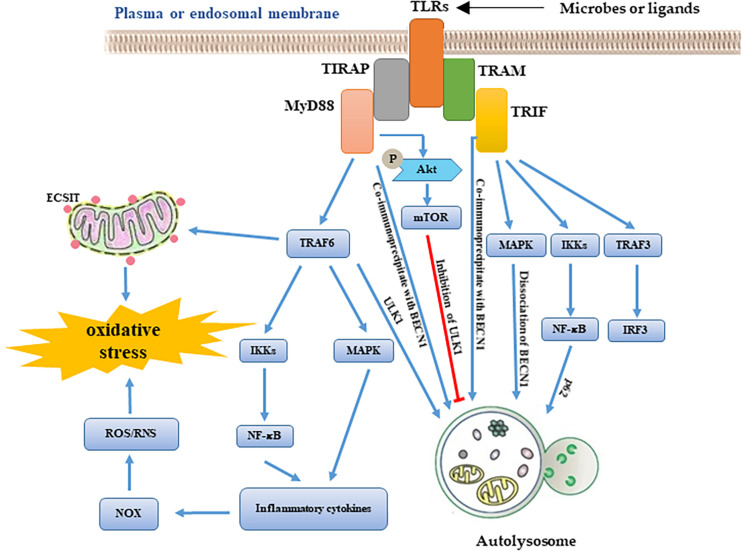
Autophagy, an essential biological process that affects immunity, is a powerful tool that host cells can use to defend against infections caused by pathogenic microorganisms. Autophagy can not only initiate innate immune responses but also degrade the cellular components that provide the conditions for removing the invaders. However, hyperactivated or inhibited autophagy leads to mitochondrial dysfunction, which is harmful to the host itself and is involved in many types of diseases. Mitochondria perform the functions of biological oxidation and energy exchange. In addition, mitochondrial functions are closely related to cell death, oxygen radical formation, and disease. Accumulation of mitochondrial metabolites affects survival of intracellular pathogens. In this mini-review, we focus on the crosstalk between autophagy and mitochondrial homeostasis during infection.
自噬是一种影响免疫的重要生物学过程,是宿主细胞用来抵御病原微生物感染的有力工具。自噬不仅可以启动先天免疫反应,还能降解为清除入侵者提供条件的细胞成分。然而,过度激活或抑制自噬会导致线粒体功能障碍,这对宿主自身有害,并与多种疾病有关。线粒体执行生物氧化和能量交换的功能。此外,线粒体功能与细胞死亡、氧自由基形成和疾病密切相关。线粒体代谢产物的积累会影响细胞内病原体的存活。在本综述中,我们重点关注感染过程中自噬与线粒体稳态之间的相互作用。