Columbia Stem Cell Initiative, Columbia University, New York, NY, United States of America.
Department of Clinical Science and Services, Royal Veterinary College, Hatfield, United Kingdom.
PLoS One. 2021 Sep 20;16(9):e0257700. doi: 10.1371/journal.pone.0257700. eCollection 2021.
To determine whether veterinarians in primary care practices (PCPs) and board-certified clinicians (BCCs) approach treatment of dogs with immune-mediated haemolytic anaemia (IMHA) similarly, and whether practitioners with more experience treat similarly to those with less experience. We hypothesised those in PCPs would show more variation in their approach to similar cases than BCCs.
A cross-sectional study was conducted by distributing a questionnaire to BCCs and veterinarians in PCPs. The questionnaire included direct questions and a number of clinical scenarios intended to capture approaches to common treatment problems.
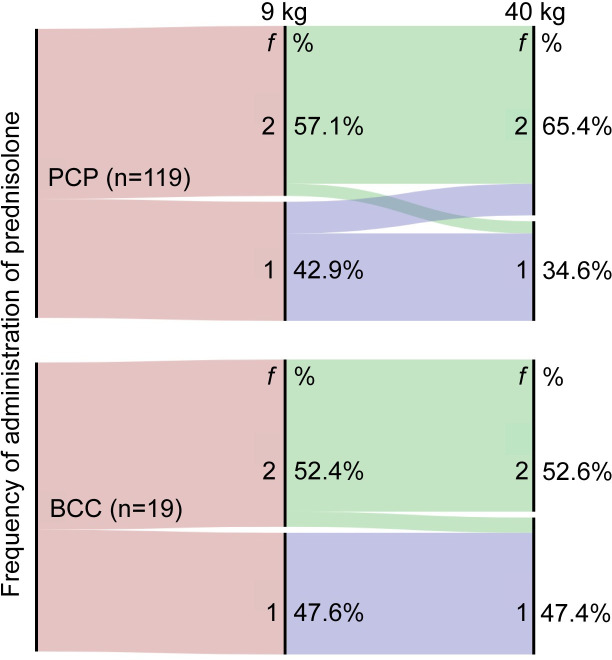
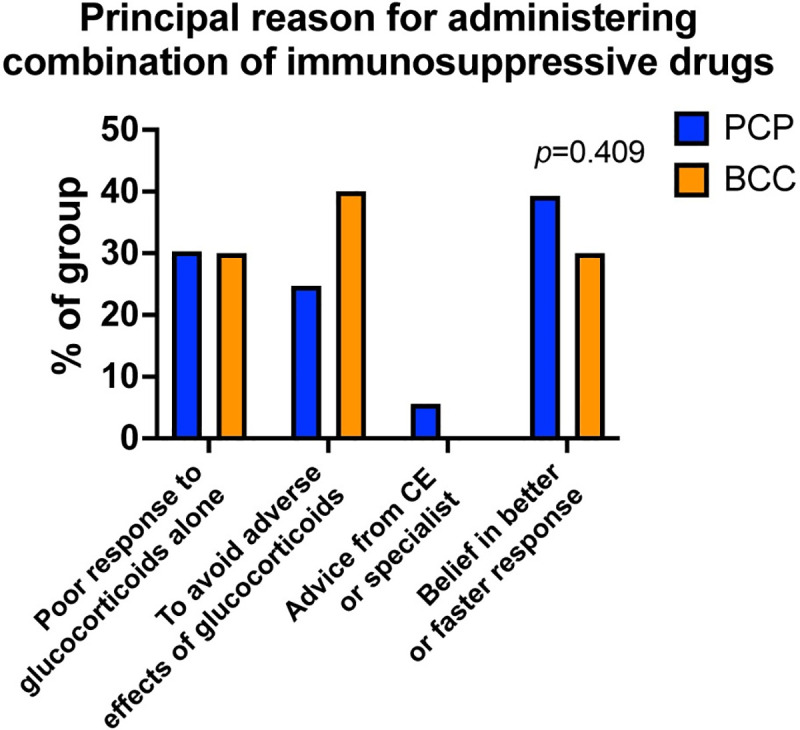
Questionnaire responses were received from 241 veterinarians, including 216 in PCPs and 25 BCCs. Veterinarians in both settings used similar tests for diagnosis of IMHA, but BCCs performed more tests to exclude underlying causes of 'associative' disease. All veterinarians reported use of similar initial dosages of glucocorticoids (median 2 mg/kg per day in both groups, p = 0.92) but those used by more experienced practitioners were higher than those with less experience. Most veterinarians made allowances for the weight of dogs, using lower prednisolone dosages in a clinical scenario involving a 40 kg dog compared to a 9 kg dog (p = 0.025 for PCP, p = 0.002 for BCC). BCCs reported greater use of combinations of immunosuppressive drugs (p<0.0001) and of antithrombotic drugs (p<0.0001); use of antithrombotic drugs was also less common among more experienced practitioners compared to less experienced.
Approaches to treatment of dogs with IMHA differ between BCCs and those in PCP. These differences may affect design and implementation of future research studies and clinical guidelines.
确定初级保健诊所(PCP)中的兽医和 board-certified 临床医生(BCC)是否以相似的方式治疗免疫介导性溶血性贫血(IMHA)的犬,以及经验更丰富的从业者是否与经验较少的从业者治疗方式相似。我们假设,在 PCP 中的从业者在处理类似病例时会表现出更多的变化,而不是 BCC。
通过向 BCC 和 PCP 中的兽医分发问卷进行了一项横断面研究。该问卷包括直接问题和一些临床情况,旨在捕捉常见治疗问题的方法。
共收到 241 名兽医的问卷回复,其中包括 216 名 PCP 兽医和 25 名 BCC 兽医。两种环境中的兽医都使用相似的测试来诊断 IMHA,但 BCC 进行了更多的测试以排除“关联”疾病的潜在原因。所有兽医报告使用相似的初始糖皮质激素剂量(两组中均为 2mg/kg/天,p = 0.92),但经验丰富的从业者使用的剂量高于经验不足的从业者。大多数兽医根据狗的体重做出了调整,在涉及 40 公斤狗的临床情况下,与 9 公斤狗相比,使用较低的泼尼松龙剂量(PCP 为 p = 0.025,BCC 为 p = 0.002)。BCC 报告更多地使用免疫抑制药物组合(p<0.0001)和抗血栓药物(p<0.0001);与经验不足的从业者相比,经验更丰富的从业者使用抗血栓药物的情况也较少。
BCC 和 PCP 中的兽医在治疗 IMHA 犬的方法上存在差异。这些差异可能会影响未来研究和临床指南的设计和实施。