Charité - Universitätsmedizin Berlin, Corporate member of Freie Universität Berlin, Humboldt-Universität zu Berlin and Berlin Institute of Health, Campus Benjamin Franklin, Department for Internal Medicine (Gastroenterology, Infectious Diseases, Rheumatology, Berlin, Germany
Charité - Universitätsmedizin Berlin, Corporate member of Freie Universität Berlin, Humboldt-Universität zu Berlin and Berlin Institute of Health, Campus Benjamin Franklin, Department for Internal Medicine (Gastroenterology, Infectious Diseases, Rheumatology, Berlin, Germany.
Gut. 2022 Aug;71(8):1567-1576. doi: 10.1136/gutjnl-2021-325181. Epub 2021 Sep 20.
A considerable proportion of patients with irritable bowel syndrome (IBS) may be wheat-sensitive and respond to a gluten-free diet (GFD) although they do not have coeliac disease. However, a diagnostic test for wheat sensitivity (WS) is missing. Our study evaluated the diagnostic accuracy (sensitivity and specificity) of confocal laser endomicroscopy (CLE) for the identification of WS as primary outcome.
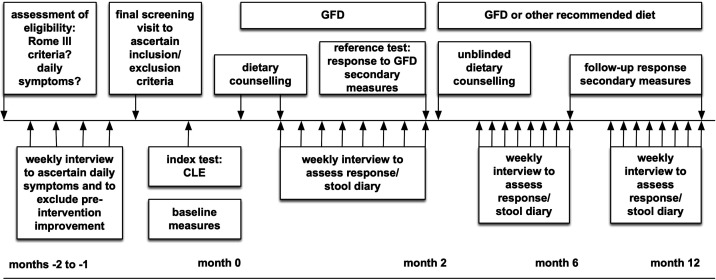
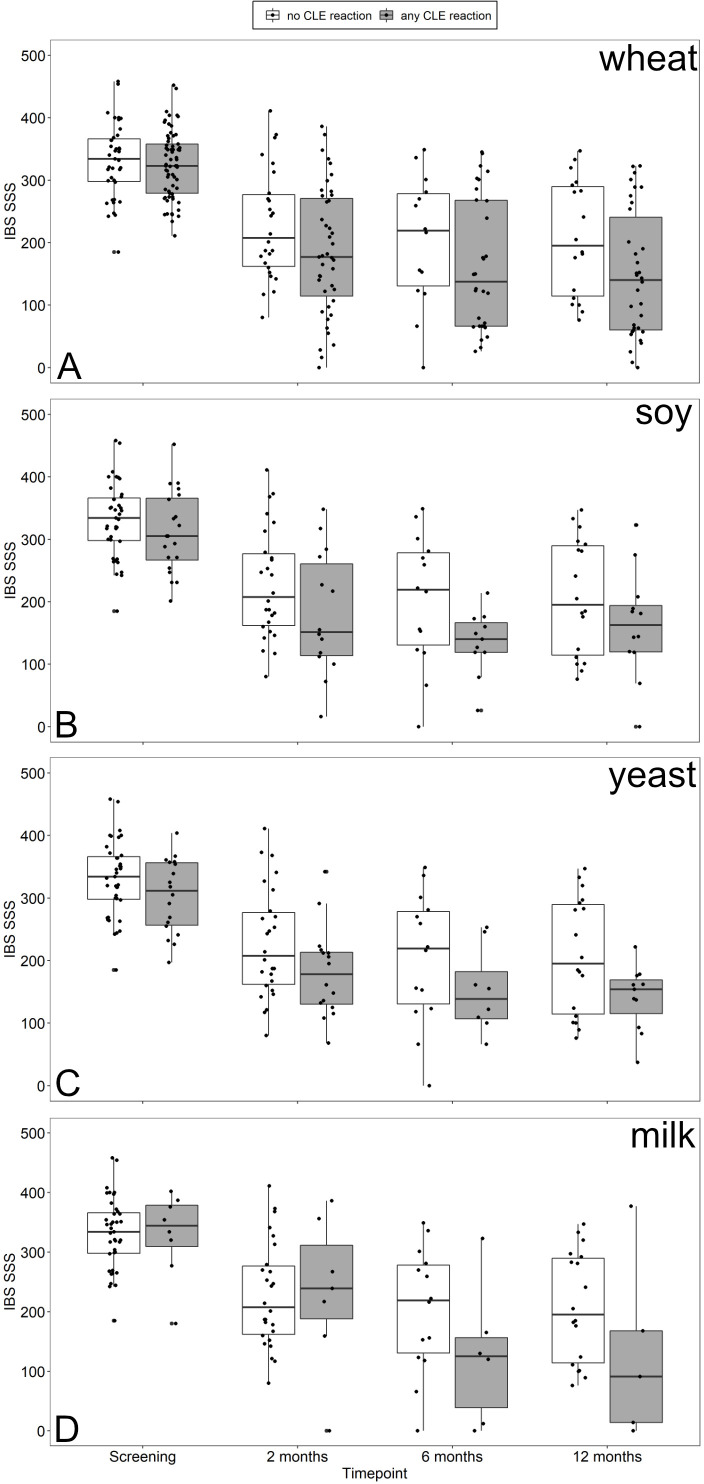
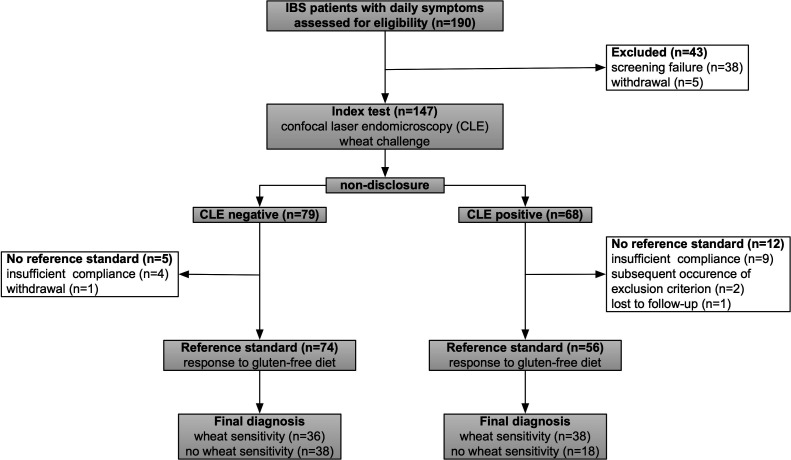
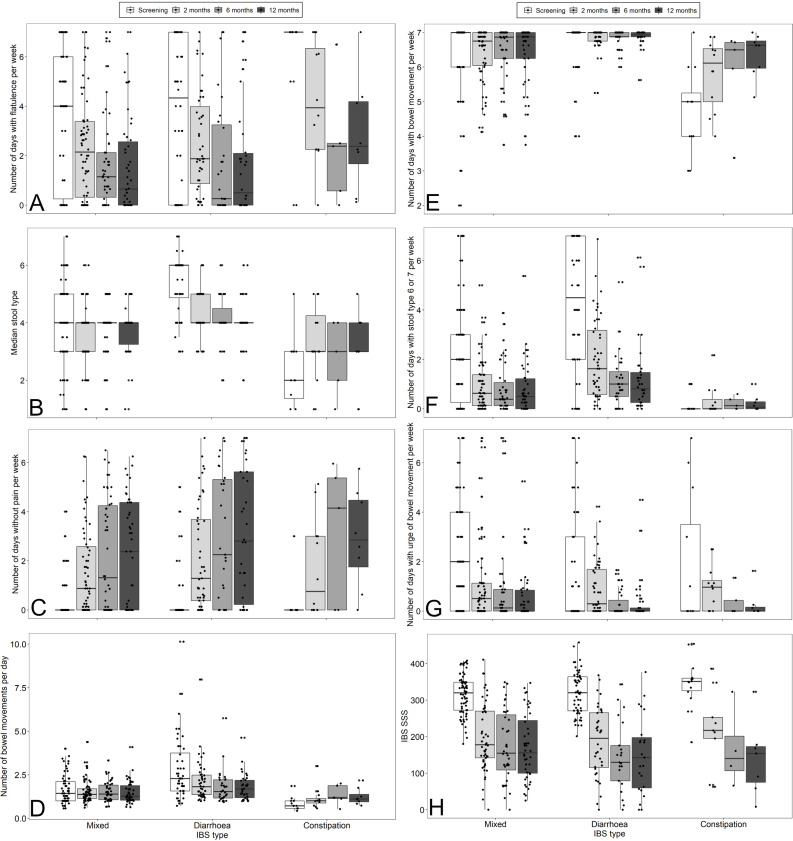
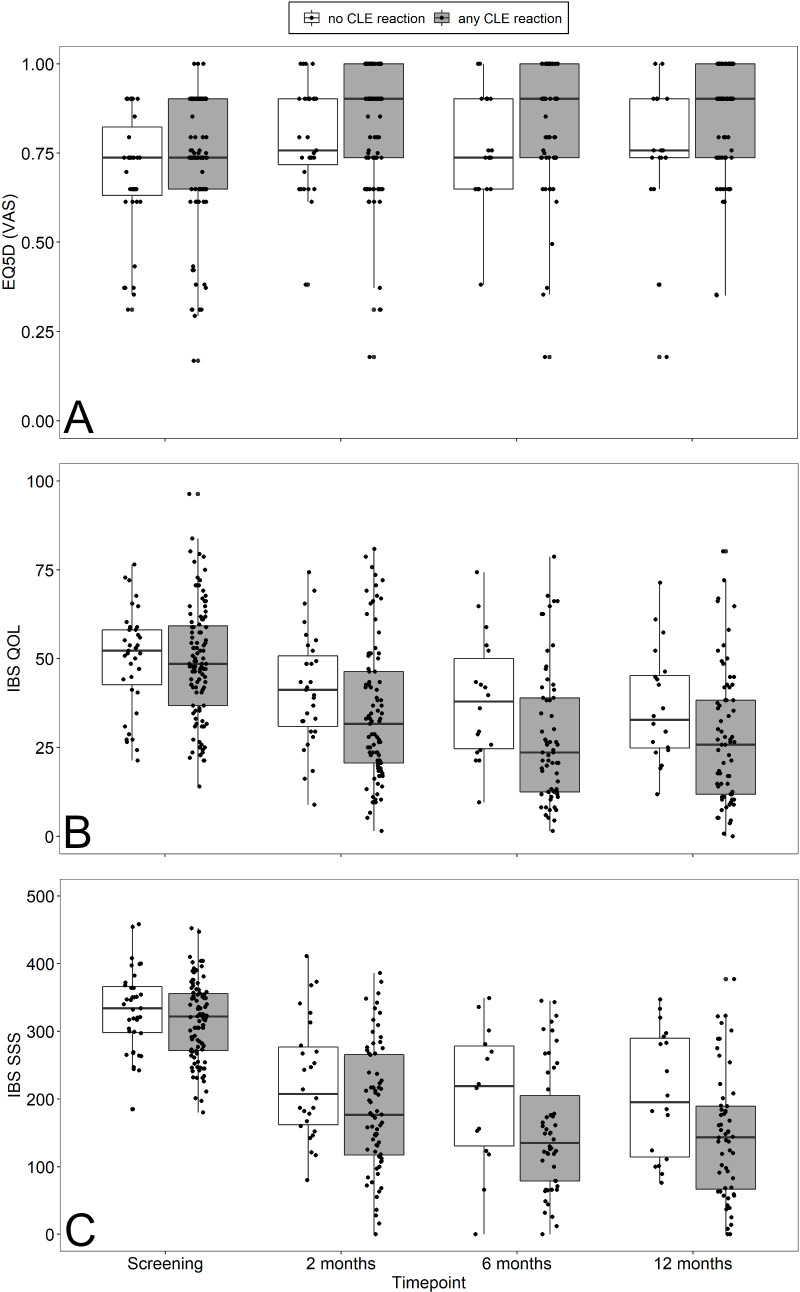
In this prospective, double-blind diagnostic study 147 non-coeliac patients fulfilling the Rome III criteria for IBS were tested by CLE for duodenal changes after wheat (index test), soy, yeast or milk exposure. Patients with IBS responding to 2 months of GFD were classified as having WS (reference test) using response criteria recommended by regulatory bodies for pharmaceutical trials of patients with IBS. After 2 months, CLE results were unblinded and patients were advised to exclude those food components that had led to a positive CLE reaction. The clinical response was assessed at follow-up after 6 and 12 months.
Of 130 patients who completed the study per protocol, 74 (56.9%) responded to GFD and were classified as WS after 2 months, and 38 of these 74 patients were correctly identified by CLE (sensitivity 51.4%; 97.5% CI: 38.7% to 63.9%). A total of 38 of 56 patients without WS were correctly identified by CLE (specificity 67.9%; 97.5% CI: 52.9% to 79.9%). At 6 months follow-up, CLE correctly identified 49 of 59 food-sensitive patients (sensitivity 83.1%; 97.5% CI: 69.9% to 91.3%) but specificity was only 32% (97.5% CI: 15.7% to 54.3%).
In light of the high proportion of patients with IBS responding to GFD, the diagnostic accuracy of CLE is too low to recommend widespread use of this invasive procedure.
This study was registered as clinical trial in the German Registry for Clinical Studies (DRKS00010123).
相当一部分肠易激综合征(IBS)患者可能对小麦敏感,并对无麸质饮食(GFD)有反应,尽管他们没有乳糜泻。然而,目前还没有针对小麦敏感性(WS)的诊断测试。我们的研究评估了共聚焦激光内镜(CLE)作为主要结局指标识别 WS 的诊断准确性(敏感性和特异性)。
在这项前瞻性、双盲诊断研究中,147 名符合罗马 III 标准的 IBS 非乳糜泻患者在接受 CLE 检查后,分别接受小麦(索引测试)、大豆、酵母或牛奶暴露,检查十二指肠变化。根据监管机构为 IBS 患者药物试验推荐的反应标准,对接受 2 个月 GFD 治疗的 IBS 患者进行分类,认为他们对 GFD 有反应(参考测试)。2 个月后,CLE 结果被揭盲,建议患者排除导致 CLE 反应阳性的食物成分。在 6 个月和 12 个月的随访中评估临床反应。
根据方案,130 名完成研究的患者中,74 名(56.9%)对 GFD 有反应,2 个月后被归类为 WS,其中 74 名患者中的 38 名被 CLE 正确识别(敏感性 51.4%;97.5%CI:38.7%至 63.9%)。56 名无 WS 的患者中,38 名被 CLE 正确识别(特异性 67.9%;97.5%CI:52.9%至 79.9%)。在 6 个月的随访中,CLE 正确识别了 59 名食物敏感患者中的 49 名(敏感性 83.1%;97.5%CI:69.9%至 91.3%),但特异性仅为 32%(97.5%CI:15.7%至 54.3%)。
鉴于相当一部分 IBS 患者对 GFD 有反应,CLE 的诊断准确性太低,不能推荐广泛使用这种有创性检查。