The Roslin Institute and Royal (Dick) School of Veterinary Studies, University of Edinburgh, Midlothian EH25 9RG, UK.
Institute of Aquaculture, School of Natural Sciences, University of Stirling, FK9 4LA, UK.
Genomics. 2021 Nov;113(6):3842-3850. doi: 10.1016/j.ygeno.2021.09.012. Epub 2021 Sep 20.
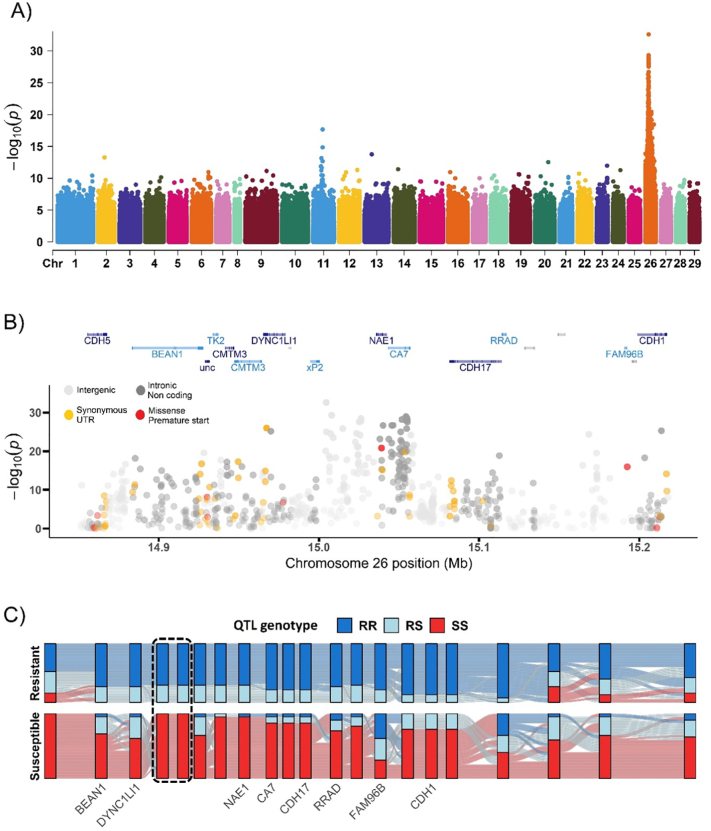
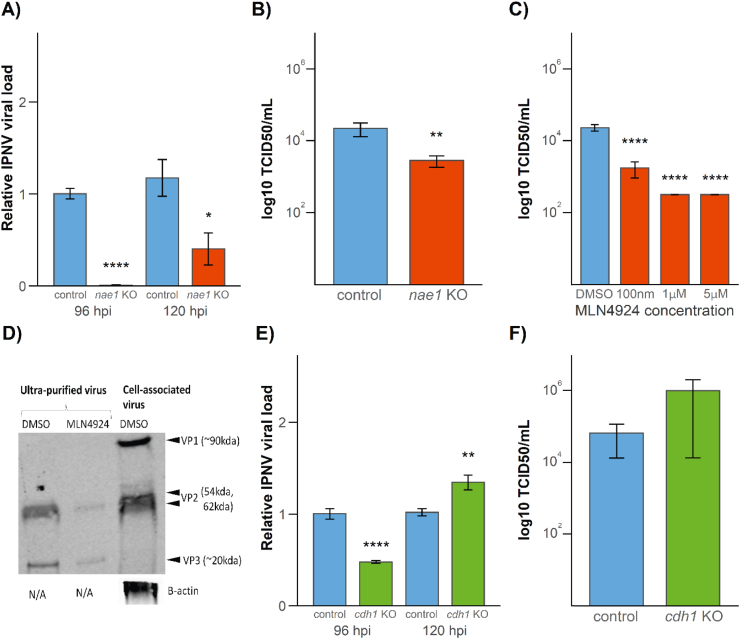
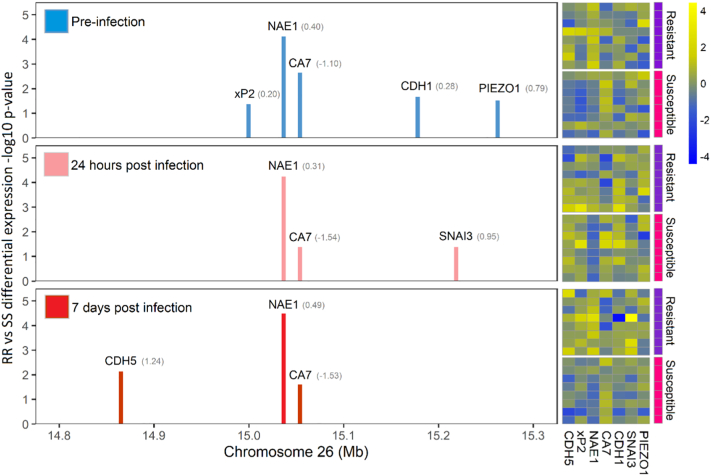
Genetic resistance to infectious pancreatic necrosis virus (IPNV) in Atlantic salmon is a rare example of a trait where a single locus (QTL) explains almost all of the genetic variation. Genetic marker tests based on this QTL on salmon chromosome 26 have been widely applied in selective breeding to markedly reduce the incidence of the disease. In the current study, whole genome sequencing and functional annotation approaches were applied to characterise genes and variants in the QTL region. This was complemented by an analysis of differential expression between salmon fry of homozygous resistant and homozygous susceptible genotypes challenged with IPNV. These analyses pointed to the NEDD-8 activating enzyme 1 (nae1) gene as a putative functional candidate underlying the QTL effect. The role of nae1 in IPN resistance was further assessed via CRISPR-Cas9 knockout of the nae1 gene and chemical inhibition of the nae1 protein activity in Atlantic salmon cell lines, both of which resulted in highly significant reduction in productive IPNV replication. In contrast, CRISPR-Cas9 knockout of a candidate gene previously purported to be a cellular receptor for the virus (cdh1) did not have a major impact on productive IPNV replication. These results suggest that nae1 is the causative gene underlying the major QTL affecting resistance to IPNV in salmon, provide further evidence for the critical role of neddylation in host-pathogen interactions, and highlight the value in combining high-throughput genomics approaches with targeted genome editing to understand the genetic basis of disease resistance.
大西洋鲑鱼对传染性胰脏坏死病毒(IPNV)的遗传抗性是一个罕见的例子,单一基因座(QTL)解释了几乎所有的遗传变异。基于鲑鱼第 26 号染色体上这个 QTL 的遗传标记测试已被广泛应用于选择性育种,以显著降低疾病的发生率。在当前的研究中,应用全基因组测序和功能注释方法来描述 QTL 区域的基因和变体。这与对感染 IPNV 的同型抗性和同型易感基因型的鲑鱼苗进行差异表达分析相辅相成。这些分析表明,NEDD-8 激活酶 1(nae1)基因是 QTL 效应的一个潜在功能候选基因。通过 CRISPR-Cas9 敲除 nae1 基因和化学抑制 nae1 蛋白在大西洋鲑鱼细胞系中的活性,进一步评估了 nae1 在 IPN 抗性中的作用,这两种方法都导致了 IPNV 复制的显著减少。相比之下,CRISPR-Cas9 敲除先前被认为是病毒细胞受体的候选基因(cdh1)对 IPNV 的复制没有重大影响。这些结果表明,nae1 是影响鲑鱼对 IPNV 抗性的主要 QTL 的致病基因,进一步证明了 neddylation 在宿主-病原体相互作用中的关键作用,并强调了结合高通量基因组学方法和靶向基因组编辑来理解疾病抗性的遗传基础的价值。