Yang Xiu, Li Xu, Liu Le, Chen Yuan-Hao, You Yue, Gao Yin, Liu Yue-Ying, Yang Li, Tong Kun, Chen Di-Shi, Hao Jing-Ru, Sun Nan, Zhao Zi-Ming, Gao Can
NMPA Key Laboratory for Research and Evaluation of Narcotic and Psychotropic Drugs, Jiangsu Province Key Laboratory of Anesthesiology, Jiangsu Province Key Laboratory of Anesthesia and Analgesia Application, Xuzhou Medical University, 221004, Xuzhou, Jiangsu, China.
Jiangsu Province Key Laboratory of New Drug Research and Clinical Pharmacy, Xuzhou Medical University, 221004, Xuzhou, Jiangsu, China.
Cell Death Discov. 2021 Sep 21;7(1):256. doi: 10.1038/s41420-021-00639-1.
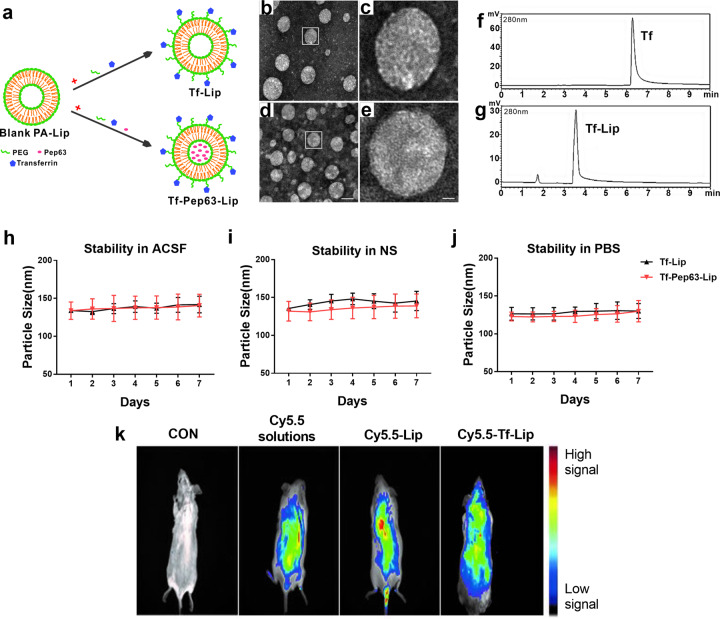
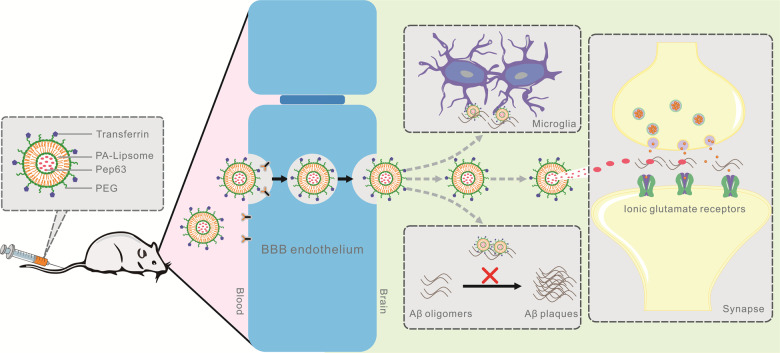
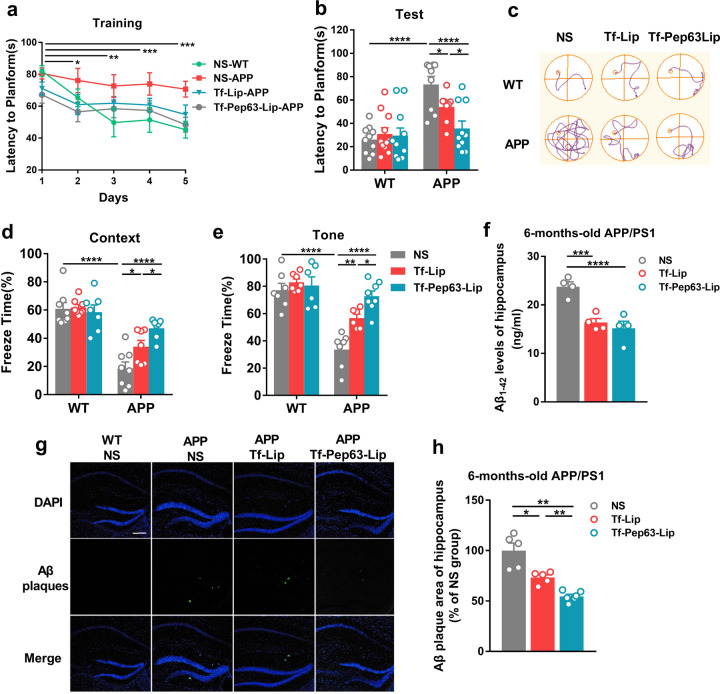
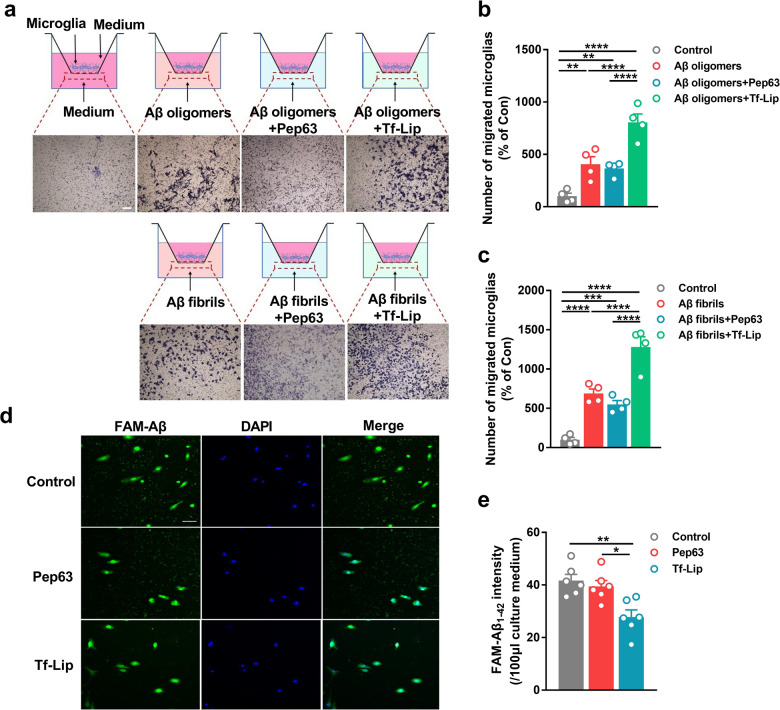
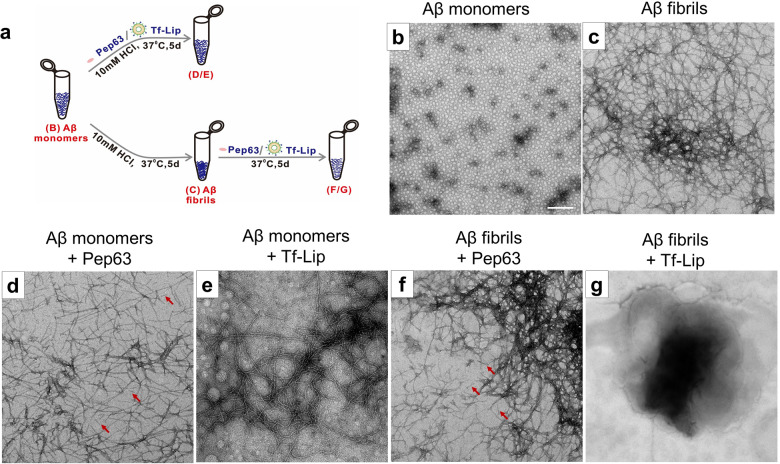
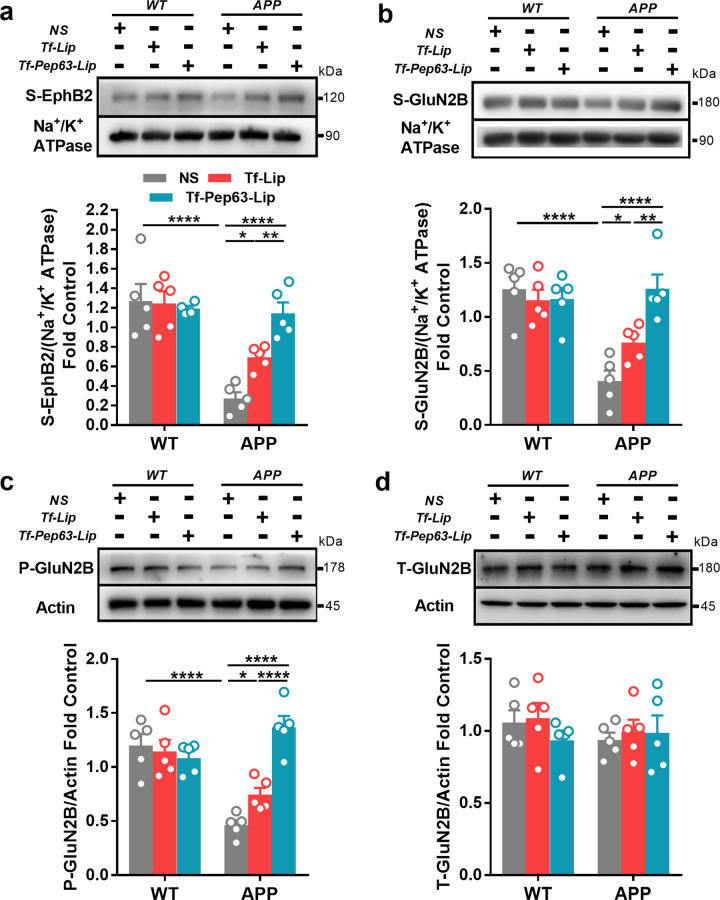
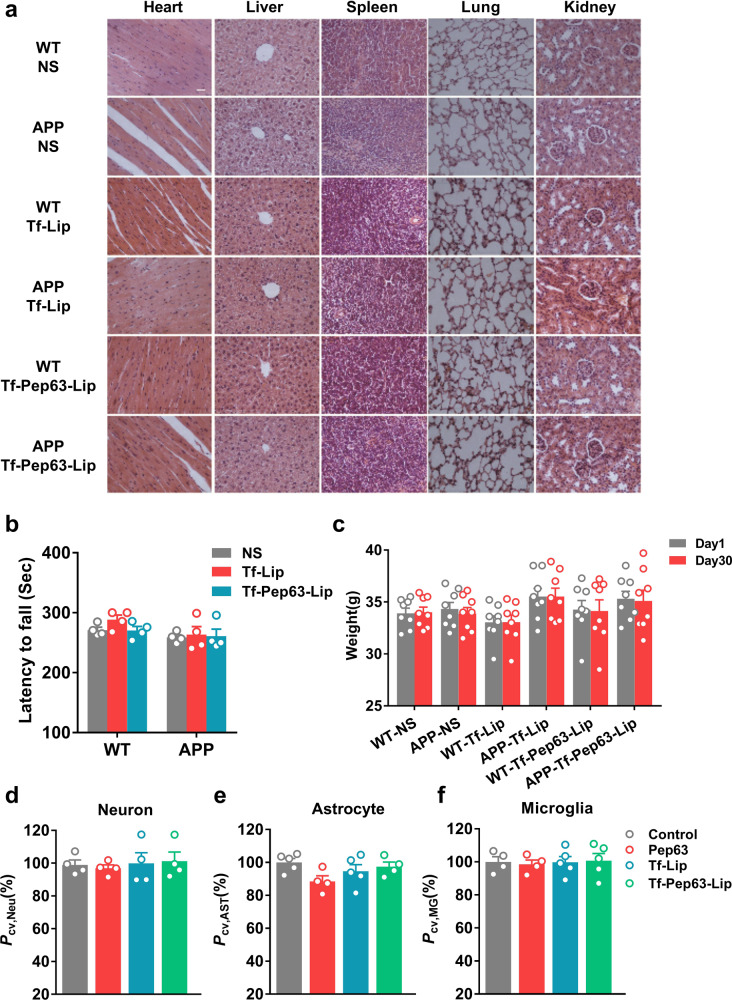
Alzheimer's disease (AD) is characterized by aberrant accumulation of extracellular β-amyloid (Aβ) peptides in the brain. Soluble Aβ oligomers are thought to be the most neurotoxic species and are correlated with cognitive dysfunction in early AD. However, there is still no effective treatment so far. We determined that Pep63, a small peptide, had a neuroprotective effect on synaptic plasticity and memory in our previous study. Here, we developed novel and multifunctional liposomes targeting both Aβ oligomers and fibrils based on a liposome delivery system. Transferrin-Pep63-liposomes (Tf-Pep63-Lip), possessing the ability for blood-brain barrier targeting, were also incorporated with phosphatidic acid (PA) and loaded with neuroprotective Pep63. We discovered that administration of Tf-Pep63-Lip could significantly reduce the Aβ burden in the hippocampus, and improve cognitive deficits in 6-month-old APP/PS1 mice in the Morris-Water maze task and fear-conditioning test with the combined effects of PA and Pep63. Tf-Pep63-Lip could capture Aβ oligomers or fibrils and then facilitated microglial chemotaxis nearby for clearance. Simultaneously, Tf-Pep63-Lip hindered Aβ1-42 aggregation and disaggregated Aβ1-42 assembly due to multivalent PA-Aβ. Pep63 effectively inhibited the binding between EphB2 and Aβ oligomers after release from liposomes and rescued NMDA receptors trafficking, the basis of synaptic plasticity. No side effects were observed in either APP/PS1 or wild-type mice, indicating that Tf-Pep63-Lip might be safe under the dosing regimen used in our experiment. Taken together, our results suggested that Tf-Pep63-Lip may serve as a safe and efficient agent for AD combination therapy.
阿尔茨海默病(AD)的特征是大脑中细胞外β淀粉样蛋白(Aβ)肽异常积聚。可溶性Aβ寡聚体被认为是最具神经毒性的物质,并且与早期AD的认知功能障碍相关。然而,迄今为止仍没有有效的治疗方法。在我们之前的研究中,我们确定小肽Pep63对突触可塑性和记忆具有神经保护作用。在此,我们基于脂质体递送系统开发了新型的、靶向Aβ寡聚体和原纤维的多功能脂质体。转铁蛋白-Pep63-脂质体(Tf-Pep63-Lip)具有血脑屏障靶向能力,还掺入了磷脂酸(PA)并装载了具有神经保护作用的Pep63。我们发现,给予Tf-Pep63-Lip可显著减轻海马体中的Aβ负荷,并在莫里斯水迷宫任务和恐惧条件测试中改善6月龄APP/PS1小鼠的认知缺陷,这是PA和Pep63共同作用的结果。Tf-Pep63-Lip可以捕获Aβ寡聚体或原纤维,然后促进附近小胶质细胞的趋化作用以进行清除。同时,由于多价PA-Aβ,Tf-Pep63-Lip阻碍了Aβ1-42的聚集并分解了Aβ1-42聚集体。Pep63从脂质体释放后可有效抑制EphB2与Aβ寡聚体之间的结合,并挽救NMDA受体转运,这是突触可塑性的基础。在APP/PS1小鼠或野生型小鼠中均未观察到副作用,表明在我们实验中使用的给药方案下Tf-Pep63-Lip可能是安全的。综上所述,我们的结果表明Tf-Pep63-Lip可能是一种用于AD联合治疗的安全有效的药物。