Private Practice, Bologna, Italy.
Department of Biomedical and Neuromotor Science (DIBINEM), University of Bologna, Bologna, Italy.
Clin Oral Implants Res. 2021 Dec;32(12):1411-1424. doi: 10.1111/clr.13841. Epub 2021 Oct 13.
The aim was to evaluate the role of resorbable membranes applied over customized titanium meshes related to soft tissue healing and bone regeneration after vertical/horizontal bone augmentation.
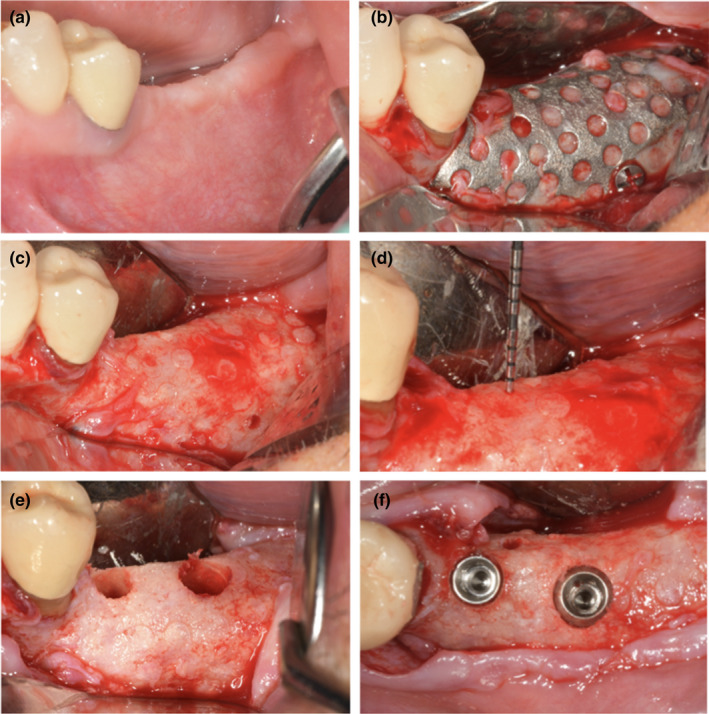
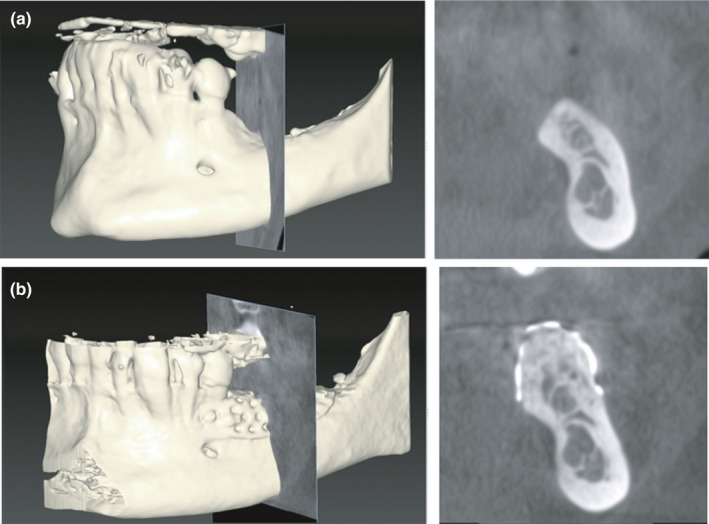
Thirty patients with partial edentulism of the maxilla/mandible, with vertical/horizontal reabsorption of the alveolar bone, and needing implant-supported restorations, were randomly divided into two groups: Group A was treated using only custom-made meshes (Mesh-) and Group B using custom-made meshes with cross-linked collagen membranes (Mesh+). Data collection included surgical/technical and healing complications, "pseudo-periosteum" thickness, bone density, planned bone volume (PBV), regenerated bone volume (RBV), regeneration rate (RR), vertical bone gain (VBG), and implant survival in regenerated areas. Statistical analysis was performed between the two study groups using a significance level of α = .05.
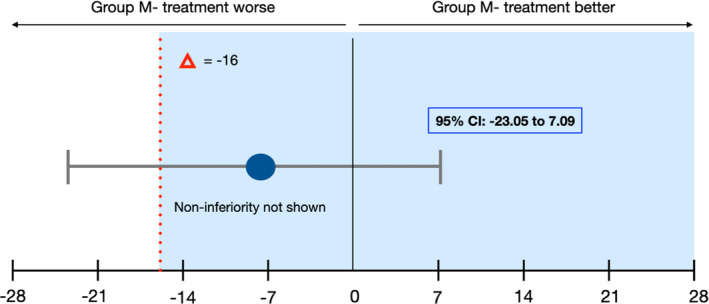
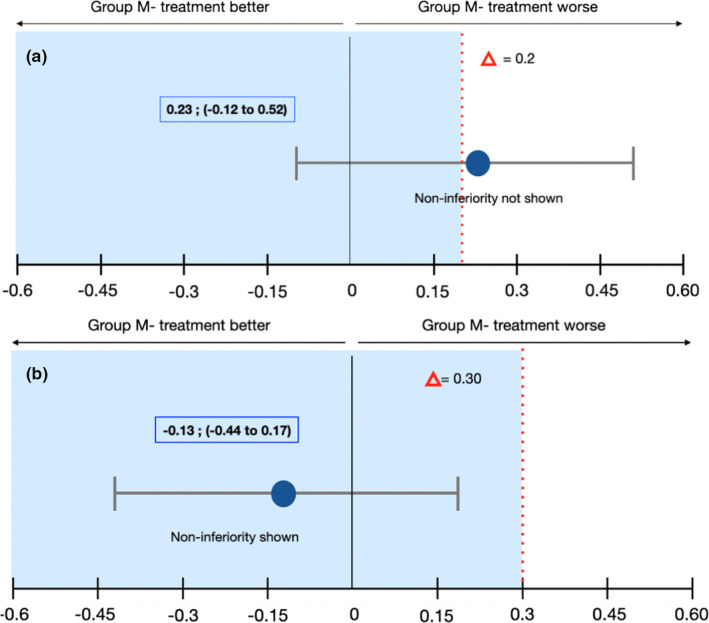
Regarding the healing complications, the noninferiority analysis proved to be inconclusive, despite the better results of group Mesh+ (13%) compared to group Mesh- (33%): estimated value -1.13 CI-95% from -0.44 to 0.17. Superiority approach confirmed the absence of significant differences (p = .39). RBV was 803.27 mm and 843.13 mm , respectively, and higher RR was observed in group Mesh+ (82.3%) compared to Mesh- (74.3%), although this value did not reach a statistical significance (p = .44). All 30 patients completed the study, receiving 71 implants; 68 out of them were clinically stable and in function.
The results showed that customized meshes alone do not appear to be inferior to customized meshes covered by cross-linked collagen membranes in terms of healing complication rates and regeneration rates, although superior results were observed in group Mesh+compared to group Mesh- for all variables.
评估可吸收膜在定制钛网中的应用对于垂直/水平骨增量后软组织愈合和骨再生的作用。
30 名上颌/下颌部分缺牙、牙槽骨垂直/水平吸收、需要种植体支持修复的患者随机分为两组:A 组仅使用定制网(Mesh-)治疗,B 组使用交联胶原膜覆盖的定制网(Mesh+)治疗。数据收集包括手术/技术和愈合并发症、“假性骨膜”厚度、骨密度、计划骨量(PBV)、再生骨量(RBV)、再生率(RR)、垂直骨增量(VBG)和再生区域的种植体存活率。使用显著性水平 α = 0.05 对两组研究进行统计学分析。
关于愈合并发症,非劣效性分析结果不确定,尽管 Mesh+组(13%)的结果优于 Mesh-组(33%):估计值-1.13 置信区间-95%为-0.44 至 0.17。优势分析证实无显著差异(p = 0.39)。RBV 分别为 803.27mm 和 843.13mm,Mesh+组的 RR 更高(82.3%),而 Mesh-组的 RR 较低(74.3%),但这一值没有达到统计学意义(p = 0.44)。所有 30 名患者均完成了研究,共植入 71 枚种植体;其中 68 枚种植体临床稳定并正常使用。
结果表明,在愈合并发症发生率和再生率方面,单独使用定制网似乎并不逊于覆盖交联胶原膜的定制网,尽管 Mesh+组的所有变量均优于 Mesh-组。