Centre for Cancer Biology, University of South Australia and SA Pathology, Adelaide, SA, 5000, Australia.
South Australian Health and Medical Research Institute (SAHMRI), Adelaide, SA, 5000, Australia.
Commun Biol. 2021 Sep 22;4(1):1111. doi: 10.1038/s42003-021-02632-x.
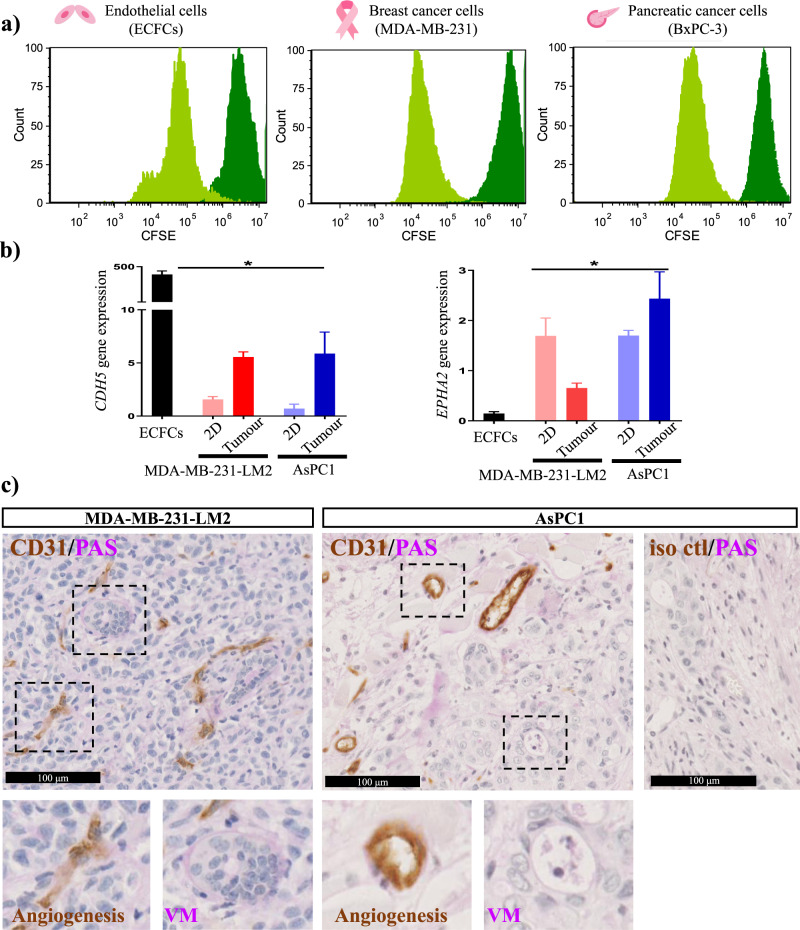
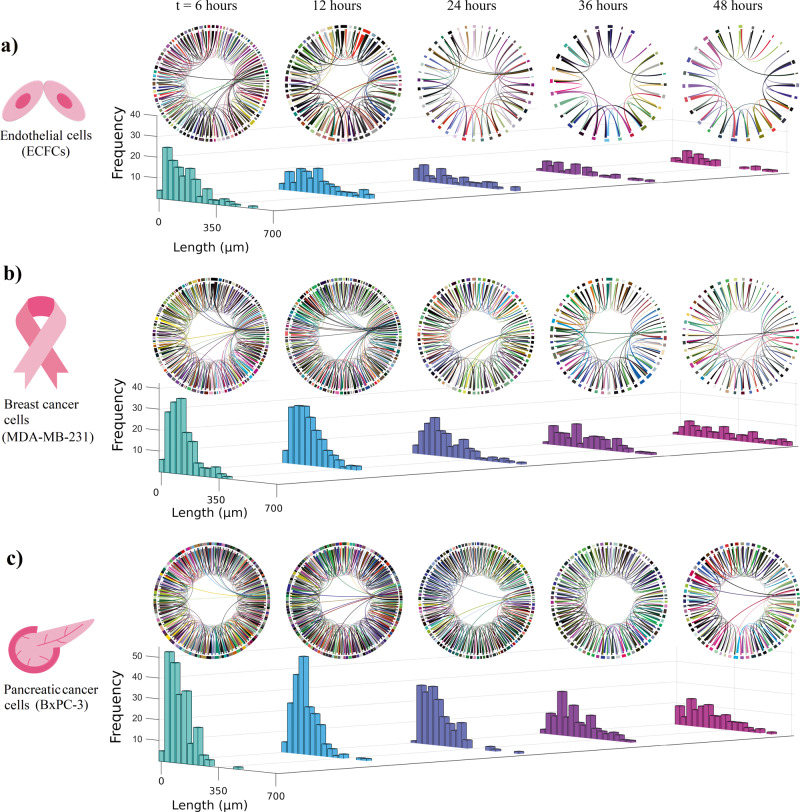
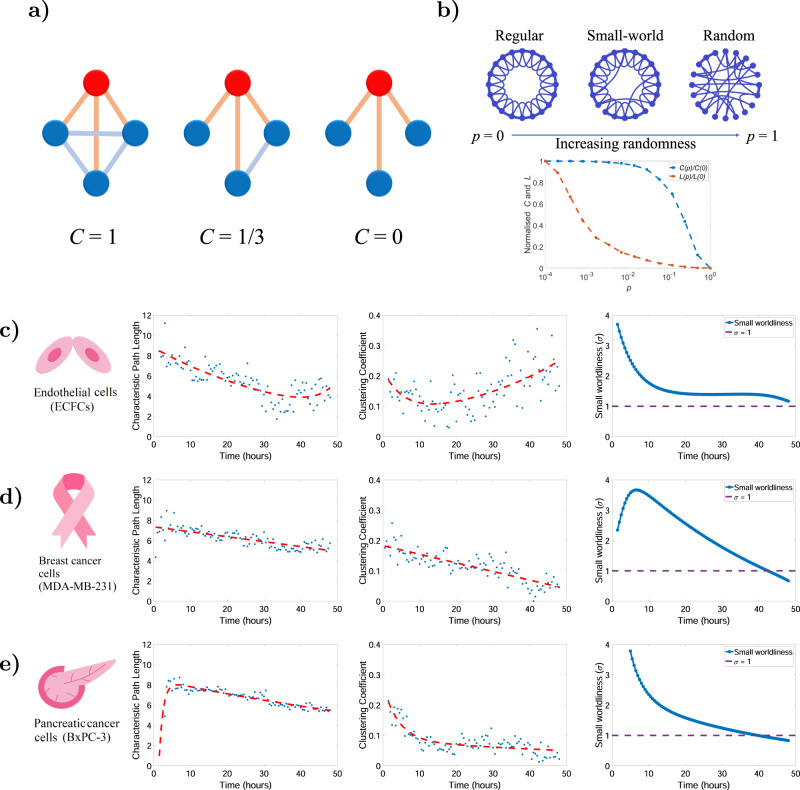
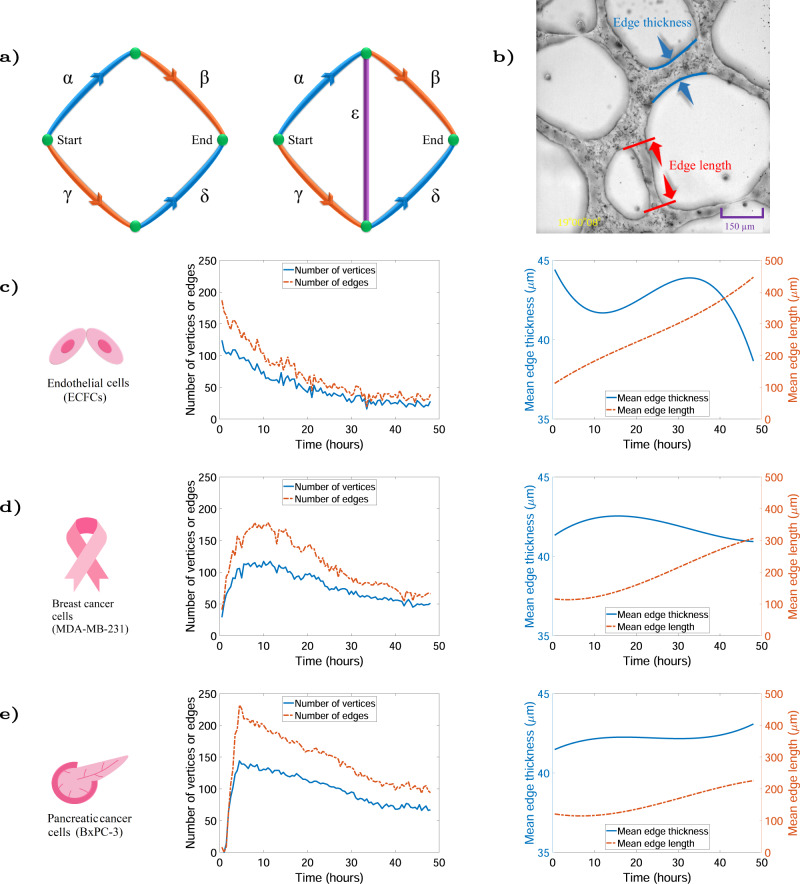
The growth of solid tumours relies on an ever-increasing supply of oxygen and nutrients that are delivered via vascular networks. Tumour vasculature includes endothelial cell lined angiogenesis and the less common cancer cell lined vasculogenic mimicry (VM). To study and compare the development of vascular networks formed during angiogenesis and VM (represented here by breast cancer and pancreatic cancer cell lines) a number of in vitro assays were utilised. From live cell imaging, we performed a large-scale automated extraction of network parameters and identified properties not previously reported. We show that for both angiogenesis and VM, the characteristic network path length reduces over time; however, only endothelial cells increase network clustering coefficients thus maintaining small-world network properties as they develop. When compared to angiogenesis, the VM network efficiency is improved by decreasing the number of edges and vertices, and also by increasing edge length. Furthermore, our results demonstrate that angiogenic and VM networks appear to display similar properties to road traffic networks and are also subject to the well-known Braess paradox. This quantitative measurement framework opens up new avenues to potentially evaluate the impact of anti-cancer drugs and anti-vascular therapies.
实体肿瘤的生长依赖于通过血管网络不断增加的氧气和营养物质供应。肿瘤血管包括内皮细胞排列的血管生成和较少见的癌细胞排列的血管生成拟态(VM)。为了研究和比较血管生成和 VM 过程中形成的血管网络的发展(这里以乳腺癌和胰腺癌细胞系为例),我们利用了许多体外检测方法。通过活细胞成像,我们进行了大规模的网络参数自动提取,并确定了以前未报道过的特性。我们表明,对于血管生成和 VM 而言,特征性的网络路径长度随时间的推移而减少;但是,只有内皮细胞增加了网络聚类系数,从而在其发育过程中保持了小世界网络特性。与血管生成相比,VM 网络的效率通过减少边和顶点的数量以及增加边的长度得到了提高。此外,我们的结果表明,血管生成和 VM 网络似乎具有与道路交通网络相似的特性,并且也受到著名的 Braess 悖论的影响。这种定量测量框架为评估抗癌药物和抗血管治疗的影响开辟了新的途径。