Department of Pathology, UCL Cancer Institute, University College London, London, United Kingdom.
Centre for Medical Image Computing, University College London, London, United Kingdom.
PLoS One. 2021 Sep 23;16(9):e0256907. doi: 10.1371/journal.pone.0256907. eCollection 2021.
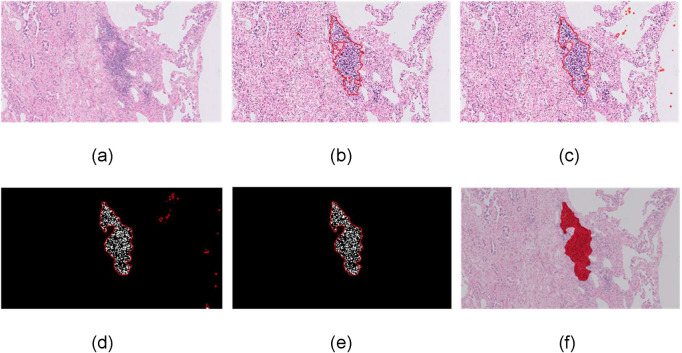
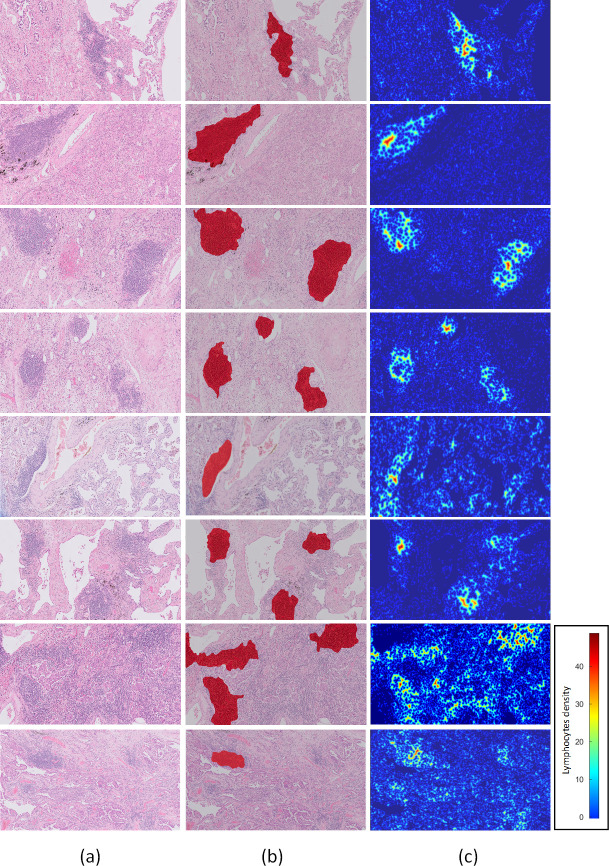
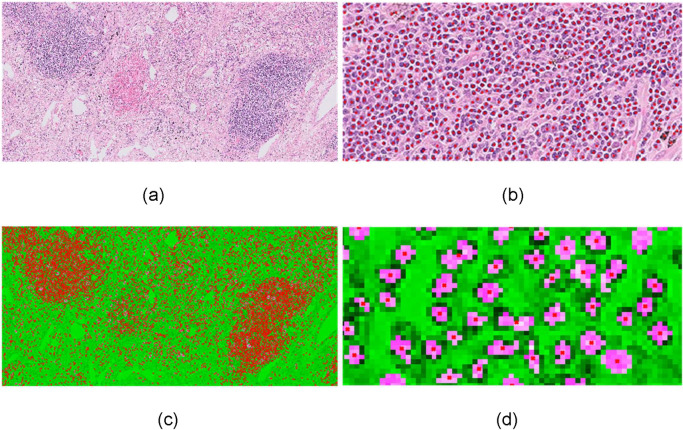
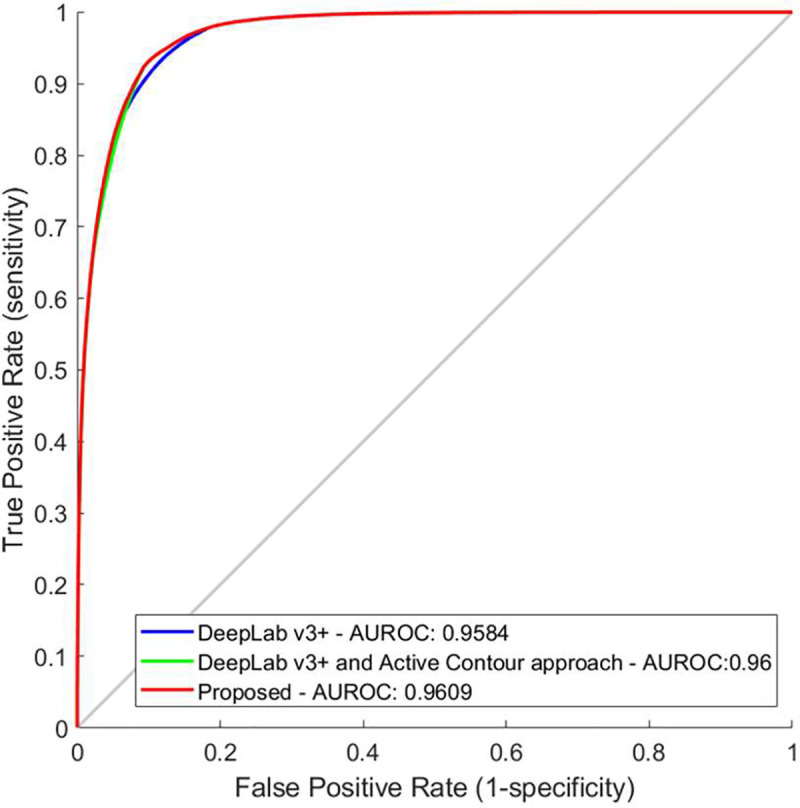
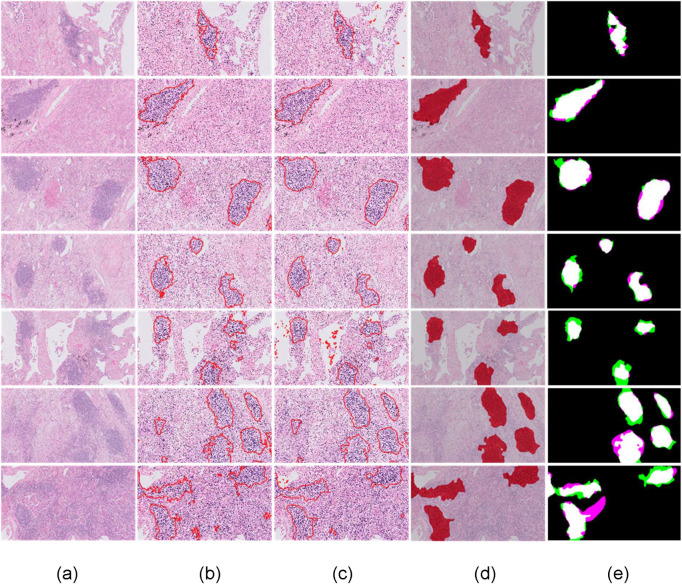
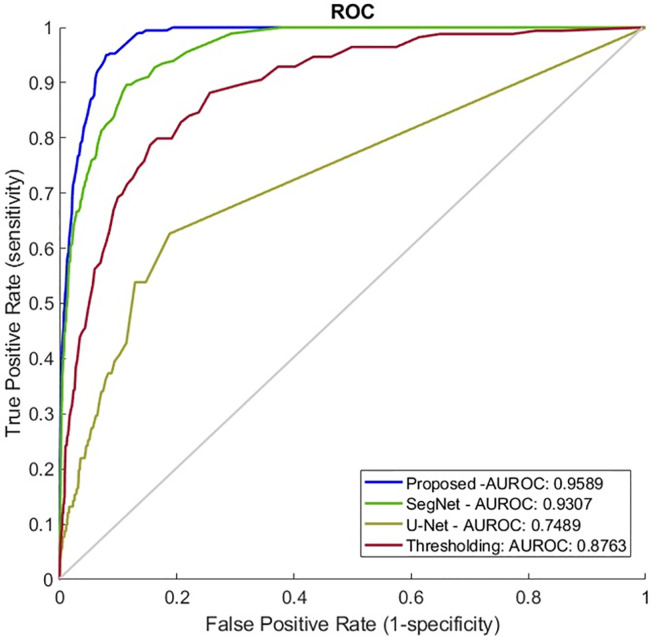
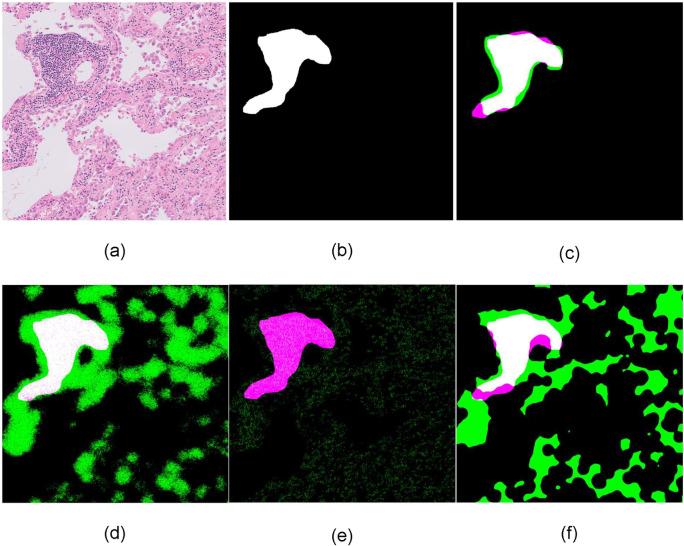
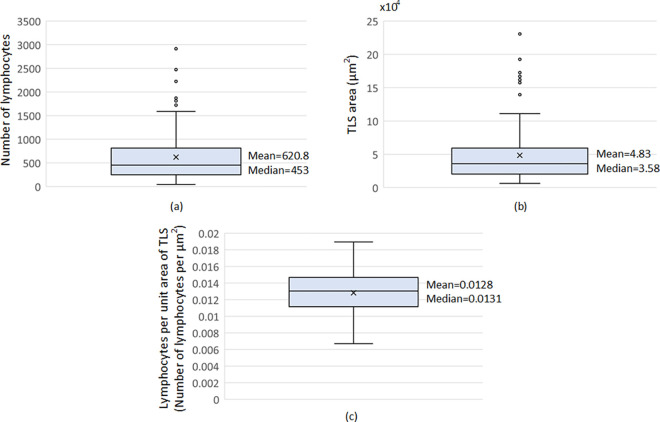
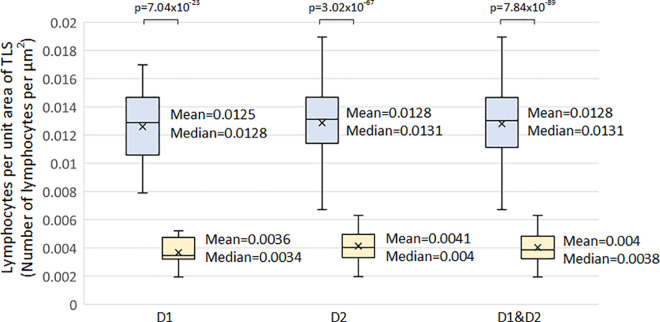
Tertiary lymphoid structures (TLS) are ectopic aggregates of lymphoid cells in inflamed, infected, or tumoral tissues that are easily recognized on an H&E histology slide as discrete entities, distinct from lymphocytes. TLS are associated with improved cancer prognosis but there is no standardised method available to quantify their presence. Previous studies have used immunohistochemistry to determine the presence of specific cells as a marker of the TLS. This has now been proven to be an underestimate of the true number of TLS. Thus, we propose a methodology for the automated identification and quantification of TLS, based on H&E slides. We subsequently determined the mathematical criteria defining a TLS. TLS regions were identified through a deep convolutional neural network and segmentation of lymphocytes was performed through an ellipsoidal model. This methodology had a 92.87% specificity at 95% sensitivity, 88.79% specificity at 98% sensitivity and 84.32% specificity at 99% sensitivity level based on 144 TLS annotated H&E slides implying that the automated approach was able to reproduce the histopathologists' assessment with great accuracy. We showed that the minimum number of lymphocytes within TLS is 45 and the minimum TLS area is 6,245μm2. Furthermore, we have shown that the density of the lymphocytes is more than 3 times those outside of the TLS. The mean density and standard deviation of lymphocytes within a TLS area are 0.0128/μm2 and 0.0026/μm2 respectively compared to 0.004/μm2 and 0.001/μm2 in non-TLS regions. The proposed methodology shows great potential for automated identification and quantification of the TLS density on digital H&E slides.
三级淋巴结构 (TLS) 是在炎症、感染或肿瘤组织中异位聚集的淋巴样细胞,在 H&E 组织学切片上很容易被识别为离散实体,与淋巴细胞不同。TLS 与癌症预后改善相关,但目前尚无标准化方法来定量其存在。先前的研究使用免疫组织化学来确定特定细胞的存在作为 TLS 的标志物。现在已经证明,这低估了 TLS 的真实数量。因此,我们提出了一种基于 H&E 切片的自动识别和定量 TLS 的方法。随后,我们确定了定义 TLS 的数学标准。通过深度卷积神经网络识别 TLS 区域,并通过椭圆模型进行淋巴细胞分割。这种方法在 144 张具有 TLS 注释的 H&E 切片上具有 92.87%的特异性和 95%的敏感性、88.79%的特异性和 98%的敏感性以及 84.32%的特异性,这意味着自动方法能够非常准确地重现组织病理学家的评估。我们表明,TLS 内淋巴细胞的最小数量为 45,TLS 的最小面积为 6245μm2。此外,我们还表明,TLS 内淋巴细胞的密度是 TLS 外的 3 倍以上。与非 TLS 区域的 0.004/μm2 和 0.001/μm2 相比,TLS 区域内淋巴细胞的平均密度和标准偏差分别为 0.0128/μm2 和 0.0026/μm2。该方法在数字 H&E 切片上自动识别和定量 TLS 密度具有很大的潜力。