• 文献检索
  • 文档翻译
  • 深度研究
  • 学术资讯
  • Suppr Zotero 插件Zotero 插件
  • 邀请有礼
  • 套餐&价格
  • 历史记录
应用&插件
Suppr Zotero 插件Zotero 插件浏览器插件Mac 客户端Windows 客户端微信小程序
定价
高级版会员购买积分包购买API积分包
服务
文献检索文档翻译深度研究API 文档MCP 服务
关于我们
关于 Suppr公司介绍联系我们用户协议隐私条款
关注我们

Suppr 超能文献

核心技术专利:CN118964589B侵权必究
粤ICP备2023148730 号-1Suppr @ 2026

文献检索

告别复杂PubMed语法,用中文像聊天一样搜索,搜遍4000万医学文献。AI智能推荐,让科研检索更轻松。

立即免费搜索

文件翻译

保留排版,准确专业,支持PDF/Word/PPT等文件格式,支持 12+语言互译。

免费翻译文档

深度研究

AI帮你快速写综述,25分钟生成高质量综述,智能提取关键信息,辅助科研写作。

立即免费体验

七种减少育肥猪咬尾损伤措施的成本效益分析

Cost-Effectiveness Analysis of Seven Measures to Reduce Tail Biting Lesions in Fattening Pigs.

作者信息

Niemi Jarkko K, Edwards Sandra A, Papanastasiou Dimitris K, Piette Deborah, Stygar Anna H, Wallenbeck Anna, Valros Anna

机构信息

Bioeconomy and Environment Unit, Natural Resources Institute Finland (Luke), Seinäjoki, Finland.

School of Natural and Environmental Sciences, Newcastle University, Newcastle upon Tyne, United Kingdom.

出版信息

Front Vet Sci. 2021 Sep 7;8:682330. doi: 10.3389/fvets.2021.682330. eCollection 2021.

DOI:10.3389/fvets.2021.682330
PMID:34557537
原文链接:https://pmc.ncbi.nlm.nih.gov/articles/PMC8452948/
Abstract

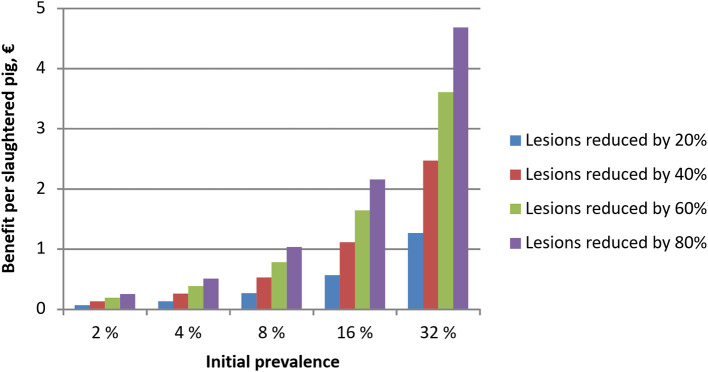
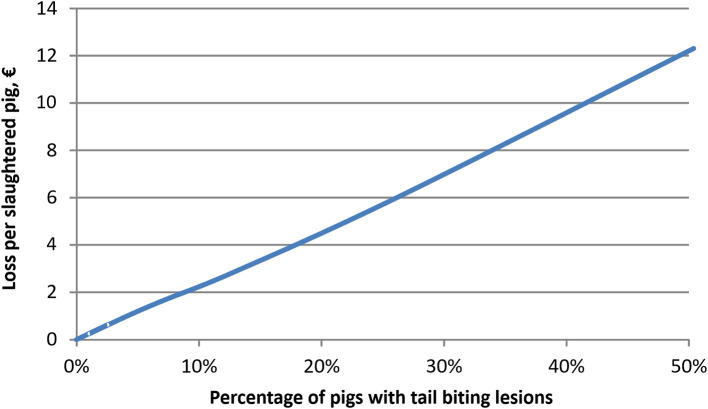
Tail biting is an important animal welfare issue in the pig sector. Studies have identified various risk factors which can lead to biting incidents and proposed mitigation measures. This study focused on the following seven key measures which have been identified to affect the risk of tail biting lesions: improvements in straw provision, housing ventilation, genetics, stocking density, herd health, provision of point-source enrichment objects, and adoption of early warning systems. The aim of this study was to examine whether these selected measures to reduce the risk of tail biting lesions in pig fattening are cost-effective. The problem was analyzed by first summarizing the most prospective interventions, their costs and expected impacts on the prevalence of tail biting lesions, second, by using a stochastic bio-economic model to simulate the financial return per pig space unit and per pig at different levels of prevalence of tail biting lesions, and third by looking at how large a reduction in tail biting lesions would be needed at different levels of initial prevalence of lesions to cover the costs of interventions. Tail biting lesions of a severity which would require an action (medication, hospitalization of the pig or other care, or taking preventive measures) by the pig producer were considered in the model. The results provide guidance on the expected benefits and costs of the studied interventions. According to the results, if the average prevalence of tail biting lesions is at a level of 10%, the costs of this damaging behavior can be as high as €2.3 per slaughtered pig (~1.6% of carcass value). Measures which were considered the least expensive to apply, such as provision of point-source enrichment objects, or provided wider production benefits, such as improvements in ventilation and herd health, became profitable at a lower level of efficacy than measures which were considered the most expensive to apply (e.g., straw provision, increased space allowance, automated early warning systems). Measures which were considered most efficient in reducing the risk of tail biting lesions, such as straw provision, can be cost-effective in preventing tail biting, especially when the risk of tail biting is high. At lower risk levels, the provision of point-source objects and other less costly but relatively effective measures can play an important role. However, selection of measures appropriate to the individual farm problem is essential. For instance, if poor health or barren pens are causing the elevated risk of tail biting lesions, then improving health management or enriching the pens may resolve the tail biting problem cost-effectively.

摘要

咬尾是养猪业中一个重要的动物福利问题。研究已经确定了各种可能导致咬尾事件的风险因素,并提出了缓解措施。本研究聚焦于已确定的影响咬尾损伤风险的以下七个关键措施:改善垫草供应、猪舍通风、遗传因素、饲养密度、猪群健康、提供点源富集物品以及采用预警系统。本研究的目的是检验这些选定的降低育肥猪咬尾损伤风险的措施是否具有成本效益。通过以下方式分析该问题:首先总结最具前景的干预措施、其成本以及对咬尾损伤发生率的预期影响;其次,使用随机生物经济模型模拟在不同咬尾损伤发生率水平下每头猪空间单位和每头猪的财务回报;第三,研究在不同初始损伤发生率水平下,需要将咬尾损伤降低多少才能覆盖干预成本。模型中考虑了严重程度达到需要养猪生产者采取行动(用药、猪住院治疗或其他护理,或采取预防措施)的咬尾损伤。研究结果为所研究的干预措施的预期效益和成本提供了指导。根据研究结果,如果咬尾损伤的平均发生率为10%,这种有害行为的成本可能高达每头屠宰猪2.3欧元(约占胴体价值的1.6%)。被认为应用成本最低的措施,如提供点源富集物品,或能带来更广泛生产效益的措施,如改善通风和猪群健康,在较低的效果水平下就变得有利可图,而被认为应用成本最高的措施(如垫草供应、增加空间 allowance、自动化预警系统)则不然。被认为在降低咬尾损伤风险方面最有效的措施,如垫草供应,在预防咬尾方面可能具有成本效益,尤其是当咬尾风险较高时。在较低风险水平下,提供点源物品和其他成本较低但相对有效的措施可以发挥重要作用。然而,选择适合个别猪场问题的措施至关重要。例如,如果健康状况不佳或猪舍贫瘠导致咬尾损伤风险升高,那么改善健康管理或丰富猪舍环境可能以具有成本效益的方式解决咬尾问题。
https://cdn.ncbi.nlm.nih.gov/pmc/blobs/f1bd/8452948/da157e74ce04/fvets-08-682330-g0003.jpg
https://cdn.ncbi.nlm.nih.gov/pmc/blobs/f1bd/8452948/a1f6a2ab2988/fvets-08-682330-g0001.jpg
https://cdn.ncbi.nlm.nih.gov/pmc/blobs/f1bd/8452948/66ea3d845abe/fvets-08-682330-g0002.jpg
https://cdn.ncbi.nlm.nih.gov/pmc/blobs/f1bd/8452948/da157e74ce04/fvets-08-682330-g0003.jpg
https://cdn.ncbi.nlm.nih.gov/pmc/blobs/f1bd/8452948/a1f6a2ab2988/fvets-08-682330-g0001.jpg
https://cdn.ncbi.nlm.nih.gov/pmc/blobs/f1bd/8452948/66ea3d845abe/fvets-08-682330-g0002.jpg
https://cdn.ncbi.nlm.nih.gov/pmc/blobs/f1bd/8452948/da157e74ce04/fvets-08-682330-g0003.jpg

相似文献

1
Cost-Effectiveness Analysis of Seven Measures to Reduce Tail Biting Lesions in Fattening Pigs.七种减少育肥猪咬尾损伤措施的成本效益分析
Front Vet Sci. 2021 Sep 7;8:682330. doi: 10.3389/fvets.2021.682330. eCollection 2021.
2
Which is the most preventive measure against tail damage in finisher pigs: tail docking, straw provision or lowered stocking density?对于育肥猪,哪种措施能最大程度预防尾部损伤:断尾、提供稻草还是降低饲养密度?
Animal. 2018 Jun;12(6):1260-1267. doi: 10.1017/S175173111700249X. Epub 2017 Nov 2.
3
A survey of straw use and tail biting in Swedish pig farms rearing undocked pigs.瑞典未断尾猪场的秸秆使用情况及咬尾行为调查。
Acta Vet Scand. 2016 Dec 5;58(1):84. doi: 10.1186/s13028-016-0266-8.
4
Provision of straw by a foraging tower -effect on tail biting in weaners and fattening pigs.通过采食塔提供稻草——对断奶仔猪和育肥猪咬尾行为的影响
Porcine Health Manag. 2017 Mar 16;3:4. doi: 10.1186/s40813-017-0052-7. eCollection 2017.
5
Risk factors for tail lesions in undocked fattening pigs reared on Swiss farms.瑞士农场育肥去势猪尾部损伤的风险因素。
Schweiz Arch Tierheilkd. 2020 Nov;162(11):683-695. doi: 10.17236/sat00278.
6
Frequency of tail lesions and risk factors for tail biting in heavy pig production from weaning to 170 kg live weight.从断奶至体重达170千克的重型生猪生产中,尾巴损伤的发生率及咬尾的风险因素。
Vet J. 2016 Jan;207:92-98. doi: 10.1016/j.tvjl.2015.10.056. Epub 2015 Nov 9.
7
Injurious tail biting in pigs: how can it be controlled in existing systems without tail docking?猪的有害咬尾行为:在不进行断尾的现有养殖系统中如何控制?
Animal. 2014 Sep;8(9):1479-97. doi: 10.1017/S1751731114001359.
8
High biosecurity and welfare standards in fattening pig farms are associated with reduced antimicrobial use.在育肥猪场采用高生物安全和福利标准与减少抗菌药物的使用有关。
Animal. 2020 Oct;14(10):2178-2186. doi: 10.1017/S1751731120000828. Epub 2020 Apr 30.
9
Why are most EU pigs tail docked? Economic and ethical analysis of four pig housing and management scenarios in the light of EU legislation and animal welfare outcomes.为什么大多数欧盟国家的猪都要断尾?根据欧盟立法和动物福利结果,对四种猪舍和管理方案的经济和伦理分析。
Animal. 2016 Apr;10(4):687-99. doi: 10.1017/S1751731115002098. Epub 2015 Nov 2.
10
Effect of Straw Provision in Racks on Tail Lesions, Straw Availability, and Pen Hygiene in Finishing Pigs.在育肥猪栏中提供稻草对尾部损伤、稻草可用性和栏舍卫生的影响。
Animals (Basel). 2021 Feb 2;11(2):379. doi: 10.3390/ani11020379.

引用本文的文献

1
Genetic parameters and potential of reducing tail and ear damage in pigs through breeding.猪尾巴和耳朵损伤的遗传参数以及通过育种降低损伤的潜力。
Genet Sel Evol. 2025 Jul 14;57(1):39. doi: 10.1186/s12711-025-00976-0.
2
Observations on the associations between damaging and aggressive behaviors, related lesions, and their implications for the welfare of pigs in the grower-finisher period.关于生长育肥期猪的伤害性和攻击性行为、相关损伤及其对猪福利影响之间关联的观察
Front Vet Sci. 2025 Mar 24;12:1523663. doi: 10.3389/fvets.2025.1523663. eCollection 2025.
3
Description of patterns of ear and tail lesions during the grower-finisher period in a commercial pig farm.

本文引用的文献

1
Severe tail lesions in finisher pigs are associated with reduction in annual profit in farrow-to-finish pig farms.育肥猪出现严重的尾部损伤与自繁自养猪场的年度利润减少有关。
Vet Rec. 2021 Apr;188(8):e13. doi: 10.1002/vetr.13. Epub 2021 Jan 16.
2
Intact Tails as a Welfare Indicator in Finishing Pigs? Scoring of Tail Lesions and Defining Intact Tails in Undocked Pigs at the Abattoir.完整尾巴作为育肥猪福利指标?屠宰场中未断尾猪尾巴损伤评分及完整尾巴的定义
Front Vet Sci. 2020 Jul 16;7:405. doi: 10.3389/fvets.2020.00405. eCollection 2020.
3
High biosecurity and welfare standards in fattening pig farms are associated with reduced antimicrobial use.
某商业猪场生长育肥期猪耳部和尾部病变模式的描述
Porcine Health Manag. 2024 Jun 27;10(1):23. doi: 10.1186/s40813-024-00374-w.
4
Assessing Decision Support Tools for Mitigating Tail Biting in Pork Production: Current Progress and Future Directions.评估用于减轻生猪生产中咬尾行为的决策支持工具:当前进展与未来方向
Animals (Basel). 2024 Jan 10;14(2):224. doi: 10.3390/ani14020224.
5
Impact of feed, light and access to manipulable material on tail biting in pigs with intact tails.饲料、光照和可操作材料的获取对有完整尾巴的猪咬尾行为的影响。
Acta Vet Scand. 2024 Jan 9;66(1):2. doi: 10.1186/s13028-023-00716-8.
6
Adapted Original Music as an Environmental Enrichment in an Intensive Pig Production System Reduced Aggression in Weaned Pigs during Regrouping.在集约化养猪生产系统中,改编的原创音乐作为一种环境富集方式,减少了断奶仔猪重新分组期间的攻击行为。
Animals (Basel). 2023 Nov 21;13(23):3599. doi: 10.3390/ani13233599.
7
The importance of slaughterhouses in monitoring the occurrence of tail biting in pigs - Review.屠宰场在监测猪咬尾发生率方面的重要性——综述
Vet Med (Praha). 2023 Sep 28;68(9):349-358. doi: 10.17221/85/2023-VETMED. eCollection 2023 Sep.
8
Greek Pig Farmers' Perceptions and Experiences of Tail Biting and Tail Docking.希腊养猪户对咬尾和断尾的认知与经历
Animals (Basel). 2023 Feb 15;13(4):672. doi: 10.3390/ani13040672.
9
The Effects of Pen Size and Design, Bedding, Rooting Material and Ambient Factors on Pen and Pig Cleanliness and Air Quality in Fattening Pig Houses.猪舍围栏尺寸与设计、垫料、生根材料及环境因素对育肥猪舍围栏和猪只清洁度及空气质量的影响
Animals (Basel). 2022 Jun 19;12(12):1580. doi: 10.3390/ani12121580.
10
Economic feasibility of interventions targeted at decreasing piglet perinatal and pre-weaning mortality across European countries.针对降低欧洲各国仔猪围产期和断奶前死亡率的干预措施的经济可行性。
Porcine Health Manag. 2022 Jun 1;8(1):22. doi: 10.1186/s40813-022-00266-x.
在育肥猪场采用高生物安全和福利标准与减少抗菌药物的使用有关。
Animal. 2020 Oct;14(10):2178-2186. doi: 10.1017/S1751731120000828. Epub 2020 Apr 30.
4
A value chain analysis of interventions to control production diseases in the intensive pig production sector.干预措施的价值链分析,以控制集约化养猪生产部门的生产疾病。
PLoS One. 2020 Apr 8;15(4):e0231338. doi: 10.1371/journal.pone.0231338. eCollection 2020.
5
Reducing estimated tail biting risk in German weaner pigs using a management tool.使用管理工具降低德国育肥猪的预估咬尾风险。
Vet J. 2019 Dec;254:105406. doi: 10.1016/j.tvjl.2019.105406. Epub 2019 Nov 12.
6
A Review of the Effects of Non-Straw Enrichment on Tail Biting in Pigs.非秸秆类富集物对猪咬尾行为影响的综述
Animals (Basel). 2019 Oct 18;9(10):824. doi: 10.3390/ani9100824.
7
Multi-Step Tail Biting Outbreak Intervention Protocols for Pigs Housed on Slatted Floors.针对饲养在漏缝地板上的猪的多步骤咬尾爆发干预方案
Animals (Basel). 2019 Aug 20;9(8):582. doi: 10.3390/ani9080582.
8
The Effect of Straw, Rope, and Bite-Rite Treatment in Weaner Pens with a Tail Biting Outbreak.秸秆、绳索和咬癖防治措施对发生咬尾疫情的断奶仔猪围栏的影响
Animals (Basel). 2019 Jun 17;9(6):365. doi: 10.3390/ani9060365.
9
Providing Effective Environmental Enrichment to Pigs: How Far Have We Come?为猪提供有效的环境富集:我们取得了多大进展?
Animals (Basel). 2019 May 21;9(5):254. doi: 10.3390/ani9050254.
10
'Phasing out pig tail docking in the EU - present state, challenges and possibilities'.欧盟逐步淘汰猪尾巴剪短术——现状、挑战与可能性
Porcine Health Manag. 2018 Nov 16;4:27. doi: 10.1186/s40813-018-0103-8. eCollection 2018.