Department of Chemical and Biomolecular Engineering, ETSIIT, University of Cantabria, Avda. Los Castros s/n, 39005 Santander, Spain.
Institute for Molecular Modeling and Simulation, BOKU - University of Natural Resources and Life Sciences, Muthgasse 18, 1190 Vienna, Austria.
J Chem Inf Model. 2021 Oct 25;61(10):4839-4851. doi: 10.1021/acs.jcim.1c00613. Epub 2021 Sep 24.
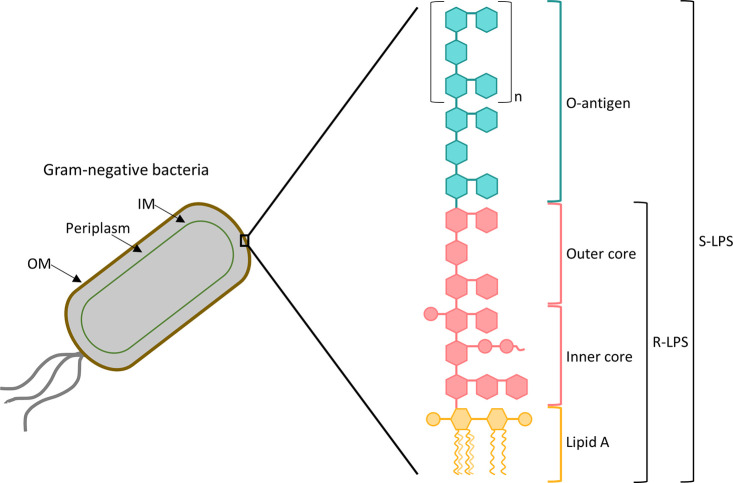
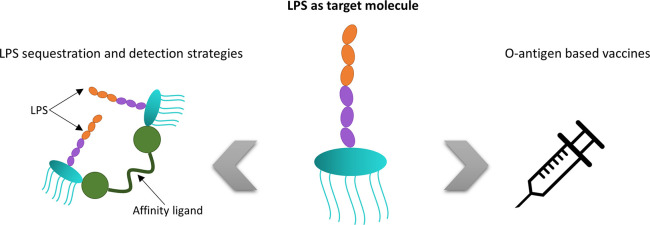
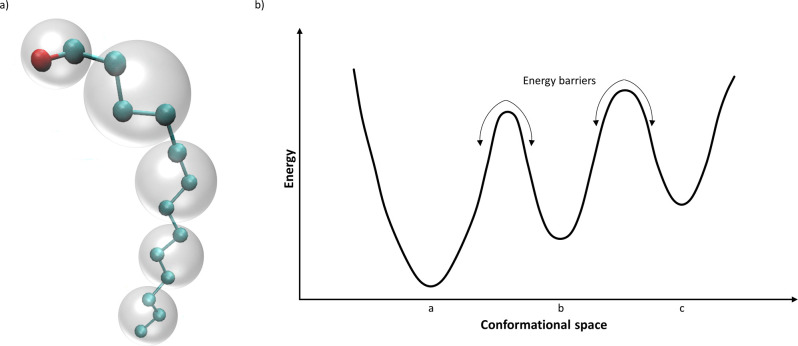
Lipopolysaccharide (LPS) is the primary component of the outer leaflet of Gram-negative bacterial outer membranes. LPS elicits an overwhelming immune response during infection, which can lead to life-threatening sepsis or septic shock for which no suitable treatment is available so far. As a result of the worldwide expanding multidrug-resistant bacteria, the occurrence and frequency of sepsis are expected to increase; thus, there is an urge to develop novel strategies for treating bacterial infections. In this regard, gaining an in-depth understanding about the ability of LPS to both stimulate the host immune system and interact with several molecules is crucial for fighting against LPS-caused infections and allowing for the rational design of novel antisepsis drugs, vaccines and LPS sequestration and detection methods. Molecular dynamics (MD) simulations, which are understood as being a computational microscope, have proven to be of significant value to understand LPS-related phenomena, driving and optimizing experimental research studies. In this work, a comprehensive review on the methods that can be combined with MD simulations, recently applied in LPS research, is provided. We focus especially on both enhanced sampling methods, which enable the exploration of more complex systems and access to larger time scales, and free energy calculation approaches. Thereby, apart from outlining several strategies for surmounting LPS-caused infections, this work reports the current state-of-the-art of the methods applied with MD simulations for moving a step forward in the development of such strategies.
脂多糖 (LPS) 是革兰氏阴性细菌外膜外层小叶的主要成分。LPS 在感染过程中引发强烈的免疫反应,可能导致危及生命的败血症或败血症性休克,目前尚无合适的治疗方法。由于全球范围内耐药菌的不断增加,预计败血症的发生和频率将会增加;因此,迫切需要开发治疗细菌感染的新策略。在这方面,深入了解 LPS 刺激宿主免疫系统和与多种分子相互作用的能力对于对抗 LPS 引起的感染以及合理设计新型抗细菌药物、疫苗和 LPS 隔离和检测方法至关重要。分子动力学 (MD) 模拟被理解为一种计算显微镜,已被证明对于理解 LPS 相关现象、推动和优化实验研究具有重要价值。在这项工作中,提供了一种关于可以与 MD 模拟相结合的方法的综合综述,这些方法最近已应用于 LPS 研究。我们特别关注增强采样方法,这些方法能够探索更复杂的系统并获得更大的时间尺度,以及自由能计算方法。因此,除了概述克服 LPS 引起的感染的几种策略外,这项工作还报告了目前应用 MD 模拟的方法的最新进展,为开发这些策略迈出了一步。