Department of Biosystems Science and Engineering (D-BSSE), ETH Zürich, Mattenstrasse 26, 4058, Basel, Switzerland.
Nat Commun. 2021 Sep 24;12(1):5651. doi: 10.1038/s41467-021-25754-6.
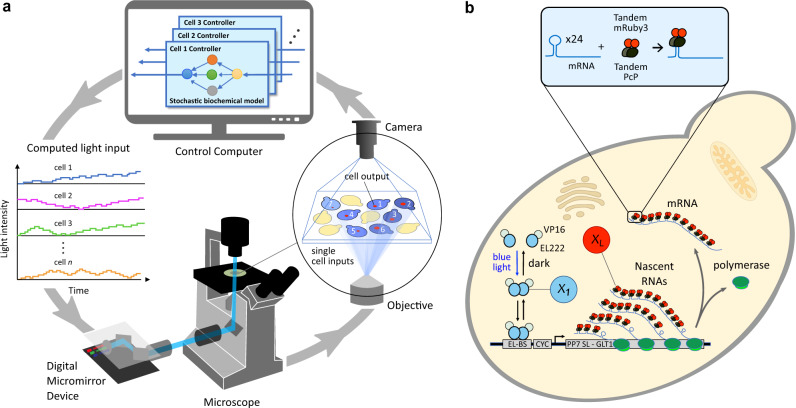
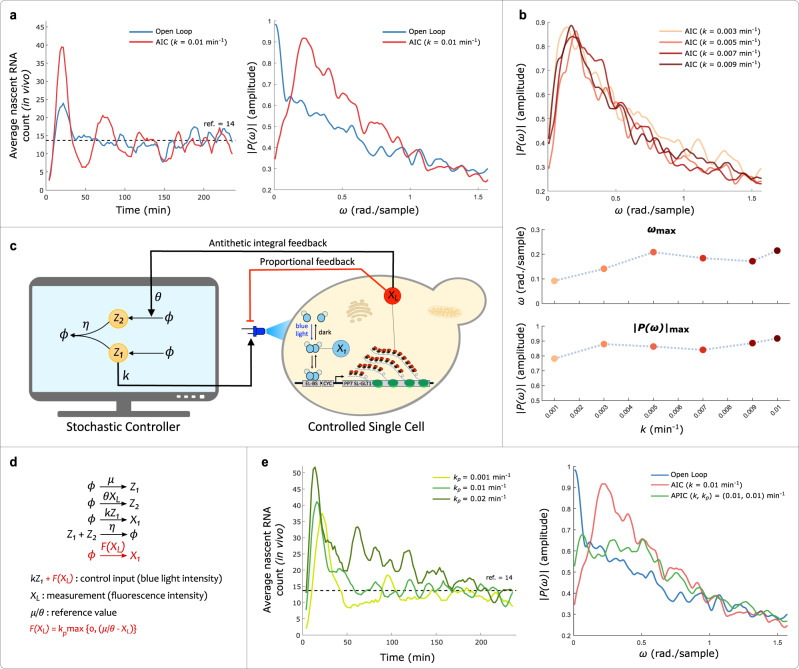
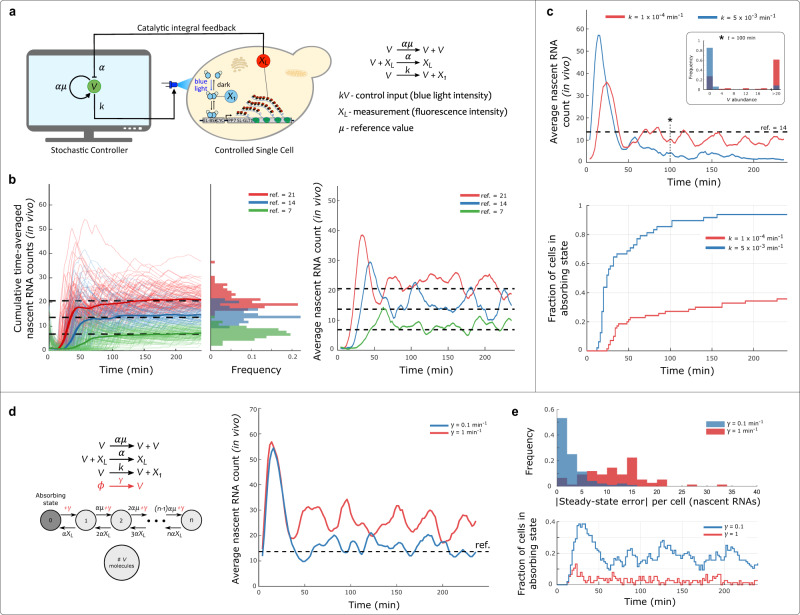
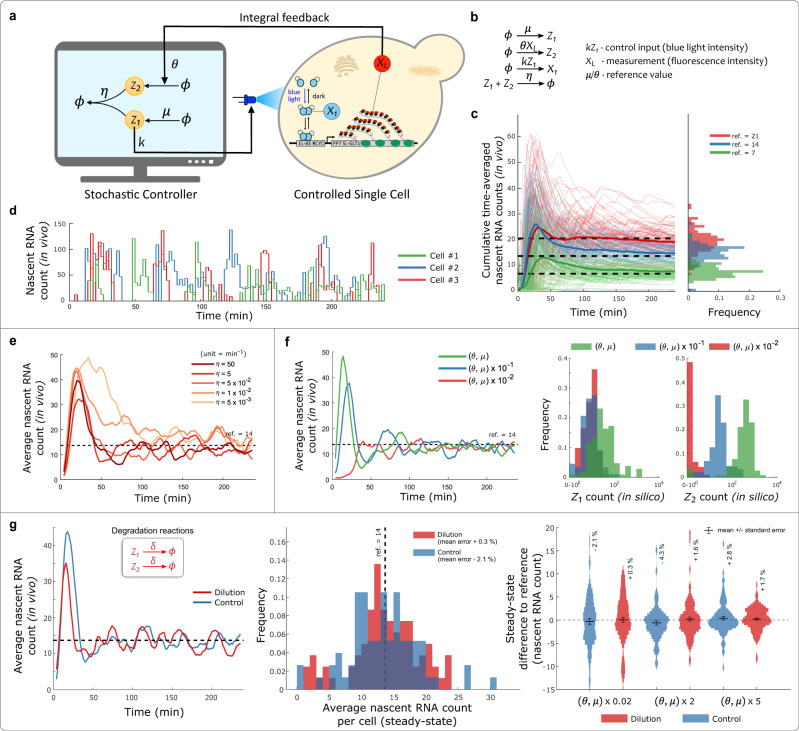
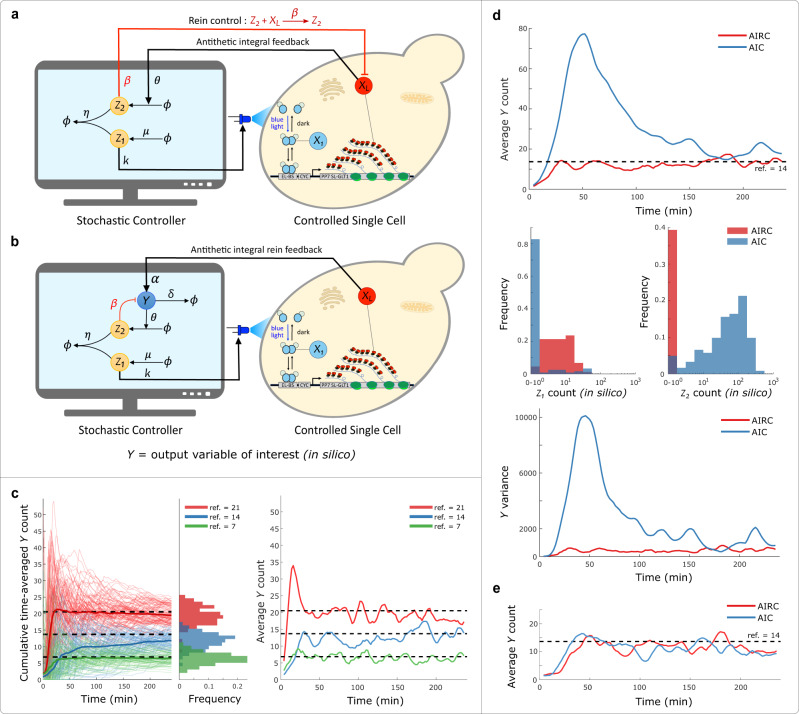
The design and implementation of synthetic circuits that operate robustly in the cellular context is fundamental for the advancement of synthetic biology. However, their practical implementation presents challenges due to low predictability of synthetic circuit design and time-intensive troubleshooting. Here, we present the Cyberloop, a testing framework to accelerate the design process and implementation of biomolecular controllers. Cellular fluorescence measurements are sent in real-time to a computer simulating candidate stochastic controllers, which in turn compute the control inputs and feed them back to the controlled cells via light stimulation. Applying this framework to yeast cells engineered with optogenetic tools, we examine and characterize different biomolecular controllers, test the impact of non-ideal circuit behaviors such as dilution on their operation, and qualitatively demonstrate improvements in controller function with certain network modifications. From this analysis, we derive conditions for desirable biomolecular controller performance, thereby avoiding pitfalls during its biological implementation.
合成电路在细胞环境中稳健运行的设计和实现是合成生物学发展的基础。然而,由于合成电路设计的可预测性低和故障排除时间长,其实际实现仍然具有挑战性。在这里,我们提出了 Cyberloop,这是一个用于加速生物分子控制器设计过程和实现的测试框架。细胞荧光测量实时发送到模拟候选随机控制器的计算机,该计算机反过来计算控制输入,并通过光刺激将其反馈给受控细胞。我们将该框架应用于经过基因工程改造的酵母细胞,使用光遗传学工具,检查和表征不同的生物分子控制器,测试非理想电路行为(如稀释)对其操作的影响,并定性地证明通过某些网络修改可以提高控制器功能。从这种分析中,我们得出了理想的生物分子控制器性能的条件,从而避免了在其生物实现过程中的陷阱。