Tanasković Marija, Erić Pavle, Patenković Aleksandra, Erić Katarina, Mihajlović Milica, Tanasić Vanja, Stanisavljević Ljubiša, Davidović Slobodan
Department of Genetics of Populations and Ecogenotoxicology, Institute for Biological Research "Siniša Stanković"-National Institute of the Republic of Serbia, University of Belgrade, Bulevar Despota Stefana 142, 11060 Belgrade, Serbia.
Center for Forensic and Applied Molecular Genetics, Faculty of Biology, University of Belgrade, Studentski trg 16, 11000 Belgrade, Serbia.
Insects. 2021 Aug 27;12(9):767. doi: 10.3390/insects12090767.
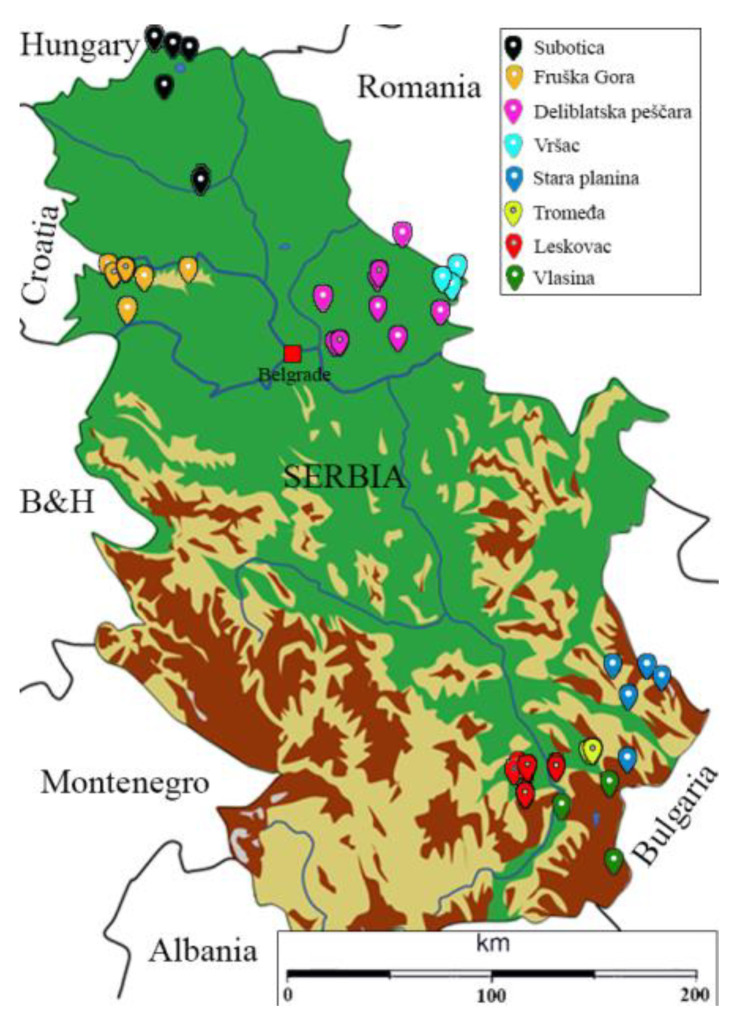
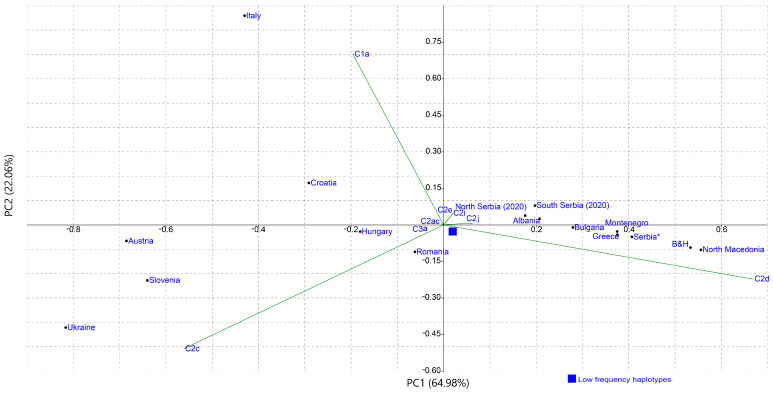
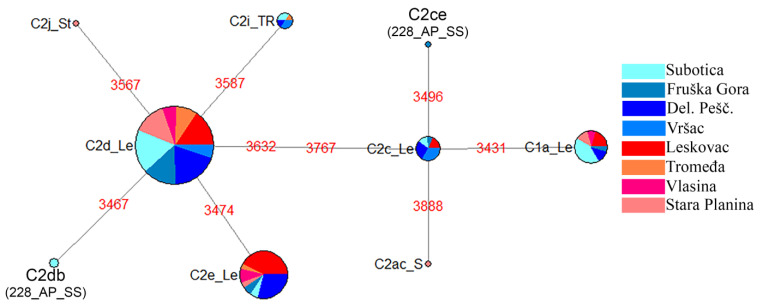
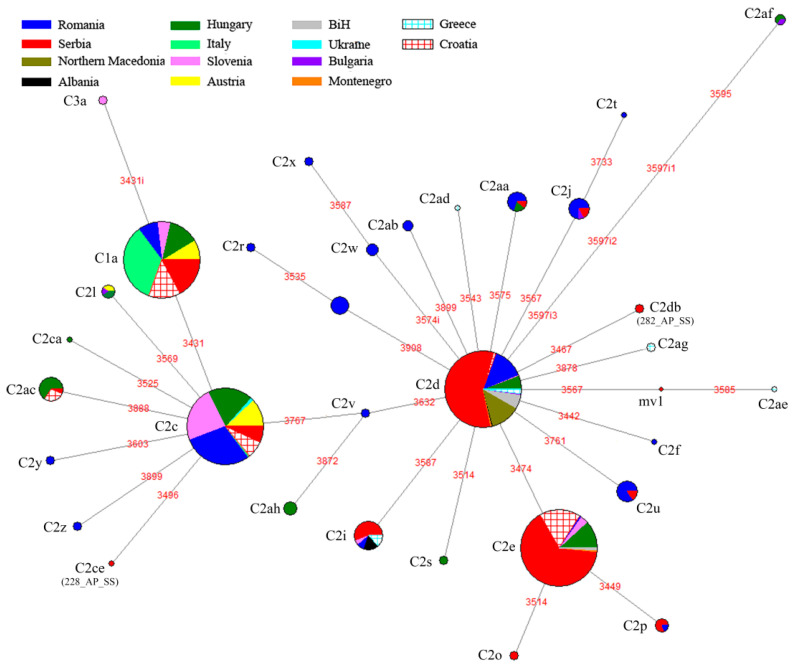
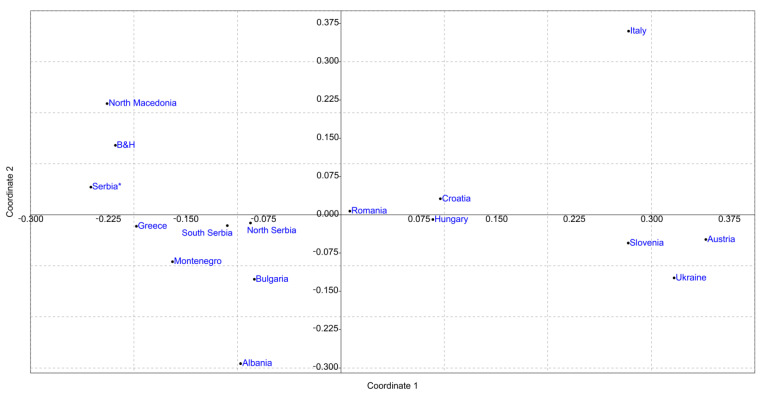
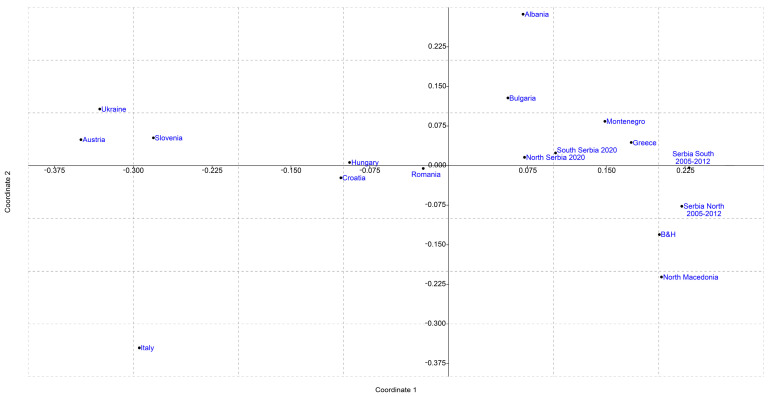
Local populations of are rapidly changing by modern beekeeping through the introduction of nonnative queens, selection and migratory beekeeping. To assess the genetic diversity of contemporary managed honey bees in Serbia, we sequenced mitochondrial intergenic region of 241 worker bees from 46 apiaries at eight localities. Nine haplotypes were observed in our samples, with C2d being the most common and widespread. To evaluate genetic diversity patterns, we compared our data with 1696 sequences from the NCBI GenBank from neighbouring countries and Serbia. All 32 detected haplotypes belonged to the Southeast Europe lineage C, with two newly described haplotypes from our sample. The most frequent haplotype was C2d, followed by C2c and C1a. To distinguish from , both previously reported in Serbia, PCR-RFLP analysis on the gene segment of mtDNA was used, and the result showed only the presence of subspecies. An MDS plot constructed on pairwise values showed significant geographical stratification. Our samples are grouped together, but distant from the Serbian dataset from the GenBank. This, with the absence of subspecies from its historic range of distribution in southern Serbia, indicates that honey bee populations are changing rapidly due to the anthropogenic influence.
通过引入非本地蜂王、选育和转地放蜂,现代养蜂业正在迅速改变当地蜜蜂种群。为评估塞尔维亚当代养殖蜜蜂的遗传多样性,我们对来自8个地区46个蜂场的241只工蜂的线粒体基因间区域进行了测序。在我们的样本中观察到9种单倍型,其中C2d最为常见且分布广泛。为评估遗传多样性模式,我们将我们的数据与来自邻国和塞尔维亚的NCBI GenBank中的1696条序列进行了比较。所有32种检测到的单倍型都属于东南欧谱系C,我们的样本中有两种新描述的单倍型。最常见的单倍型是C2d,其次是C2c和C1a。为区分塞尔维亚先前报道过的和,我们对线粒体DNA的基因片段进行了PCR-RFLP分析,结果显示只存在亚种。基于成对值构建的MDS图显示出明显的地理分层。我们的样本聚在一起,但与GenBank中的塞尔维亚数据集相距较远。这一点,再加上塞尔维亚南部历史分布范围内不存在亚种,表明由于人为影响,蜜蜂种群正在迅速变化。