Kovaničová Zuzana, Karhánek Miloslav, Kurdiová Tímea, Baláž Miroslav, Wolfrum Christian, Ukropcová Barbara, Ukropec Jozef
Institute of Experimental Endocrinology, Biomedical Research Center, Slovak Academy of Sciences, 84505 Bratislava, Slovakia.
Institute of Food, Nutrition and Health, ETH Zurich, 8603 Schwerzenbach, Switzerland.
Metabolites. 2021 Sep 12;11(9):619. doi: 10.3390/metabo11090619.
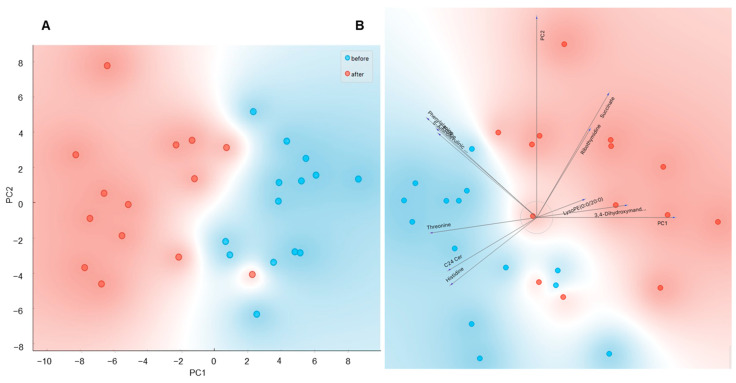
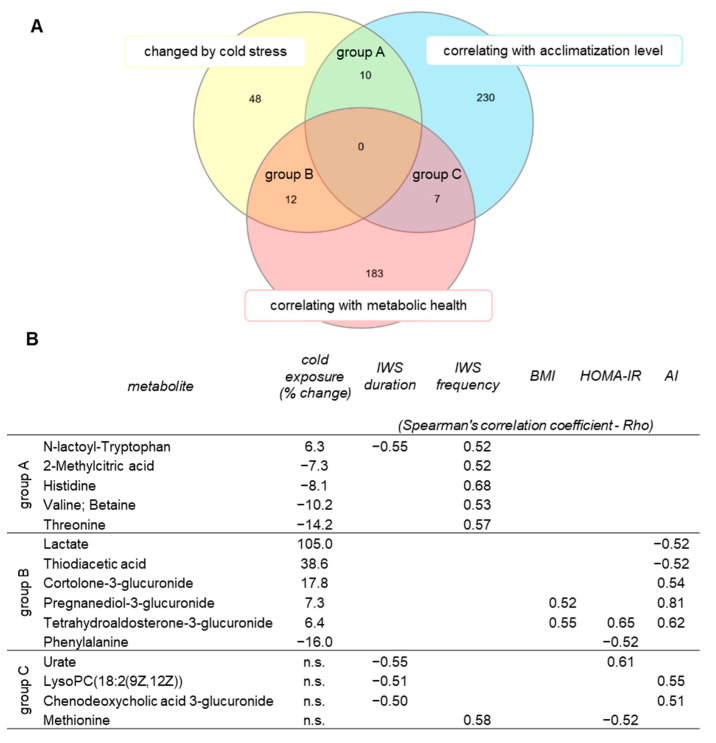
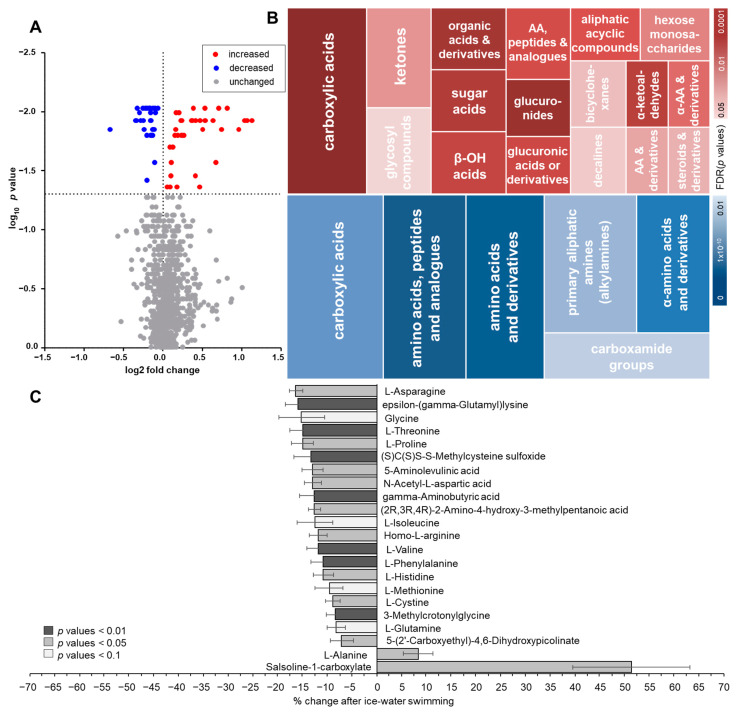
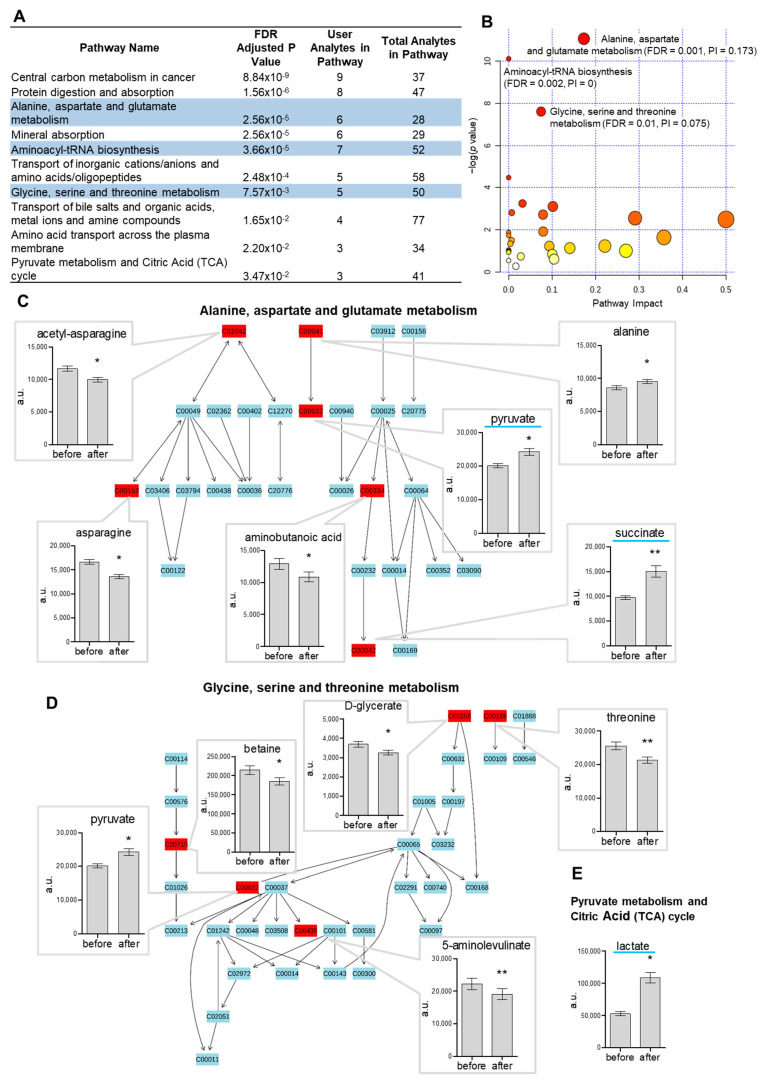
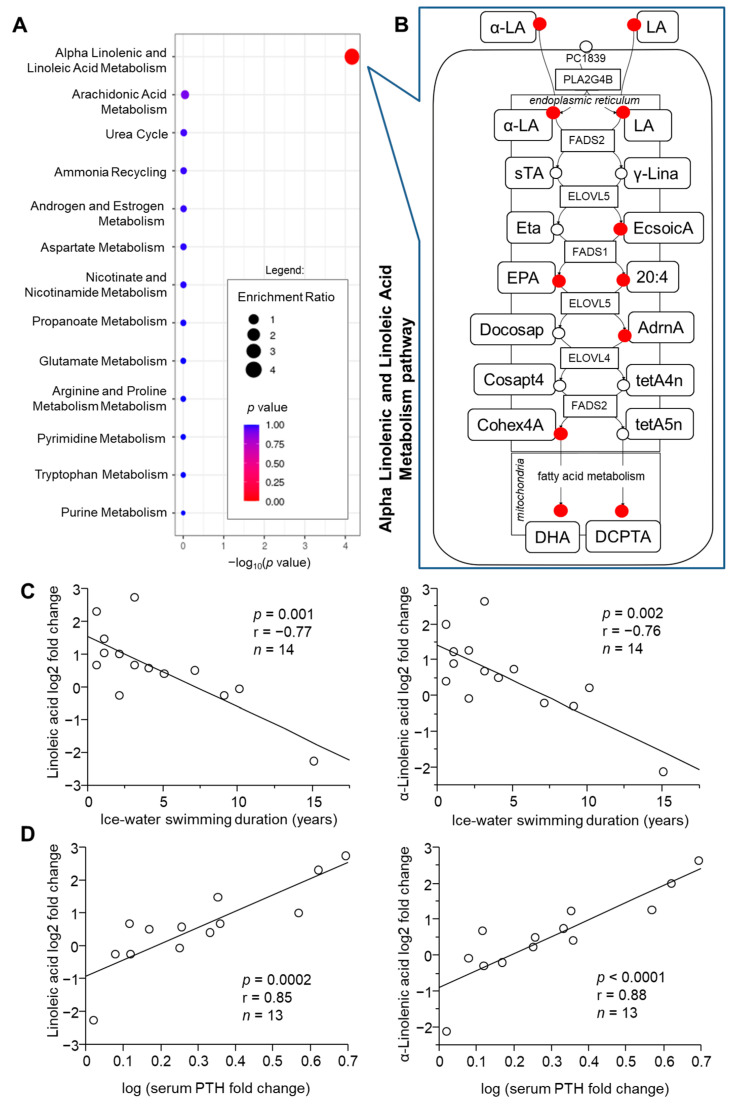
Cold exposure results in activation of metabolic processes required for fueling thermogenesis, potentially promoting improved metabolic health. However, the metabolic complexity underlying this process is not completely understood. We aimed to analyze changes in plasma metabolites related to acute cold exposure and their relationship to cold-acclimatization level and metabolic health in cold-acclimatized humans. Blood samples were obtained before and acutely after 10-15 min of ice-water swimming (<5 °C) from 14 ice-water swimmers. Using mass spectrometry, 973 plasma metabolites were measured. Ice-water swimming induced acute changes in 70 metabolites. Pathways related to amino acid metabolism were the most cold-affected and cold-induced changes in several amino acids correlated with cold-acclimatization level and/or metabolic health markers, including atherogenic lipid profile or insulin resistance. Metabolites correlating with cold-acclimatization level were enriched in the linoleic/α-linolenic acid metabolic pathway. N-lactoyl-tryptophan correlated with both cold-acclimatization level and cold-induced changes in thyroid and parathyroid hormones. Acute cold stress in cold-acclimatized humans induces changes in plasma metabolome that involve amino acids metabolism, while the linoleic and α-linolenic acid metabolism pathway seems to be affected by regular cold exposure. Metabolites related to metabolic health, thermogenic hormonal regulators and acclimatization level might represent prospective molecular factors important in metabolic adaptations to regular cold exposure.
冷暴露会激活为产热提供能量所需的代谢过程,可能促进代谢健康的改善。然而,这一过程背后的代谢复杂性尚未完全被理解。我们旨在分析与急性冷暴露相关的血浆代谢物变化,以及它们与冷适应人群的冷适应水平和代谢健康之间的关系。从14名冰水游泳者身上采集了冰水游泳(<5°C)10 - 15分钟之前和之后的血样。使用质谱法测量了973种血浆代谢物。冰水游泳引起了70种代谢物的急性变化。与氨基酸代谢相关的途径受寒冷影响最大,几种氨基酸的寒冷诱导变化与冷适应水平和/或代谢健康标志物相关,包括致动脉粥样硬化脂质谱或胰岛素抵抗。与冷适应水平相关的代谢物在亚油酸/α-亚麻酸代谢途径中富集。N-乳酰色氨酸与冷适应水平以及甲状腺和甲状旁腺激素的寒冷诱导变化均相关。冷适应人群的急性冷应激会引起血浆代谢组的变化,其中涉及氨基酸代谢,而亚油酸和α-亚麻酸代谢途径似乎受到定期冷暴露的影响。与代谢健康、产热激素调节剂和适应水平相关的代谢物可能代表了在对定期冷暴露的代谢适应中重要的潜在分子因素。