College of Animal Sciences, Zhejiang University, Hangzhou, China.
Key Laboratory of Molecular Animal Nutrition (Zhejiang University), Ministry of Education, Hangzhou, China.
Front Endocrinol (Lausanne). 2022 Feb 23;13:827523. doi: 10.3389/fendo.2022.827523. eCollection 2022.
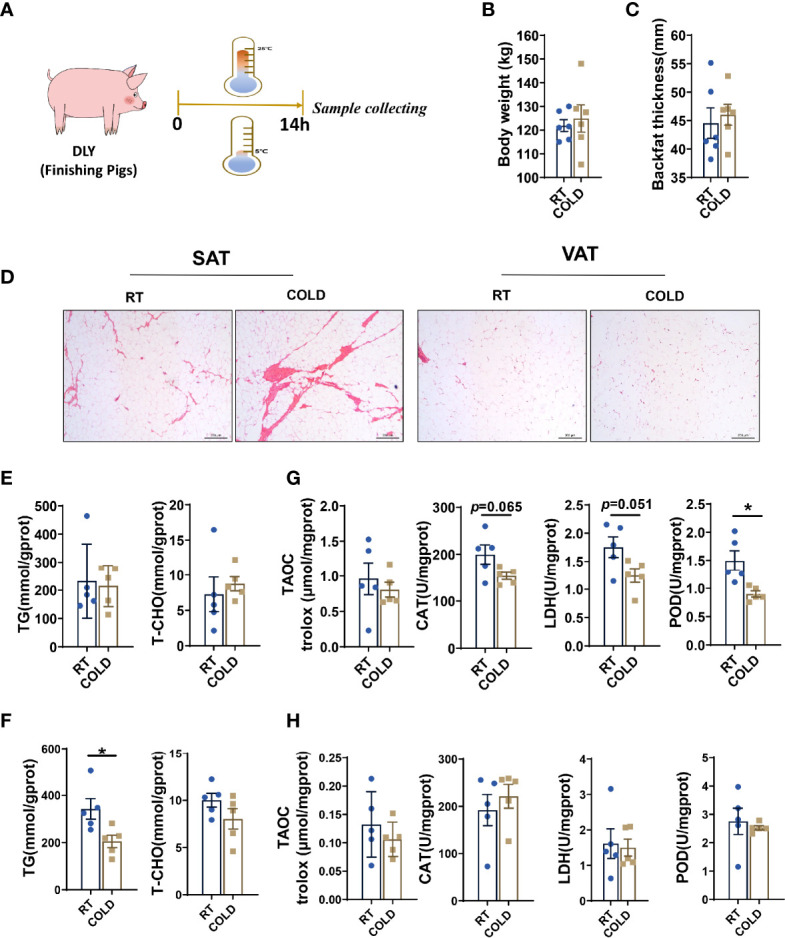
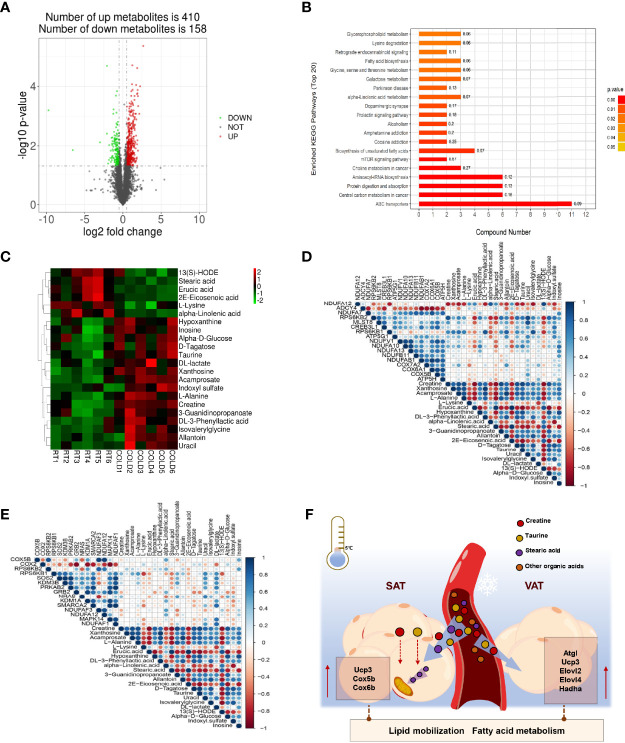
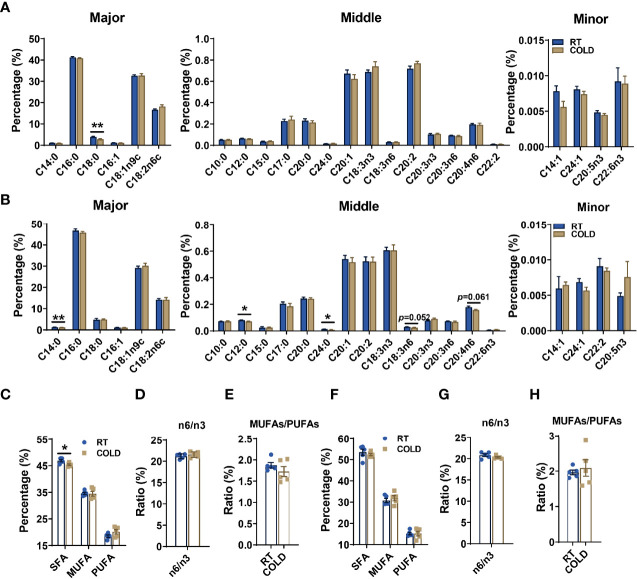
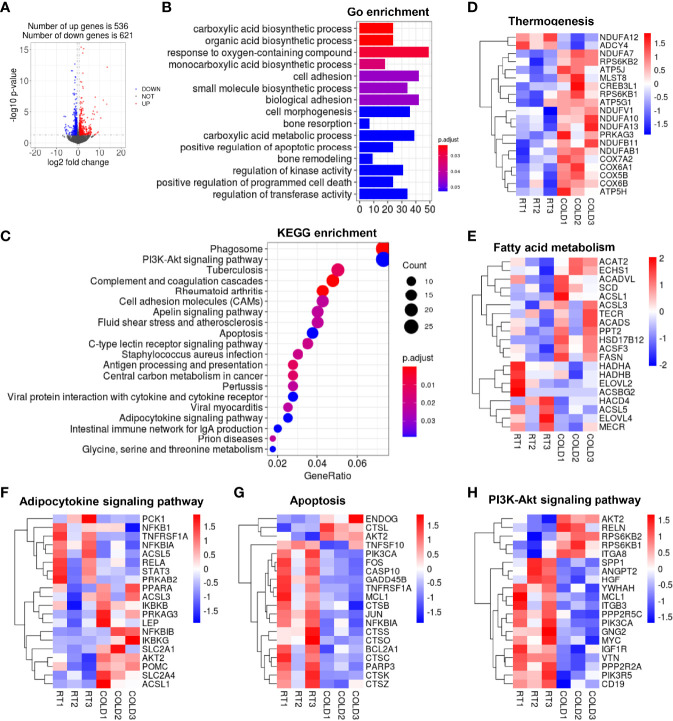
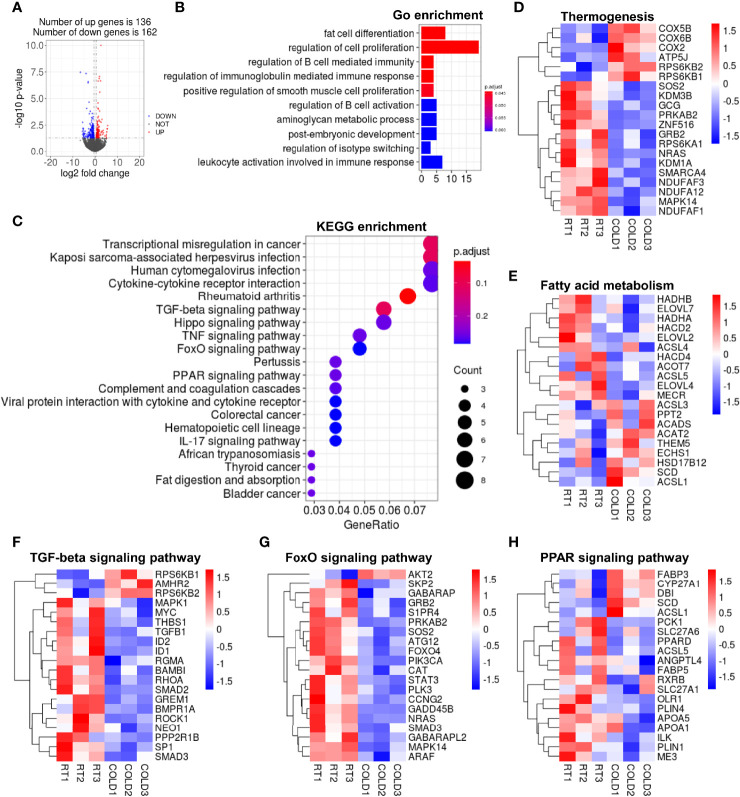
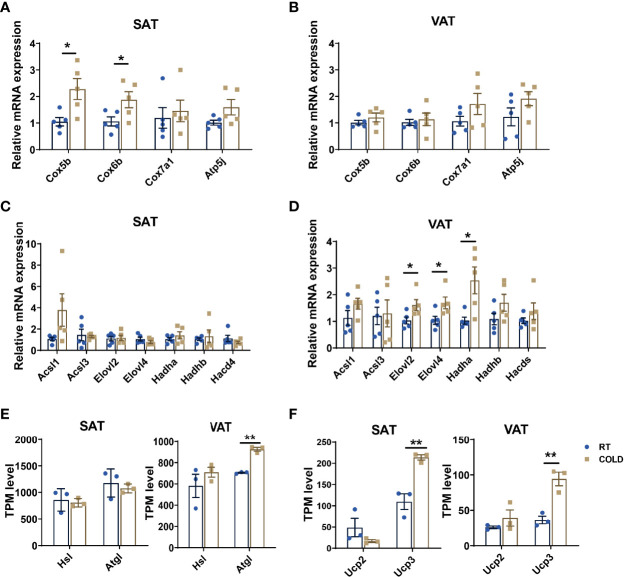
Cold exposure promotes fat oxidation and modulates the energy metabolism in adipose tissue through multiple mechanisms. However, it is still unclear about heat-generating capacity and lipid mobilization of different fat depots without functional mitochondrial uncoupling protein 1 (UCP1). In this study, we kept finishing pigs (lack a functional UCP1 gene) under cold (5-7°C) or room temperature (22-25°C) and determined the effects of overnight cold exposure on fatty acid composition and transcriptional profiles of subcutaneous adipose tissue (SAT) and visceral adipose tissue (VAT). And the plasma metabolomes of porcine was also studied by LC-MS-based untargeted metabolomics. We found that the saturated fatty acids (SFAs) content was decreased in SAT upon cold exposure. While in VAT, the relative content of lauric acid (C12:0), myristic acid (C14:0) and lignoceric acid (C24:0) were decreased without affecting total SFA content. RNA-seq results showed SAT possess active organic acid metabolism and energy mobilization upon cold exposure. Compared with SAT, cold-induced transcriptional changes were far less broad in VAT, and the differentially expressed genes (DEGs) were mainly enriched in fat cell differentiation and cell proliferation. Moreover, we found that the contents of organic acids like creatine, acamprosate, DL-3-phenyllactic acid and taurine were increased in plasma upon overnight cold treatment, suggesting that cold exposure induced lipid and fatty acid metabolism in white adipose tissue (WAT) might be regulated by functions of organic acids. These results provide new insights into the effects of short-term cold exposure on lipid metabolism in adipose tissues without functional UCP1.
冷暴露通过多种机制促进脂肪氧化和调节脂肪组织的能量代谢。然而,在没有功能性解偶联蛋白 1(UCP1)的情况下,不同脂肪组织的产热能力和脂动员能力仍不清楚。在这项研究中,我们让长白猪(缺乏功能性 UCP1 基因)在冷(5-7°C)或室温(22-25°C)下过夜,并确定过夜冷暴露对皮下脂肪组织(SAT)和内脏脂肪组织(VAT)的脂肪酸组成和转录谱的影响。我们还通过基于 LC-MS 的非靶向代谢组学研究了猪的血浆代谢组。我们发现冷暴露会使 SAT 中的饱和脂肪酸(SFAs)含量降低。而在 VAT 中,月桂酸(C12:0)、肉豆蔻酸(C14:0)和愈创木酸(C24:0)的相对含量降低,但总 SFA 含量不受影响。RNA-seq 结果表明,冷暴露会使 SAT 活跃地进行有机酸代谢和能量动员。与 SAT 相比,冷诱导的转录变化在 VAT 中远远不那么广泛,差异表达基因(DEGs)主要富集在脂肪细胞分化和细胞增殖。此外,我们发现,在 overnight 冷处理后,血浆中像肌酸、安非他命、DL-3-苯乳酸和牛磺酸等有机酸的含量增加,表明冷暴露可能通过有机酸的功能调节白色脂肪组织(WAT)中的脂质和脂肪酸代谢。这些结果为短期冷暴露对无功能性 UCP1 的脂肪组织中脂质代谢的影响提供了新的见解。