Universidad de Buenos Aires. Facultad de Odontología. Cátedra de Endodoncia. Buenos Aires, Argentina.
Acta Odontol Latinoam. 2021 Aug 1;34(2):166-172. doi: 10.54589/aol.34/2/166.
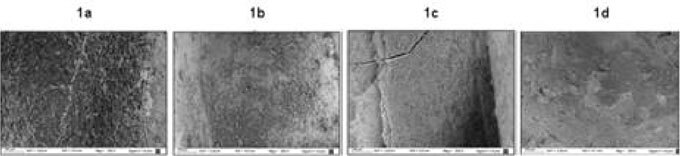
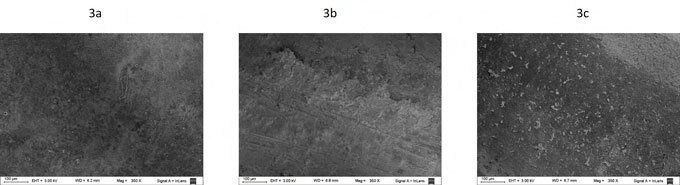
Adhesively cemented fiber-reinforced composite posts are commonly used to reconstruct endodontically treated teeth. Adhesion to intraradicular dentin is complex, and close contact between the resin cements and the dentin is essential. The removal of the smear layer following post space preparation (secondary smear layer) can improve this integration. Different mechanical systems have been used to activate the irrigant inside the root canal. The purpose of this study was to compare, ex-vivo, the removal of the smear layer from the walls of the immediate post space preparation by the action of three mechanized instruments. Forty premolar specimens with a single root canal were selected, endodontically treated, and shaped for glass fiber post cementation with Peeso reamer #1 (Dentsply Sirona, Switzerland) and Macrolock finishing drill #3 (RTD, France). The specimens were randomly divided into 4 groups (n=10): Group C (control); Group PUI (passive ultrasonic irrigation); Group CEP (Rotoprox brush, Hager Werken, Germany) and Group XP (XP-endo Finisher, FKG Dentaire, Switzerland). Post space surfaces were cleaned with 3mL of distilled water; each specimen root split longitudinally to expose the root canals, and prepared for examination in a scanning electron microscope at magnification 350X. The results were analyzed using the Kruskal-Wallis and Friedman tests (p>0.05). RESULTS: Statistically significant differences (p<0.05) were found between Groups C and XP in all three root regions, but not between Groups C, CEP and PIU. Of these, Group CEP showed a better trend in the results of the coronary and middle thirds, without significant difference with Group XP. Although it was difficult to achieve a clean dentin surface after preparation for the fiberglass post, the XP-endo Finisher was the most efficient in removing secondary smear layer, followed by the Rotoprox conical brush.
黏结纤维增强复合材料桩常用于修复根管治疗后的牙齿。牙本质内的黏附较为复杂,树脂水门汀与牙本质紧密接触至关重要。根管预备后去除玷污层(继发性玷污层)可以改善这种结合。不同的机械系统已被用于激活根管内的冲洗液。本研究旨在体外比较三种机械仪器作用下即刻桩道预备后玷污层从管壁的去除情况。选择 40 个具有单根管的前磨牙标本,进行根管内治疗,并使用 Peeso 扩孔钻#1(登士柏西诺德,瑞士)和 Macrolock 精修钻#3(RTD,法国)进行玻璃纤维桩黏结预备。标本随机分为 4 组(n=10):C 组(对照组);PUI 组(被动超声冲洗);CEP 组(Rotoprox 刷,德国 HagerWerken)和 XP 组(XP-endo Finisher,瑞士 FKG Dentaire)。用 3mL 蒸馏水清洁桩道表面;每个标本的根部分别纵向劈开,暴露根管,在扫描电子显微镜下放大 350X 进行检查。使用 Kruskal-Wallis 和 Friedman 检验分析结果(p>0.05)。结果:在所有三个根区,C 组和 XP 组之间的差异均有统计学意义(p<0.05),但 C 组、CEP 组和 PUI 组之间无差异。其中,CEP 组在冠部和中部的结果中显示出更好的趋势,与 XP 组无显著差异。尽管纤维桩预备后难以获得清洁的牙本质表面,但 XP-endo Finisher 去除继发性玷污层的效果最有效,其次是 Rotoprox 锥形刷。