Department of Sports Medicine, Institute of Sports Sciences, Justus-Liebig-University Giessen, Giessen, Germany.
PLoS One. 2013 Nov 13;8(11):e79069. doi: 10.1371/journal.pone.0079069. eCollection 2013.
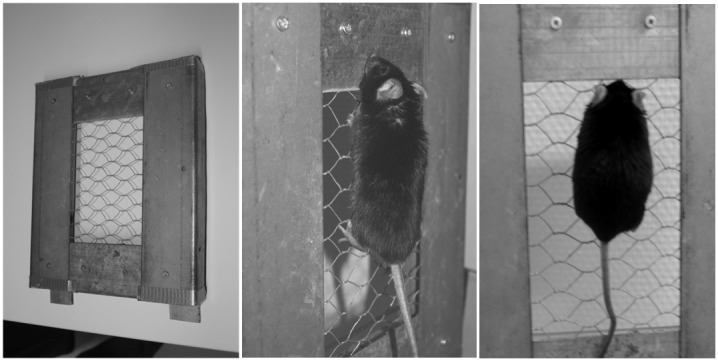
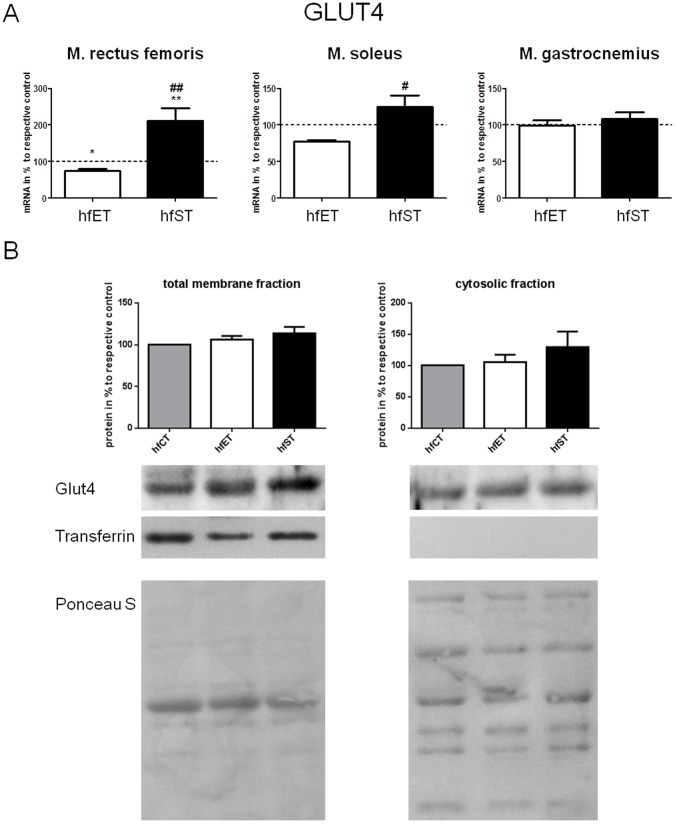
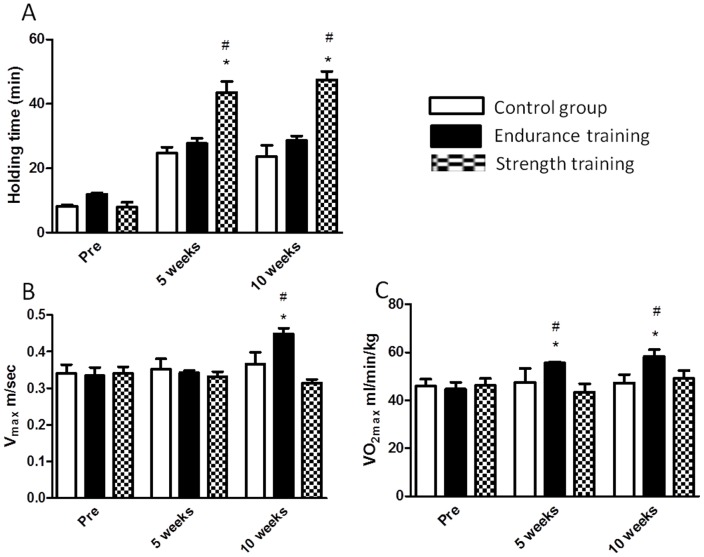
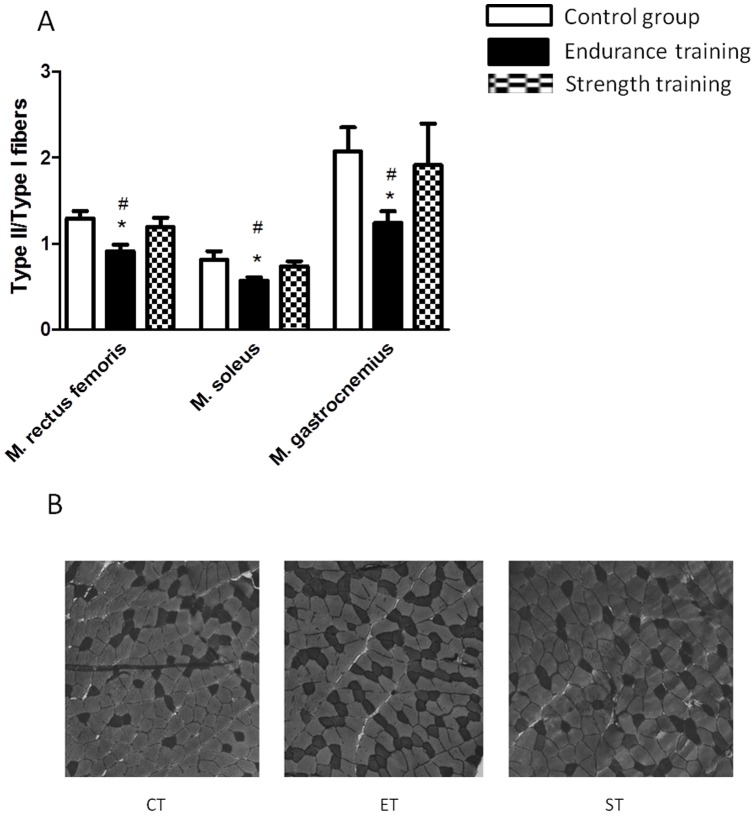
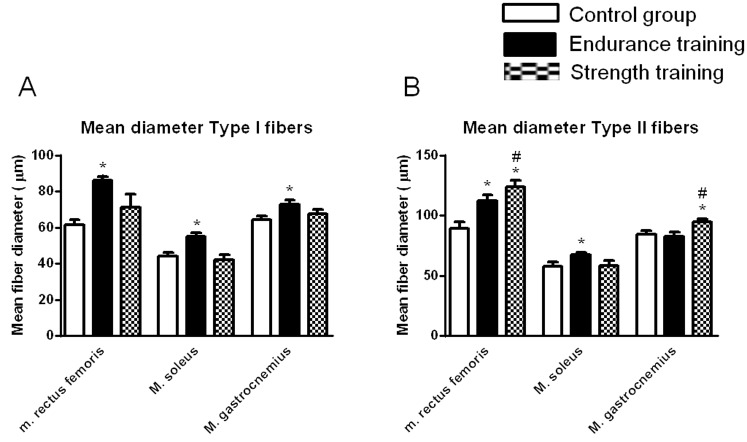
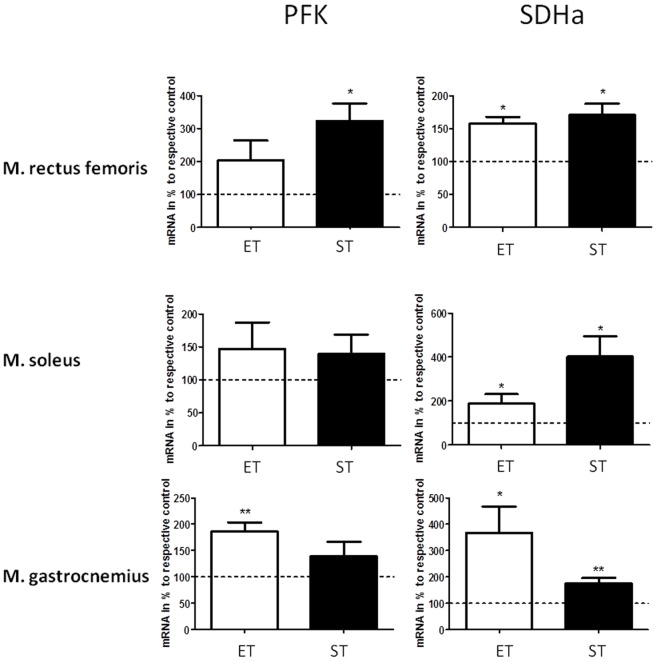
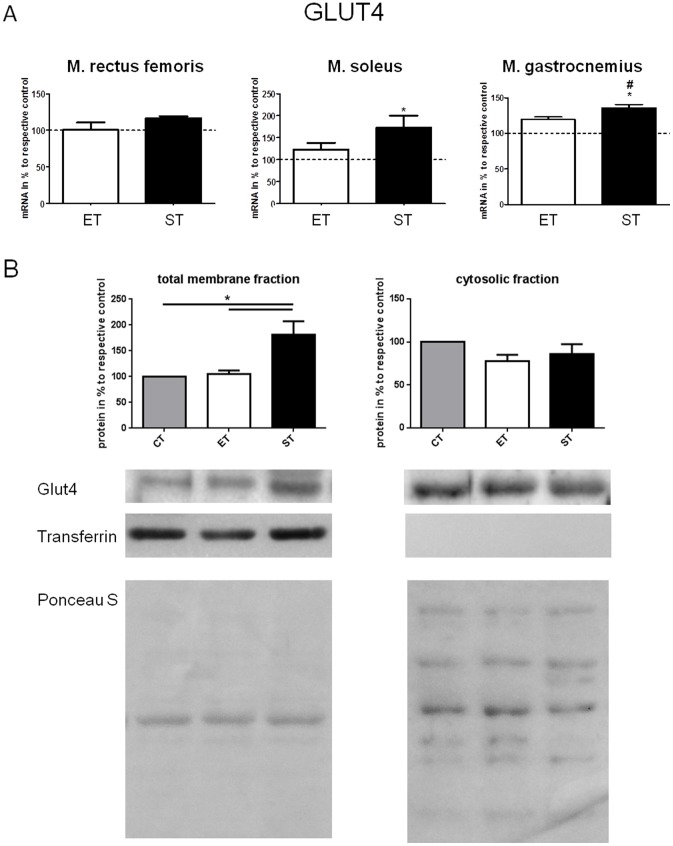
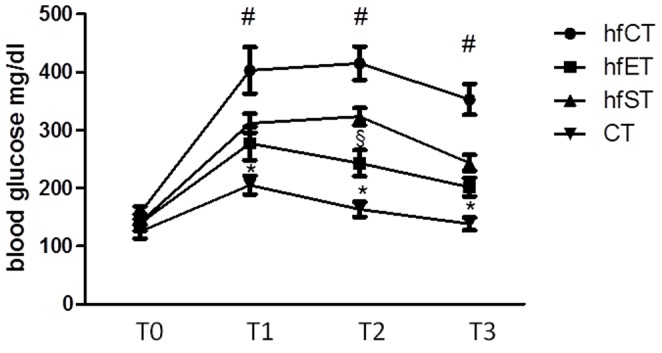
Exercise training induces muscular adaptations that are highly specific to the type of exercise. For a systematic study of the differentiated exercise adaptations on a molecular level mouse models have been used successfully. The aim of the current study was to develop a suitable mouse model of isometric strength exercise training characterized by specific adaptations known from strength training. C57BL/6 mice performed an isometric strength training (ST) for 10 weeks 5 days/week. Additionally, either a sedentary control group (CT) or a regular endurance training group (ET) groups were used as controls. Performance capacity was determined by maximum holding time (MHT) and treadmill spirometry, respectively. Furthermore, muscle fiber types and diameter, muscular concentration of phosphofructokinase 1 (PFK), succinate dehydrogenase (SDHa), and glucose transporter type 4 (GLUT4) were determined. In a further approach, the effect of ST on glucose intolerance was tested in diabetic mice. In mice of the ST group we observed an increase of MHT in isometric strength tests, a type II fiber hypertrophy, and an increased GLUT4 protein content in the membrane fraction. In contrast, in mice of the ET group an increase of VO(2max), a shift to oxidative muscle fiber type and an increase of oxidative enzyme content was measured. Furthermore strength training was effective in reducing glucose intolerance in mice fed a high fat diet. An effective murine strength training model was developed and evaluated, which revealed marked differences in adaptations known from endurance training. This approach seems also suitable to test for therapeutical effects of strength training.
运动训练可引起肌肉适应,这种适应高度依赖于运动的类型。为了在分子水平上对不同的运动适应进行系统研究,成功地使用了小鼠模型。本研究的目的是开发一种合适的等长力量训练小鼠模型,其特征为具有力量训练中已知的特异性适应。C57BL/6 小鼠进行 10 周的等长力量训练(ST),每周 5 天。此外,还使用了久坐对照组(CT)或常规耐力训练组(ET)作为对照。性能能力通过最大保持时间(MHT)和跑步机呼吸功能测定法分别确定。此外,还测定了肌纤维类型和直径、磷酸果糖激酶 1(PFK)、琥珀酸脱氢酶(SDHa)和葡萄糖转运蛋白 4(GLUT4)的肌肉浓度。在进一步的方法中,在糖尿病小鼠中测试了 ST 对葡萄糖不耐受的影响。在 ST 组的小鼠中,我们观察到等长力量测试中的 MHT 增加、II 型纤维肥大以及膜部分的 GLUT4 蛋白含量增加。相比之下,在 ET 组的小鼠中,观察到 VO2max 增加、肌肉纤维类型向氧化型转变以及氧化酶含量增加。此外,力量训练在减少高脂肪饮食喂养的小鼠的葡萄糖不耐受方面是有效的。开发并评估了一种有效的小鼠力量训练模型,该模型揭示了与耐力训练中已知的适应存在明显差异。这种方法似乎也适用于测试力量训练的治疗效果。