Liu Wangta, Lin Li-Ching, Wang Pei-Ju, Chen Yan-Ning, Wang Sheng-Chieh, Chuang Ya-Ting, Tsai I-Hsuan, Yu Szu-Yin, Chang Fang-Rong, Cheng Yuan-Bin, Huang Li-Chen, Huang Ming-Yii, Chang Hsueh-Wei
Department of Biotechnology, Kaohsiung Medical University, Kaohsiung 80708, Taiwan.
Department of Radiation Oncology, Chi-Mei Foundation Medical Center, Tainan 71004, Taiwan.
Antioxidants (Basel). 2021 Sep 2;10(9):1410. doi: 10.3390/antiox10091410.
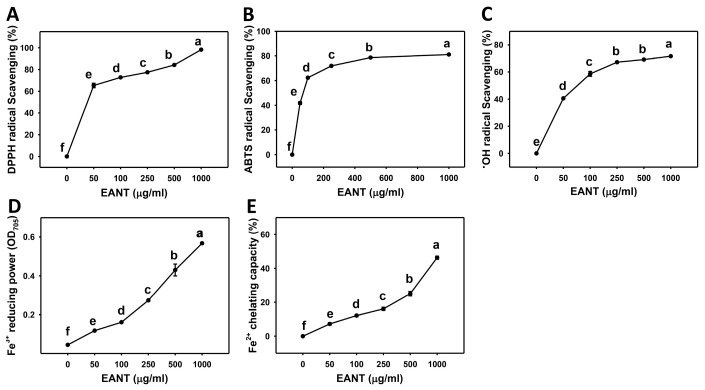
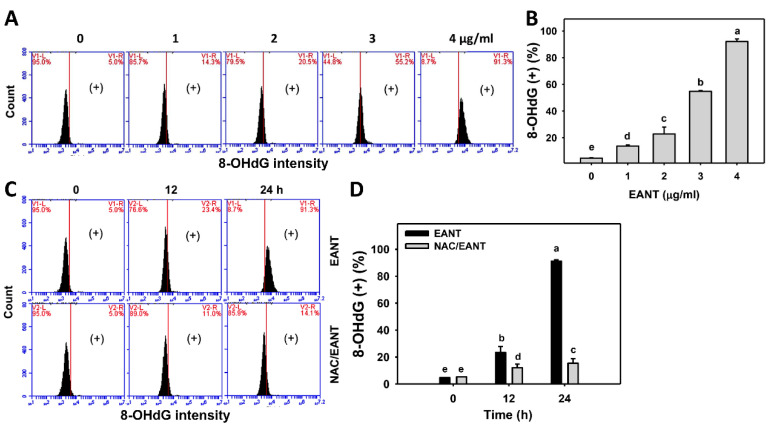
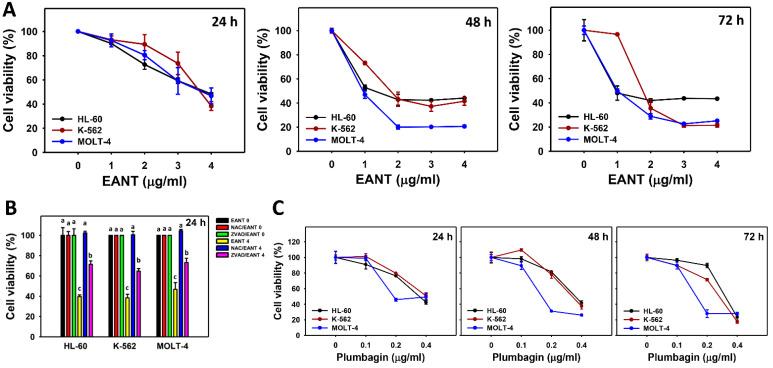
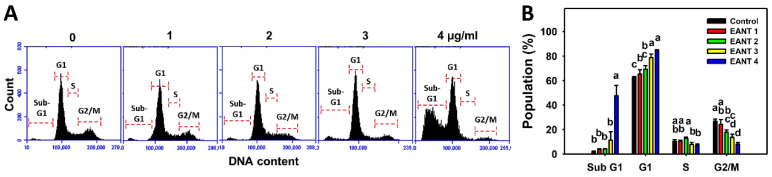
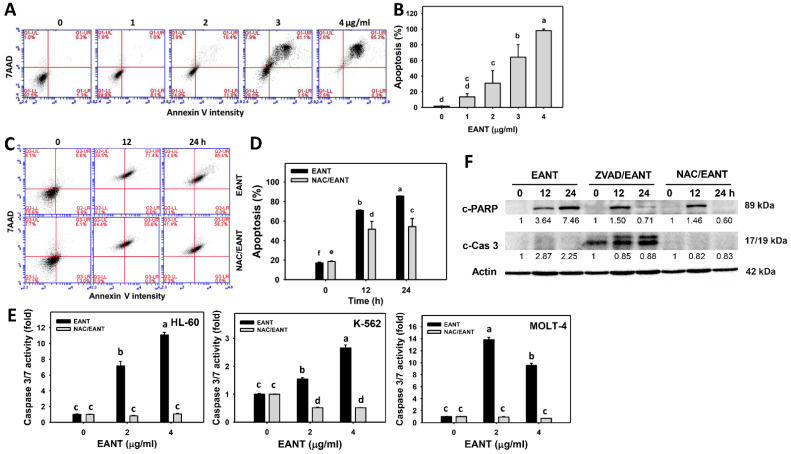
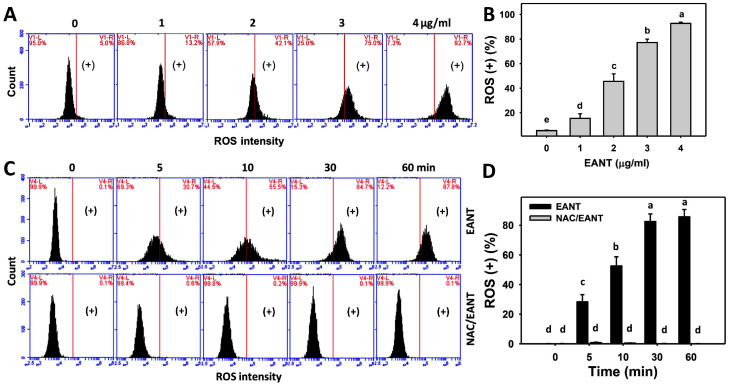
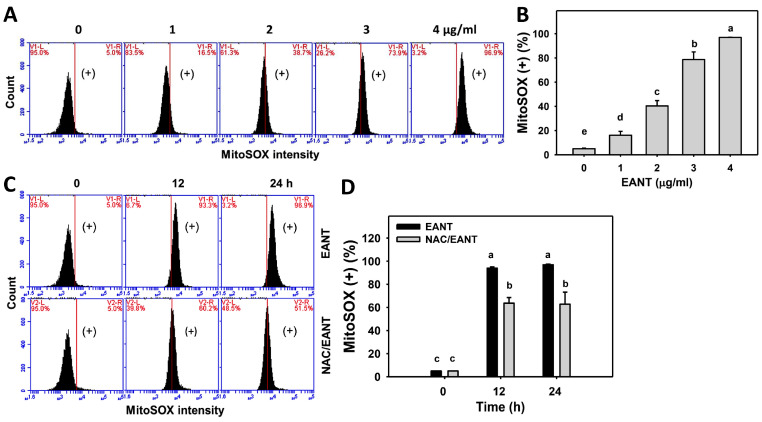
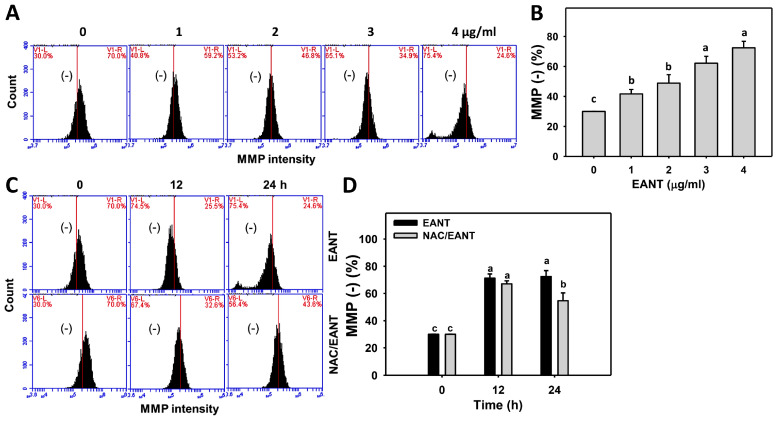
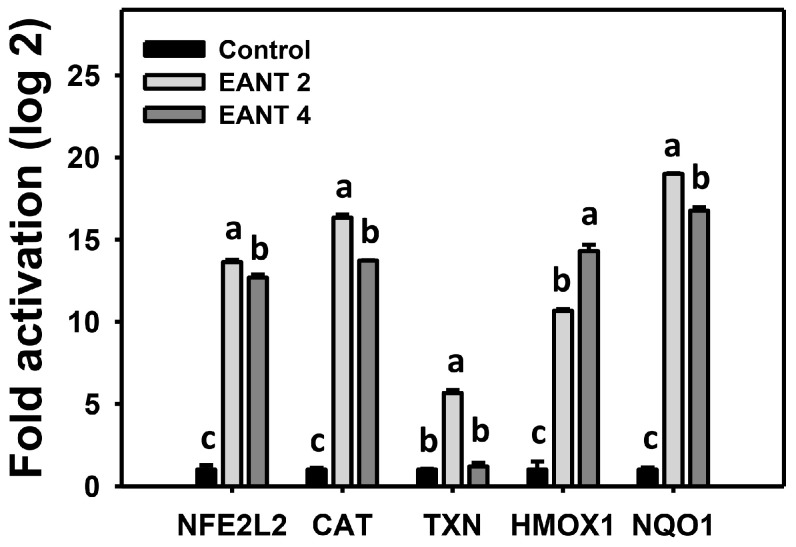
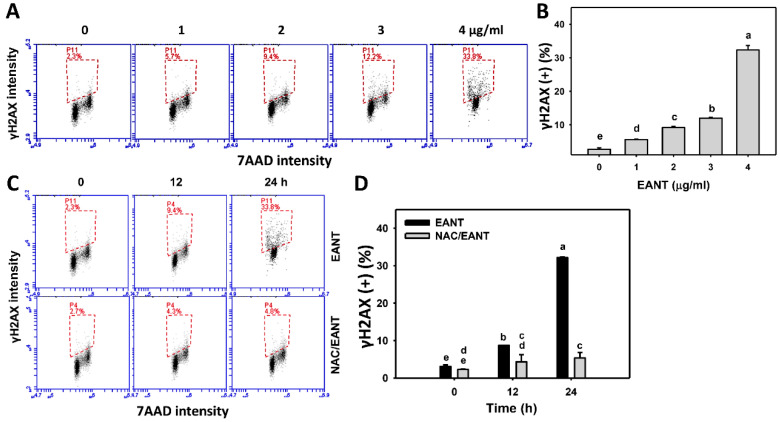
Several kinds of solvents have been applied to extractions exhibiting antioxidant and anticancer effects. However, they were rarely investigated for ethyl acetate extract (EANT), especially leukemia cells. The purpose of the present study was to evaluate the antioxidant properties and explore the antiproliferation impact and mechanism of EANT in leukemia cells. Five standard assays demonstrated that EANT exhibits antioxidant capability. In the cell line model, EANT dose-responsively inhibited cell viabilities of three leukemia cell lines (HL-60, K-562, and MOLT-4) based on 24 h MTS assays, which were reverted by pretreating oxidative stress and apoptosis inhibitors (-acetylcysteine and Z-VAD-FMK). Due to similar sensitivities among the three cell lines, leukemia HL-60 cells were chosen for exploring antiproliferation mechanisms. EANT caused subG1 and G1 cumulations, triggered annexin V-detected apoptosis, activated apoptotic caspase 3/7 activity, and induced poly ADP-ribose polymerase expression. Moreover, reactive oxygen species, mitochondrial superoxide, and mitochondrial membrane depolarization were generated by EANT, which was reverted by -acetylcysteine. The antioxidant response to oxidative stress showed that EANT upregulated mRNA expressions for nuclear factor erythroid 2-like 2 (), catalase (), thioredoxin (), heme oxygenase 1 (), and NAD(P)H quinone dehydrogenase 1 () genes. Moreover, these oxidative stresses led to DNA damage (γH2AX and 8-hydroxy-2-deoxyguanosine) and were alleviated by -acetylcysteine. Taken together, EANT demonstrated oxidative stress-dependent anti-leukemia ability to HL-60 cells associated with apoptosis and DNA damage.
几种溶剂已被应用于具有抗氧化和抗癌作用的提取物中。然而,很少有人对乙酸乙酯提取物(EANT)进行研究,尤其是对白血病细胞的研究。本研究的目的是评估EANT的抗氧化特性,并探讨其对白血病细胞的抗增殖作用及机制。五种标准检测方法表明EANT具有抗氧化能力。在细胞系模型中,基于24小时的MTS检测,EANT呈剂量依赖性地抑制三种白血病细胞系(HL-60、K-562和MOLT-4)的细胞活力,而预先处理氧化应激和凋亡抑制剂(N-乙酰半胱氨酸和Z-VAD-FMK)可逆转这种抑制作用。由于这三种细胞系的敏感性相似,因此选择白血病HL-60细胞来探索抗增殖机制。EANT导致亚G1期和G1期积累,引发膜联蛋白V检测到的凋亡,激活凋亡性半胱天冬酶3/7活性,并诱导聚ADP-核糖聚合酶表达。此外,EANT产生了活性氧、线粒体超氧化物和线粒体膜去极化,而N-乙酰半胱氨酸可逆转这种现象。对氧化应激的抗氧化反应表明,EANT上调了核因子红细胞2样2(Nrf2)、过氧化氢酶(CAT)、硫氧还蛋白(Trx)、血红素加氧酶1(HO-1)和NAD(P)H醌脱氢酶1(NQO1)基因的mRNA表达。此外,这些氧化应激导致DNA损伤(γH2AX和8-羟基-2-脱氧鸟苷),而N-乙酰半胱氨酸可减轻这种损伤。综上所述,EANT对HL-60细胞具有氧化应激依赖性的抗白血病能力,与凋亡和DNA损伤有关。