Miranda Carla, Contente Diogo, Igrejas Gilberto, Câmara Sandra P A, Dapkevicius Maria de Lurdes Enes, Poeta Patrícia
Microbiology and Antibiotic Resistance Team (MicroART), University of Trás-os-Montes and Alto Douro, 5000-801 Vila Real, Portugal.
Department of Veterinary Sciences, University of Trás-os-Montes and Alto Douro, 5000-801 Vila Real, Portugal.
Foods. 2021 Sep 4;10(9):2092. doi: 10.3390/foods10092092.
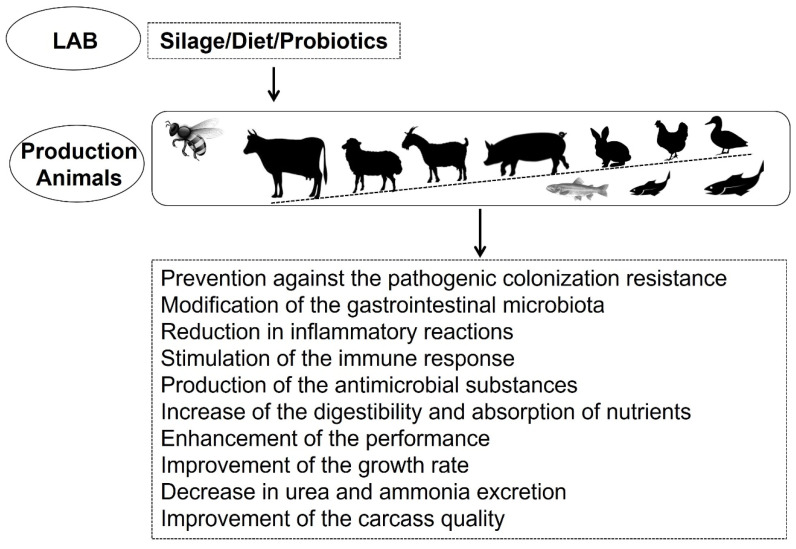
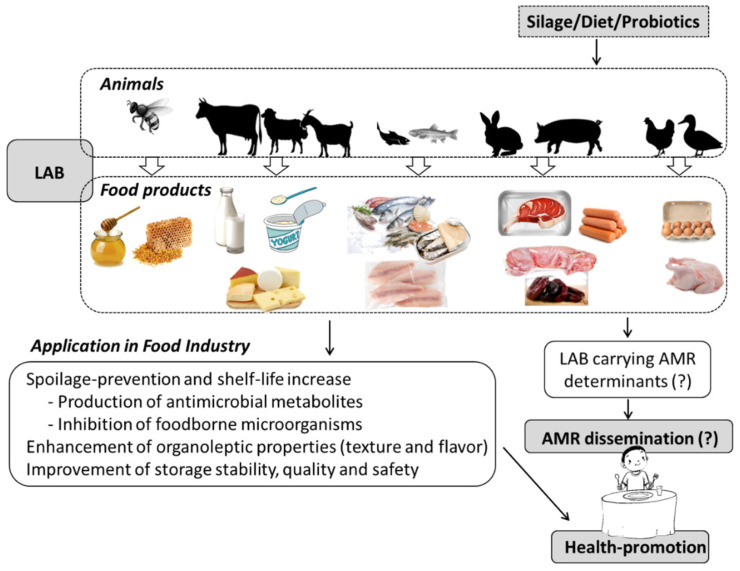
Animal products, in particular dairy and fermented products, are major natural sources of lactic acid bacteria (LAB). These are known for their antimicrobial properties, as well as for their roles in organoleptic changes, antioxidant activity, nutrient digestibility, the release of peptides and polysaccharides, amino acid decarboxylation, and biogenic amine production and degradation. Due to their antimicrobial properties, LAB are used in humans and in animals, with beneficial effects, as probiotics or in the treatment of a variety of diseases. In livestock production, LAB contribute to animal performance, health, and productivity. In the food industry, LAB are applied as bioprotective and biopreservation agents, contributing to improve food safety and quality. However, some studies have described resistance to relevant antibiotics in LAB, with the concomitant risks associated with the transfer of antibiotic resistance genes to foodborne pathogens and their potential dissemination throughout the food chain and the environment. Here, we summarize the application of LAB in livestock and animal products, as well as the health impact of LAB in animal food products. In general, the beneficial effects of LAB on the human food chain seem to outweigh the potential risks associated with their consumption as part of animal and human diets. However, further studies and continuous monitorization efforts are needed to ensure their safe application in animal products and in the control of pathogenic microorganisms, preventing the possible risks associated with antibiotic resistance and, thus, protecting public health.
动物产品,尤其是乳制品和发酵产品,是乳酸菌(LAB)的主要天然来源。这些细菌以其抗菌特性以及在感官变化、抗氧化活性、营养物质消化率、肽和多糖的释放、氨基酸脱羧以及生物胺的产生和降解中的作用而闻名。由于其抗菌特性,乳酸菌被用于人类和动物,作为益生菌或用于治疗多种疾病,具有有益效果。在畜牧生产中,乳酸菌有助于提高动物性能、健康和生产力。在食品工业中,乳酸菌被用作生物保护和生物保鲜剂,有助于提高食品安全和质量。然而,一些研究描述了乳酸菌对相关抗生素的耐药性,以及随之而来的抗生素耐药基因转移到食源性病原体并在整个食物链和环境中潜在传播的风险。在此,我们总结了乳酸菌在畜牧和动物产品中的应用,以及乳酸菌对动物食品的健康影响。总体而言,乳酸菌对人类食物链的有益影响似乎超过了作为动物和人类饮食一部分食用它们所带来的潜在风险。然而,需要进一步研究和持续监测,以确保它们在动物产品中的安全应用以及对致病微生物的控制,防止与抗生素耐药性相关的潜在风险,从而保护公众健康。