National Institute for Viral Disease Control and Prevention, Chinese Center for Disease Control and Prevention (China CDC), Beijing 102206, China.
State Key Laboratory of Resources and Environmental Information System, Institute of Geographic Sciences and Natural Resources Research, Chinese Academy of Sciences, Beijing 100101, China.
Int J Environ Res Public Health. 2021 Sep 10;18(18):9535. doi: 10.3390/ijerph18189535.
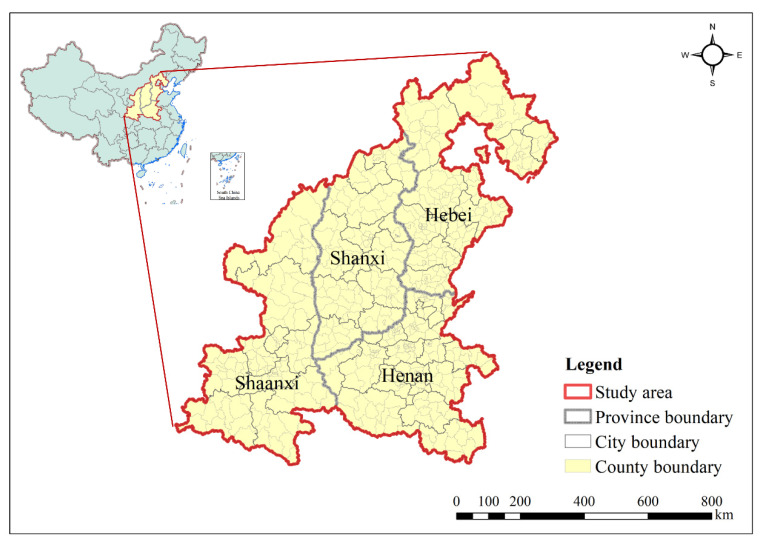
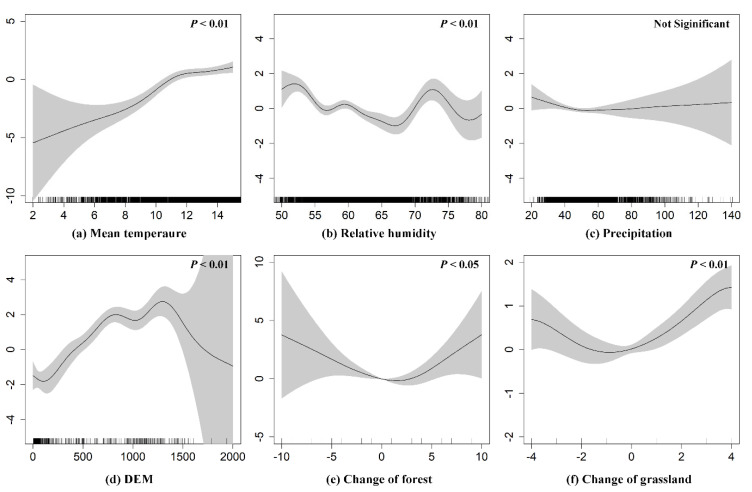
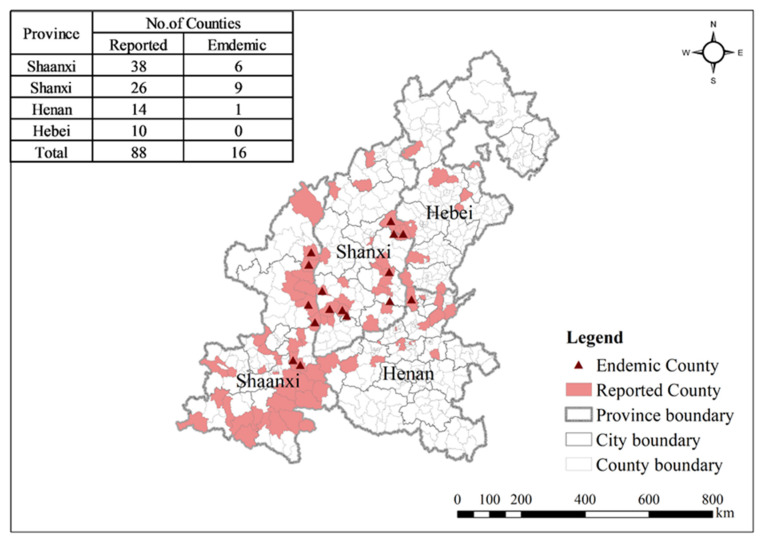
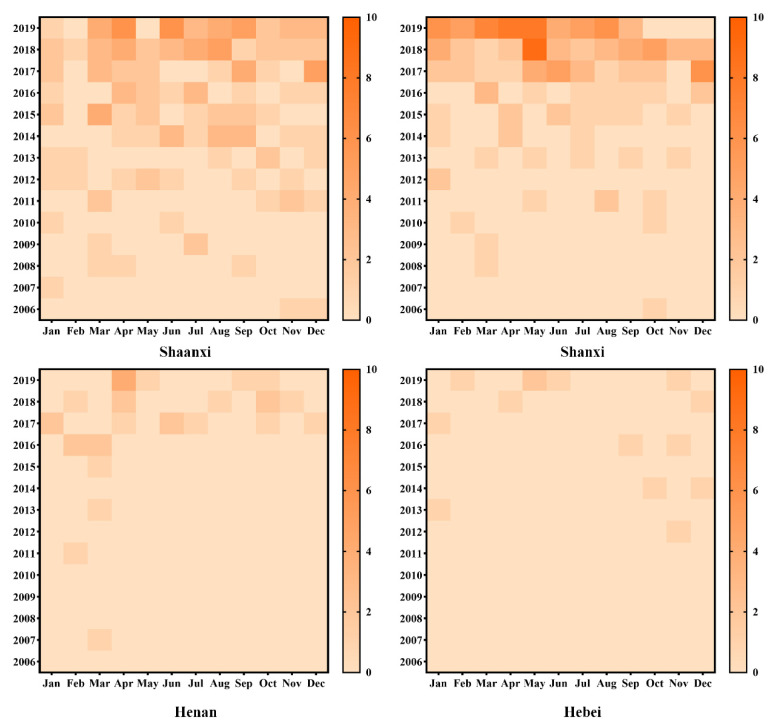
Visceral leishmaniasis (VL) is an important vector-borne zoonosis caused by spp. that has been spreading in China. It has been posing a significant risk to public health in central China due to its recurrence in recent decades. Yet, the spatiotemporal patterns and the driving factors of VL in central China remain unclear at present. The purpose of this study was to analyse spatiotemporal distribution, explore driving factors, and provide novel insight into prevention and control countermeasures of the VL spreading in central China. Based on data of human VL cases from 2006 to 2019 obtained from the Chinese Centres for Disease Control and Prevention (CDC), we depicted the map showing the spatiotemporal distribution of VL in central China. We further explored the driving factors contributing to the spread of VL through the general additive model (GAM) by combining maps of environmental, meteorological, and socioeconomic correlates. Most VL cases were reported in Shaanxi and Shanxi provinces, the number of which has been increasing every year in the last 14 years, from 3 new cases in 2006 to 101 new cases in 2019. The results of GAM revealed that environmental (i.e., changes in grasslands/forests), meteorological (i.e., temperature and relative humidity), and socioeconomic (i.e., population density) factors are significantly associated with the prevalence of VL in central China. Our results provide a better understanding regarding the current situation and the driving factors of VL in central China, assisting in developing the disease prevention and control strategies implemented by public health authorities.
内脏利什曼病(VL)是一种由 spp.引起的重要媒介传播的动物源性传染病,在中国不断蔓延。由于近几十年来的复发,它对中国中部地区的公共卫生构成了重大威胁。然而,目前中国中部地区 VL 的时空模式和驱动因素尚不清楚。本研究旨在分析时空分布,探讨驱动因素,为中国中部地区 VL 的传播提供新的预防和控制对策。基于从中国疾病预防控制中心(CDC)获得的 2006 年至 2019 年人类 VL 病例数据,我们描绘了中国中部地区 VL 的时空分布地图。我们通过结合环境、气象和社会经济相关因素的地图,进一步通过广义加性模型(GAM)探索了导致 VL 传播的驱动因素。大多数 VL 病例报告发生在陕西和山西省,在过去的 14 年中,每年的病例数量都在增加,从 2006 年的 3 例新发病例增加到 2019 年的 101 例。GAM 的结果表明,环境(即草地/森林的变化)、气象(即温度和相对湿度)和社会经济(即人口密度)因素与中国中部地区 VL 的流行显著相关。我们的研究结果提供了对中国中部地区 VL 现状和驱动因素的更好理解,有助于制定公共卫生当局实施的疾病预防和控制策略。