Noorani Behnam, Bhalerao Aditya, Raut Snehal, Nozohouri Ehsan, Bickel Ulrich, Cucullo Luca
Department of Pharmaceutical Sciences, Jerry H. Hodge School of Pharmacy, Texas Tech University Health Sciences Center, Amarillo, TX 79106, USA.
Center for Blood-Brain Barrier Research, School of Pharmacy, Texas Tech University Health Sciences Center, Amarillo, TX 79106, USA.
Pharmaceutics. 2021 Sep 15;13(9):1474. doi: 10.3390/pharmaceutics13091474.
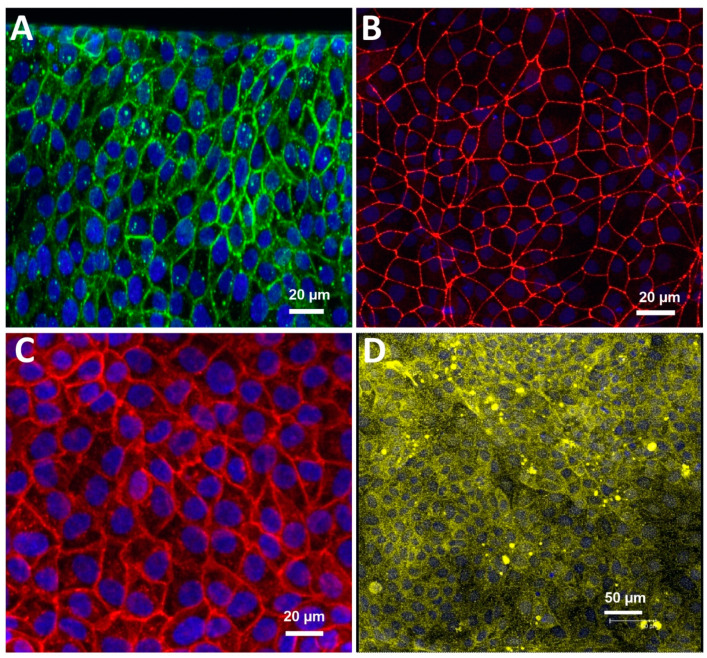
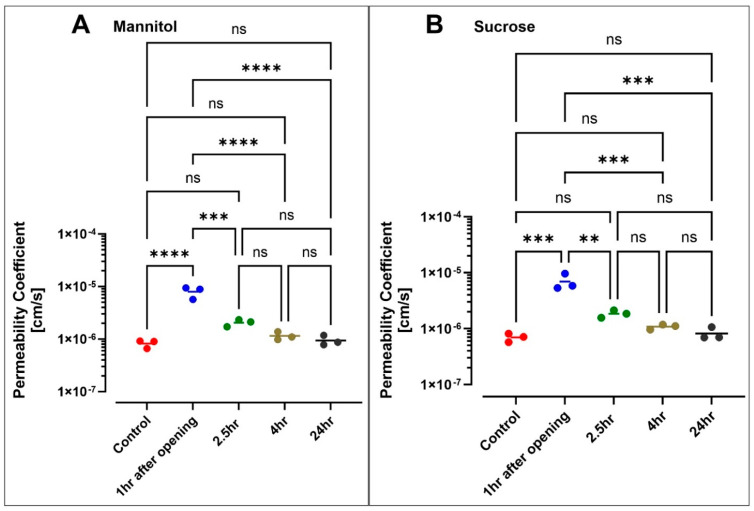
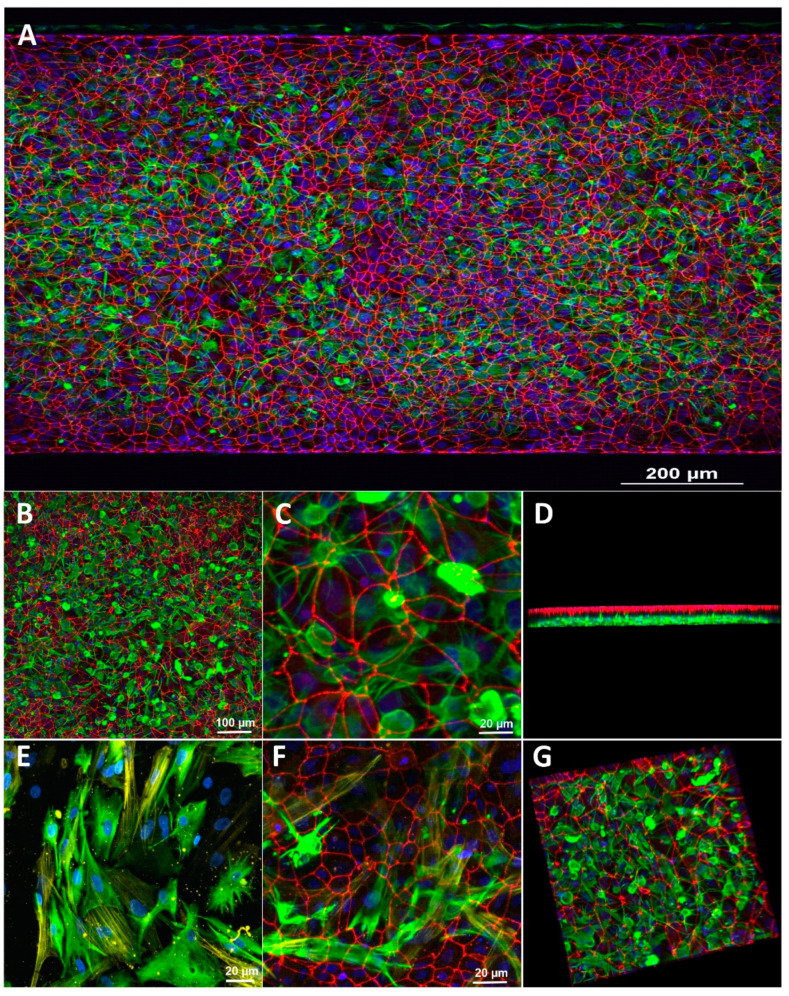
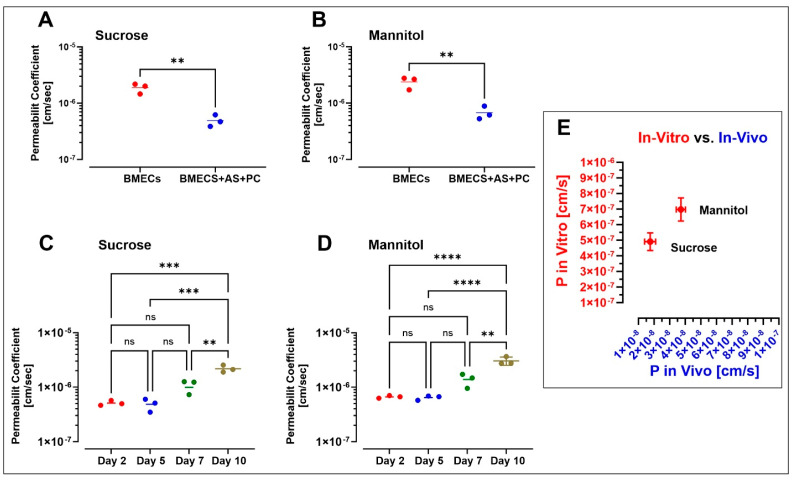
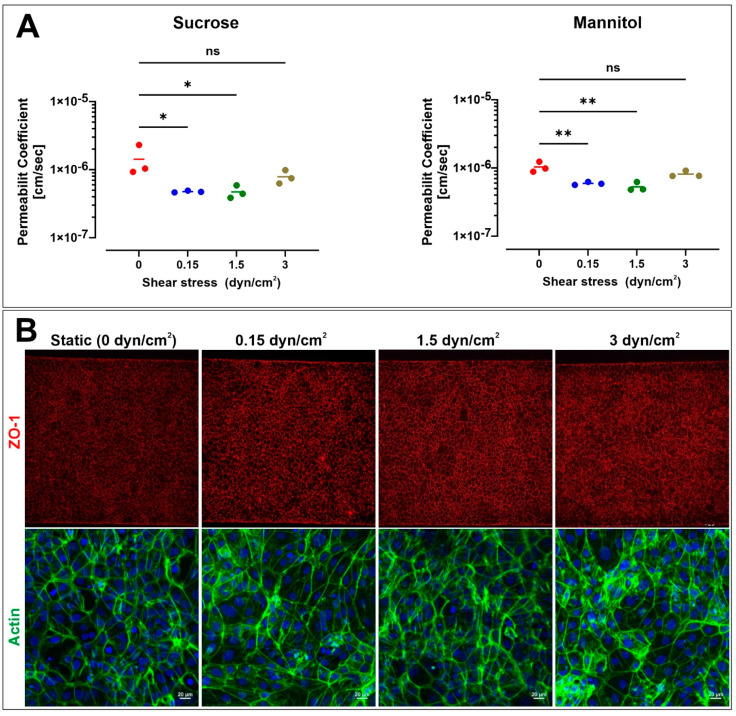
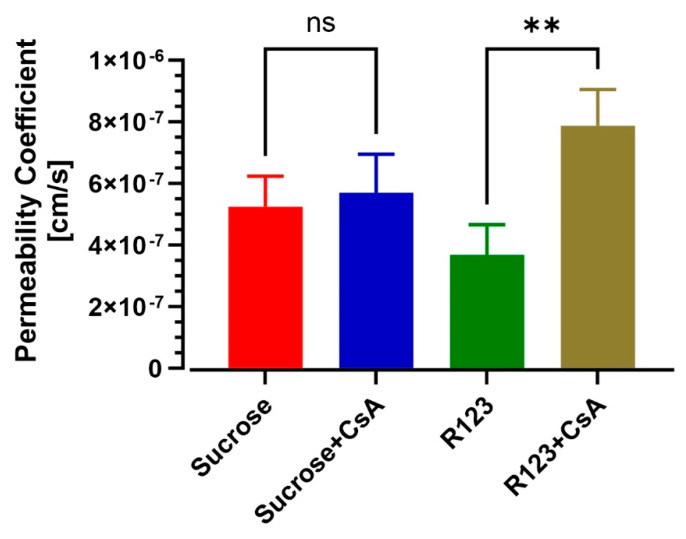
Microfluidics-based organ-on-a-chip technology allows for developing a new class of in-vitro blood-brain barrier (BBB) models that recapitulate many hemodynamic and architectural features of the brain microvasculature not attainable with conventional two-dimensional platforms. Herein, we describe and validate a novel microfluidic BBB model that closely mimics the one in situ. Induced pluripotent stem cell (iPSC)-derived brain microvascular endothelial cells (BMECs) were juxtaposed with primary human pericytes and astrocytes in a co-culture to enable BBB-specific characteristics, such as low paracellular permeability, efflux activity, and osmotic responses. The permeability coefficients of [C] sucrose and [C] mannitol were assessed using a highly sensitive LC-MS/MS procedure. The resulting BBB displayed continuous tight-junction patterns, low permeability to mannitol and sucrose, and quasi-physiological responses to hyperosmolar opening and p-glycoprotein inhibitor treatment, as demonstrated by decreased BBB integrity and increased permeability of rhodamine 123, respectively. Astrocytes and pericytes on the abluminal side of the vascular channel provided the environmental cues necessary to form a tight barrier and extend the model's long-term viability for time-course studies. In conclusion, our novel multi-culture microfluidic platform showcased the ability to replicate a quasi-physiological brain microvascular, thus enabling the development of a highly predictive and translationally relevant BBB model.
基于微流控的芯片器官技术能够开发出一类新型的体外血脑屏障(BBB)模型,该模型概括了脑微血管系统的许多血流动力学和结构特征,而这些特征是传统二维平台无法实现的。在此,我们描述并验证了一种紧密模拟原位血脑屏障的新型微流控BBB模型。将诱导多能干细胞(iPSC)衍生的脑微血管内皮细胞(BMEC)与原代人周细胞和星形胶质细胞共培养,以实现BBB的特异性特征,如低细胞旁通透性、外排活性和渗透反应。使用高灵敏度的液相色谱-串联质谱(LC-MS/MS)方法评估[C]蔗糖和[C]甘露醇的渗透系数。结果显示,所构建的BBB呈现出连续的紧密连接模式,对甘露醇和蔗糖的通透性较低,并且对高渗开放和P-糖蛋白抑制剂治疗表现出准生理反应,分别表现为BBB完整性降低和罗丹明123通透性增加。血管通道腔外侧的星形胶质细胞和周细胞提供了形成紧密屏障所需的环境线索,并延长了该模型用于时程研究的长期活力。总之,我们的新型多培养微流控平台展示了复制准生理脑微血管的能力,从而能够开发出具有高度预测性和转化相关性的BBB模型。