Petrova Marjana, Kiat Hosen, Gavino Alex, McLachlan Craig S
Centre for Healthy Futures, Health Faculty, Torrens University, 5/235 Pyrmont St., Pyrmont, NSW 2009, Australia.
Faculty of Medicine, Health and Human Sciences, Macquarie University, Level 3, 75 Talavera Rd., Sydney, NSW 2109, Australia.
J Pers Med. 2021 Sep 8;11(9):897. doi: 10.3390/jpm11090897.
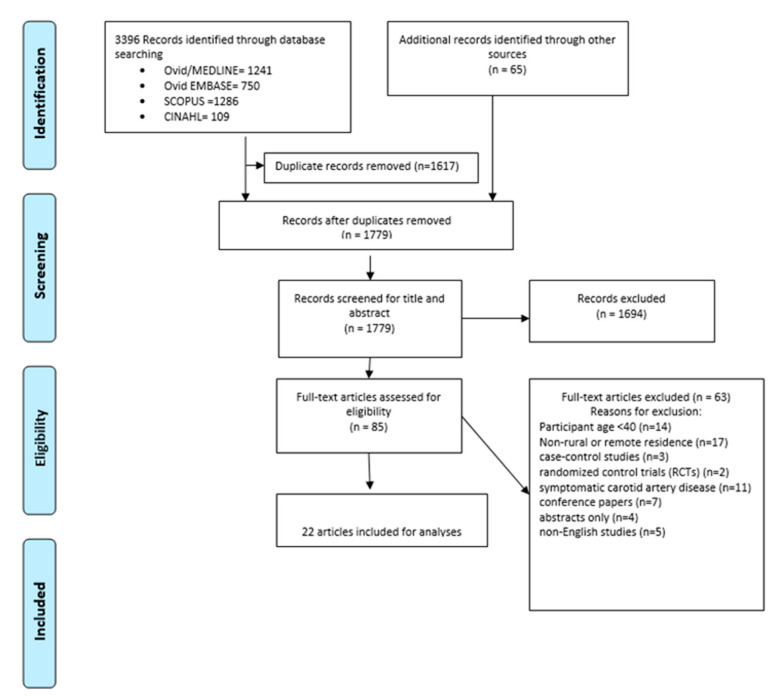
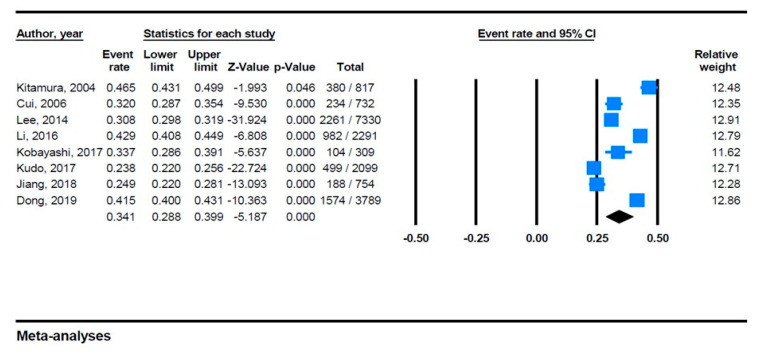
Carotid atherosclerosis assessments inform about stroke and cardiovascular risk. It is known that stroke and cardiovascular disease (CVD) prevalence is higher in rural communities than in urban communities. We aimed to conduct a systematic review of rural carotid ultrasound screening programs to define carotid atherosclerosis using traditional and emerging imaging biomarkers, prevalence, and risk factors. We searched Ovid/MEDLINE, Ovid/EMBASE, SCOPUS and CINAHL from inception to 3 April 2020 for rural population studies that utilized carotid ultrasound screening for adults ≥40 years of age and free of known cerebrovascular disease. Studies were included if participants received a bilateral ultrasound scanning of the carotid arteries and reported at least one marker of carotid atherosclerosis pathology. A random effect meta-analyses calculated the estimated prevalence of carotid plaque. In total, 22/3461 articles that met all of the inclusion criteria were included. Studies reported increased intima media thickness (IMT), carotid plaque presence and carotid artery stenosis. There were no studies reporting on novel imaging markers, such as carotid stiffness, carotid plaque morphology or neovascularization. The overall random effect pooled prevalence of carotid plaque was 34.1% (95% CI, 33.6-35.0); the prevalence of increased IMT was 11.2-41.5%, and the prevalence of carotid artery stenosis was 0.4-16.0%. There is an absence of data necessary to understand the carotid atherosclerosis prevalence across global rural populations. Represented studies have focused on East Asian countries where a high burden of rural carotid artery disease has been reported. There is no rural evidence to guide the use of novel ultrasound carotid biomarkers such as stiffness or neovascularization.
颈动脉粥样硬化评估可为中风和心血管疾病风险提供信息。众所周知,农村社区中风和心血管疾病(CVD)的患病率高于城市社区。我们旨在对农村颈动脉超声筛查项目进行系统综述,以使用传统和新兴的成像生物标志物、患病率及风险因素来定义颈动脉粥样硬化。我们检索了Ovid/MEDLINE、Ovid/EMBASE、SCOPUS和CINAHL数据库,从建库至2020年4月3日,查找针对40岁及以上且无已知脑血管疾病的成年人进行颈动脉超声筛查的农村人口研究。如果参与者接受了双侧颈动脉超声扫描并报告了至少一种颈动脉粥样硬化病理标志物,则纳入研究。采用随机效应荟萃分析计算颈动脉斑块的估计患病率。总共纳入了3461篇文章中符合所有纳入标准的22篇。研究报告了内膜中层厚度(IMT)增加、颈动脉斑块存在及颈动脉狭窄情况。没有研究报告新型成像标志物,如颈动脉僵硬度、颈动脉斑块形态或新生血管形成。颈动脉斑块的总体随机效应合并患病率为34.1%(95%CI,33.6 - 35.0);IMT增加的患病率为11.2 - 41.5%,颈动脉狭窄的患病率为0.4 - 16.0%。缺乏了解全球农村人口颈动脉粥样硬化患病率所需的数据。所纳入的研究主要集中在东亚国家,这些国家报告了农村地区较高的颈动脉疾病负担。没有农村地区的证据可指导新型超声颈动脉生物标志物(如僵硬度或新生血管形成)的应用。