• 文献检索
  • 文档翻译
  • 深度研究
  • 学术资讯
  • Suppr Zotero 插件Zotero 插件
  • 邀请有礼
  • 套餐&价格
  • 历史记录
应用&插件
Suppr Zotero 插件Zotero 插件浏览器插件Mac 客户端Windows 客户端微信小程序
定价
高级版会员购买积分包购买API积分包
服务
文献检索文档翻译深度研究API 文档MCP 服务
关于我们
关于 Suppr公司介绍联系我们用户协议隐私条款
关注我们

Suppr 超能文献

核心技术专利:CN118964589B侵权必究
粤ICP备2023148730 号-1Suppr @ 2026

文献检索

告别复杂PubMed语法,用中文像聊天一样搜索,搜遍4000万医学文献。AI智能推荐,让科研检索更轻松。

立即免费搜索

文件翻译

保留排版,准确专业,支持PDF/Word/PPT等文件格式,支持 12+语言互译。

免费翻译文档

深度研究

AI帮你快速写综述,25分钟生成高质量综述,智能提取关键信息,辅助科研写作。

立即免费体验

医疗保健领域人工智能的经济学:诊断与治疗

Economics of Artificial Intelligence in Healthcare: Diagnosis vs. Treatment.

作者信息

Khanna Narendra N, Maindarkar Mahesh A, Viswanathan Vijay, Fernandes Jose Fernandes E, Paul Sudip, Bhagawati Mrinalini, Ahluwalia Puneet, Ruzsa Zoltan, Sharma Aditya, Kolluri Raghu, Singh Inder M, Laird John R, Fatemi Mostafa, Alizad Azra, Saba Luca, Agarwal Vikas, Sharma Aman, Teji Jagjit S, Al-Maini Mustafa, Rathore Vijay, Naidu Subbaram, Liblik Kiera, Johri Amer M, Turk Monika, Mohanty Lopamudra, Sobel David W, Miner Martin, Viskovic Klaudija, Tsoulfas George, Protogerou Athanasios D, Kitas George D, Fouda Mostafa M, Chaturvedi Seemant, Kalra Mannudeep K, Suri Jasjit S

机构信息

Department of Cardiology, Indraprastha APOLLO Hospitals, New Delhi 110001, India.

Stroke Monitoring and Diagnostic Division, AtheroPoint™, Roseville, CA 95661, USA.

出版信息

Healthcare (Basel). 2022 Dec 9;10(12):2493. doi: 10.3390/healthcare10122493.

DOI:10.3390/healthcare10122493
PMID:36554017
原文链接:https://pmc.ncbi.nlm.nih.gov/articles/PMC9777836/
Abstract

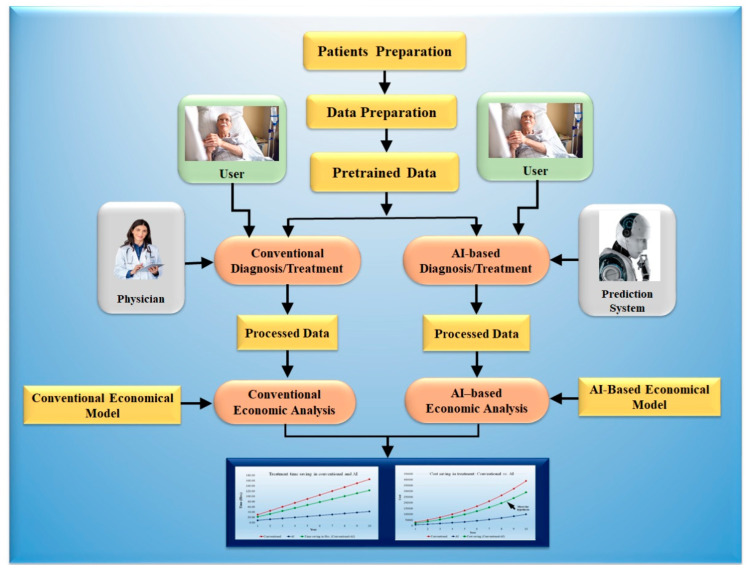
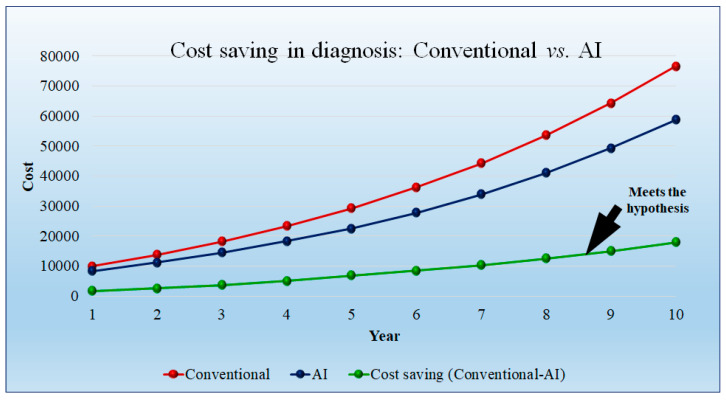
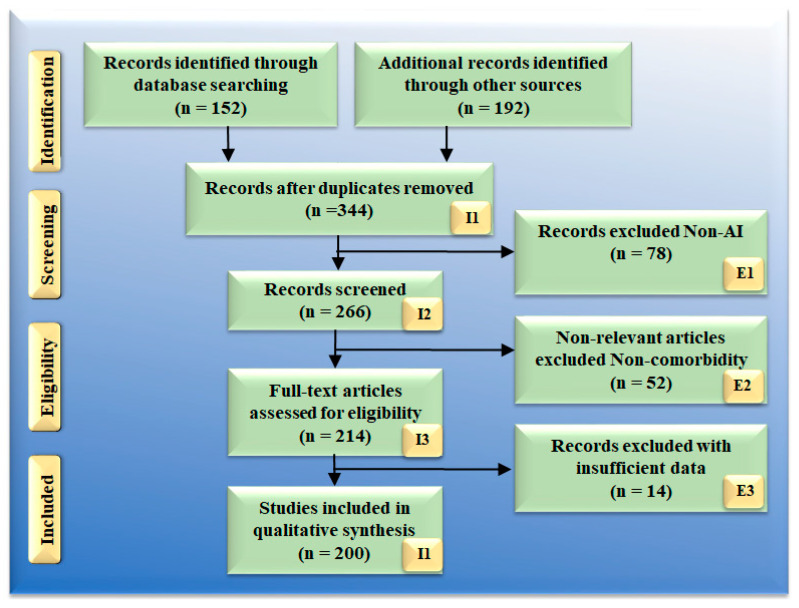
: The price of medical treatment continues to rise due to (i) an increasing population; (ii) an aging human growth; (iii) disease prevalence; (iv) a rise in the frequency of patients that utilize health care services; and (v) increase in the price. Artificial Intelligence (AI) is already well-known for its superiority in various healthcare applications, including the segmentation of lesions in images, speech recognition, smartphone personal assistants, navigation, ride-sharing apps, and many more. Our study is based on two hypotheses: (i) AI offers more economic solutions compared to conventional methods; (ii) AI treatment offers stronger economics compared to AI diagnosis. This novel study aims to evaluate AI technology in the context of healthcare costs, namely in the areas of diagnosis and treatment, and then compare it to the traditional or non-AI-based approaches. PRISMA was used to select the best 200 studies for AI in healthcare with a primary focus on cost reduction, especially towards diagnosis and treatment. We defined the diagnosis and treatment architectures, investigated their characteristics, and categorized the roles that AI plays in the diagnostic and therapeutic paradigms. We experimented with various combinations of different assumptions by integrating AI and then comparing it against conventional costs. Lastly, we dwell on three powerful future concepts of AI, namely, pruning, bias, explainability, and regulatory approvals of AI systems. The model shows tremendous cost savings using AI tools in diagnosis and treatment. The economics of AI can be improved by incorporating pruning, reduction in AI bias, explainability, and regulatory approvals.

摘要

由于以下原因,医疗费用持续上涨:(i)人口增长;(ii)人类老龄化;(iii)疾病流行率;(iv)使用医疗保健服务的患者频率增加;以及(v)价格上涨。人工智能(AI)在各种医疗保健应用中的优越性已广为人知,包括图像中病变的分割、语音识别、智能手机个人助手、导航、拼车应用等等。我们的研究基于两个假设:(i)与传统方法相比,人工智能提供更经济的解决方案;(ii)与人工智能诊断相比,人工智能治疗具有更强的经济性。这项新颖的研究旨在评估医疗保健成本背景下的人工智能技术,即在诊断和治疗领域,然后将其与传统的或非基于人工智能的方法进行比较。采用PRISMA方法选择了医疗保健领域中关于人工智能的200项最佳研究,主要关注成本降低,特别是在诊断和治疗方面。我们定义了诊断和治疗架构,研究了它们的特征,并对人工智能在诊断和治疗范式中所起的作用进行了分类。我们通过整合人工智能并将其与传统成本进行比较,对不同假设的各种组合进行了实验。最后,我们详细探讨了人工智能的三个强大的未来概念,即修剪、偏差、可解释性以及人工智能系统的监管批准。该模型显示,在诊断和治疗中使用人工智能工具可大幅节省成本。通过纳入修剪、减少人工智能偏差、可解释性和监管批准,可以提高人工智能的经济性。
https://cdn.ncbi.nlm.nih.gov/pmc/blobs/8936/9777836/3f4841cfa5b8/healthcare-10-02493-g018.jpg
https://cdn.ncbi.nlm.nih.gov/pmc/blobs/8936/9777836/612b3676cd59/healthcare-10-02493-g001.jpg
https://cdn.ncbi.nlm.nih.gov/pmc/blobs/8936/9777836/b120e1c04a33/healthcare-10-02493-g002.jpg
https://cdn.ncbi.nlm.nih.gov/pmc/blobs/8936/9777836/48f1c3da39dc/healthcare-10-02493-g003.jpg
https://cdn.ncbi.nlm.nih.gov/pmc/blobs/8936/9777836/7110cb27ccf9/healthcare-10-02493-g004.jpg
https://cdn.ncbi.nlm.nih.gov/pmc/blobs/8936/9777836/397aa535aac9/healthcare-10-02493-g005.jpg
https://cdn.ncbi.nlm.nih.gov/pmc/blobs/8936/9777836/8d0f5f5d44aa/healthcare-10-02493-g006.jpg
https://cdn.ncbi.nlm.nih.gov/pmc/blobs/8936/9777836/8002a92bbec2/healthcare-10-02493-g007.jpg
https://cdn.ncbi.nlm.nih.gov/pmc/blobs/8936/9777836/f4395b42fdd1/healthcare-10-02493-g008.jpg
https://cdn.ncbi.nlm.nih.gov/pmc/blobs/8936/9777836/26c6ab7f8ca7/healthcare-10-02493-g009.jpg
https://cdn.ncbi.nlm.nih.gov/pmc/blobs/8936/9777836/66b876d6593c/healthcare-10-02493-g010.jpg
https://cdn.ncbi.nlm.nih.gov/pmc/blobs/8936/9777836/988c4d7c4af4/healthcare-10-02493-g011.jpg
https://cdn.ncbi.nlm.nih.gov/pmc/blobs/8936/9777836/467500b3bf9a/healthcare-10-02493-g012.jpg
https://cdn.ncbi.nlm.nih.gov/pmc/blobs/8936/9777836/6a1db87d6370/healthcare-10-02493-g013.jpg
https://cdn.ncbi.nlm.nih.gov/pmc/blobs/8936/9777836/ec02e52b5daa/healthcare-10-02493-g014.jpg
https://cdn.ncbi.nlm.nih.gov/pmc/blobs/8936/9777836/aaa2329d7ee8/healthcare-10-02493-g015.jpg
https://cdn.ncbi.nlm.nih.gov/pmc/blobs/8936/9777836/524972d47182/healthcare-10-02493-g016.jpg
https://cdn.ncbi.nlm.nih.gov/pmc/blobs/8936/9777836/c4906c6d3128/healthcare-10-02493-g017.jpg
https://cdn.ncbi.nlm.nih.gov/pmc/blobs/8936/9777836/3f4841cfa5b8/healthcare-10-02493-g018.jpg
https://cdn.ncbi.nlm.nih.gov/pmc/blobs/8936/9777836/612b3676cd59/healthcare-10-02493-g001.jpg
https://cdn.ncbi.nlm.nih.gov/pmc/blobs/8936/9777836/b120e1c04a33/healthcare-10-02493-g002.jpg
https://cdn.ncbi.nlm.nih.gov/pmc/blobs/8936/9777836/48f1c3da39dc/healthcare-10-02493-g003.jpg
https://cdn.ncbi.nlm.nih.gov/pmc/blobs/8936/9777836/7110cb27ccf9/healthcare-10-02493-g004.jpg
https://cdn.ncbi.nlm.nih.gov/pmc/blobs/8936/9777836/397aa535aac9/healthcare-10-02493-g005.jpg
https://cdn.ncbi.nlm.nih.gov/pmc/blobs/8936/9777836/8d0f5f5d44aa/healthcare-10-02493-g006.jpg
https://cdn.ncbi.nlm.nih.gov/pmc/blobs/8936/9777836/8002a92bbec2/healthcare-10-02493-g007.jpg
https://cdn.ncbi.nlm.nih.gov/pmc/blobs/8936/9777836/f4395b42fdd1/healthcare-10-02493-g008.jpg
https://cdn.ncbi.nlm.nih.gov/pmc/blobs/8936/9777836/26c6ab7f8ca7/healthcare-10-02493-g009.jpg
https://cdn.ncbi.nlm.nih.gov/pmc/blobs/8936/9777836/66b876d6593c/healthcare-10-02493-g010.jpg
https://cdn.ncbi.nlm.nih.gov/pmc/blobs/8936/9777836/988c4d7c4af4/healthcare-10-02493-g011.jpg
https://cdn.ncbi.nlm.nih.gov/pmc/blobs/8936/9777836/467500b3bf9a/healthcare-10-02493-g012.jpg
https://cdn.ncbi.nlm.nih.gov/pmc/blobs/8936/9777836/6a1db87d6370/healthcare-10-02493-g013.jpg
https://cdn.ncbi.nlm.nih.gov/pmc/blobs/8936/9777836/ec02e52b5daa/healthcare-10-02493-g014.jpg
https://cdn.ncbi.nlm.nih.gov/pmc/blobs/8936/9777836/aaa2329d7ee8/healthcare-10-02493-g015.jpg
https://cdn.ncbi.nlm.nih.gov/pmc/blobs/8936/9777836/524972d47182/healthcare-10-02493-g016.jpg
https://cdn.ncbi.nlm.nih.gov/pmc/blobs/8936/9777836/c4906c6d3128/healthcare-10-02493-g017.jpg
https://cdn.ncbi.nlm.nih.gov/pmc/blobs/8936/9777836/3f4841cfa5b8/healthcare-10-02493-g018.jpg

相似文献

1
Economics of Artificial Intelligence in Healthcare: Diagnosis vs. Treatment.医疗保健领域人工智能的经济学:诊断与治疗
Healthcare (Basel). 2022 Dec 9;10(12):2493. doi: 10.3390/healthcare10122493.
2
3
Population Preferences for Performance and Explainability of Artificial Intelligence in Health Care: Choice-Based Conjoint Survey.人群对医疗人工智能性能和可解释性的偏好:基于选择的联合调查。
J Med Internet Res. 2021 Dec 13;23(12):e26611. doi: 10.2196/26611.
4
Health care cost and benefits of artificial intelligence-assisted population-based glaucoma screening for the elderly in remote areas of China: a cost-offset analysis.中国偏远地区基于人群的人工智能辅助老年青光眼筛查的医疗成本和效益:成本抵消分析。
BMC Public Health. 2021 Jun 4;21(1):1065. doi: 10.1186/s12889-021-11097-w.
5
Existing Barriers Faced by and Future Design Recommendations for Direct-to-Consumer Health Care Artificial Intelligence Apps: Scoping Review.直接面向消费者的医疗保健人工智能应用程序所面临的现有障碍和未来设计建议:范围综述。
J Med Internet Res. 2023 Dec 18;25:e50342. doi: 10.2196/50342.
6
Position statement of the EADV Artificial Intelligence (AI) Task Force on AI-assisted smartphone apps and web-based services for skin disease.EADV 人工智能(AI)工作组关于 AI 辅助智能手机应用程序和基于网络的皮肤病服务的立场声明。
J Eur Acad Dermatol Venereol. 2024 Jan;38(1):22-30. doi: 10.1111/jdv.19521. Epub 2023 Sep 27.
7
Explainability for artificial intelligence in healthcare: a multidisciplinary perspective.人工智能在医疗保健中的可解释性:多学科视角。
BMC Med Inform Decis Mak. 2020 Nov 30;20(1):310. doi: 10.1186/s12911-020-01332-6.
8
Development of an explainable artificial intelligence model for Asian vascular wound images.亚洲血管性创面图像可解释人工智能模型的开发。
Int Wound J. 2024 Apr;21(4):e14565. doi: 10.1111/iwj.14565. Epub 2023 Dec 25.
9
The Impact of Artificial Intelligence on Allergy Diagnosis and Treatment.人工智能对过敏诊断和治疗的影响。
Curr Allergy Asthma Rep. 2024 Jul;24(7):361-372. doi: 10.1007/s11882-024-01152-y. Epub 2024 Jul 2.
10
Are current clinical studies on artificial intelligence-based medical devices comprehensive enough to support a full health technology assessment? A systematic review.基于人工智能的医疗器械的当前临床研究是否足够全面,足以支持全面的健康技术评估?系统评价。
Artif Intell Med. 2023 Jun;140:102547. doi: 10.1016/j.artmed.2023.102547. Epub 2023 Apr 23.

引用本文的文献

1
Artificial intelligence in interventional cardiology: a review of its role in diagnosis, decision-making, and procedural precision.人工智能在介入心脏病学中的应用:对其在诊断、决策和操作精准性方面作用的综述
Ann Med Surg (Lond). 2025 Jul 18;87(9):5720-5734. doi: 10.1097/MS9.0000000000003602. eCollection 2025 Sep.
2
The application of machine learning in predicting post-cardiac surgery acute kidney injury in pediatric patients: a systematic review.机器学习在预测小儿心脏手术后急性肾损伤中的应用:一项系统综述。
Front Pediatr. 2025 Aug 12;13:1581578. doi: 10.3389/fped.2025.1581578. eCollection 2025.
3
Smart CAR-T Nanosymbionts: archetypes and proto-models.

本文引用的文献

1
The Economic Impact of AI on Breast Imaging.人工智能对乳腺成像的经济影响。
J Breast Imaging. 2022 Jun 7;4(3):302-308. doi: 10.1093/jbi/wbac012.
2
The "Ecosystem as a Service (EaaS)" approach to advance clinical artificial intelligence (cAI).采用“生态系统即服务(EaaS)”方法推进临床人工智能(cAI)。
PLOS Digit Health. 2022 Feb 3;1(2):e0000011. doi: 10.1371/journal.pdig.0000011. eCollection 2022 Feb.
3
Segmentation-Based Classification Deep Learning Model Embedded with Explainable AI for COVID-19 Detection in Chest X-ray Scans.
智能嵌合抗原受体T细胞纳米共生体:原型与原始模型
Front Immunol. 2025 Aug 12;16:1635159. doi: 10.3389/fimmu.2025.1635159. eCollection 2025.
4
Systematic review of cost effectiveness and budget impact of artificial intelligence in healthcare.人工智能在医疗保健领域成本效益和预算影响的系统评价
NPJ Digit Med. 2025 Aug 26;8(1):548. doi: 10.1038/s41746-025-01722-y.
5
State-of-the-art artificial intelligence methods for pre-operative planning of cardiothoracic surgery and interventions: a narrative review.用于心胸外科手术和干预术前规划的先进人工智能方法:一项叙述性综述。
J Thorac Dis. 2025 Jul 31;17(7):5282-5297. doi: 10.21037/jtd-24-1793. Epub 2025 Jul 29.
6
Nano-Phytomedicine: Harnessing Plant-Derived Phytochemicals in Nanocarriers for Targeted Human Health Applications.纳米植物医学:利用纳米载体中植物源植物化学物质用于靶向人类健康应用。
Molecules. 2025 Jul 29;30(15):3177. doi: 10.3390/molecules30153177.
7
Economic Evaluations and Equity in the Use of Artificial Intelligence in Imaging Examinations for Medical Diagnosis in People With Dermatological, Neurological, and Pulmonary Diseases: Systematic Review.皮肤病、神经疾病和肺部疾病患者医学诊断影像检查中人工智能应用的经济评估与公平性:系统评价
Interact J Med Res. 2025 Aug 13;14:e56240. doi: 10.2196/56240.
8
Automated detection of wrist ganglia in MRI using convolutional neural networks.使用卷积神经网络在磁共振成像中自动检测腕部腱鞘囊肿
BMC Musculoskelet Disord. 2025 Aug 7;26(1):760. doi: 10.1186/s12891-025-09011-1.
9
GPSai: A Clinically Validated AI Tool for Tissue of Origin Prediction during Routine Tumor Profiling.GPSai:一种在常规肿瘤分析中用于预测组织起源的经过临床验证的人工智能工具。
Cancer Res Commun. 2025 Sep 1;5(9):1477-1489. doi: 10.1158/2767-9764.CRC-25-0171.
10
Economic Evaluation of Artificially Intelligent (AI) Diagnostic Systems: Cost Consequence Analysis of Clinician-Friendly Interpretable Computer-Aided Diagnosis (ICADX) Tested in Cardiology, Obstetrics, and Gastroenterology, from the HosmartAI Horizon 2020 Project.人工智能(AI)诊断系统的经济评估:来自HosmartAI地平线2020项目的在心脏病学、妇产科学和胃肠病学中测试的临床医生友好型可解释计算机辅助诊断(ICADX)的成本后果分析
Healthcare (Basel). 2025 Jul 10;13(14):1661. doi: 10.3390/healthcare13141661.
基于分割的分类深度学习模型,嵌入可解释人工智能用于胸部X光扫描中的新冠肺炎检测
Diagnostics (Basel). 2022 Sep 2;12(9):2132. doi: 10.3390/diagnostics12092132.
4
Combination Therapy with Ezetimibe: An Alternative Strategy to Statin Monotherapy in the Management of Patients with Non-cardiac Vascular Disease.依折麦布联合治疗:非心脏血管疾病患者管理中他汀类单药治疗的替代策略。
Curr Vasc Pharmacol. 2022;20(6):457-459. doi: 10.2174/1570161120666220919095729.
5
Brain Tumor Characterization Using Radiogenomics in Artificial Intelligence Framework.在人工智能框架中使用放射基因组学进行脑肿瘤特征描述
Cancers (Basel). 2022 Aug 22;14(16):4052. doi: 10.3390/cancers14164052.
6
Vascular Implications of COVID-19: Role of Radiological Imaging, Artificial Intelligence, and Tissue Characterization: A Special Report.2019冠状病毒病的血管影响:放射影像学、人工智能和组织特征分析的作用:特别报告
J Cardiovasc Dev Dis. 2022 Aug 15;9(8):268. doi: 10.3390/jcdd9080268.
7
Deep Learning Paradigm for Cardiovascular Disease/Stroke Risk Stratification in Parkinson's Disease Affected by COVID-19: A Narrative Review.深度学习范式在受COVID-19影响的帕金森病心血管疾病/中风风险分层中的应用:一项叙述性综述
Diagnostics (Basel). 2022 Jun 24;12(7):1543. doi: 10.3390/diagnostics12071543.
8
International Union of Angiology (IUA) consensus paper on imaging strategies in atherosclerotic carotid artery imaging: From basic strategies to advanced approaches.国际血管联盟(IUA)关于动脉粥样硬化性颈动脉成像影像学策略的共识文件:从基本策略到先进方法。
Atherosclerosis. 2022 Aug;354:23-40. doi: 10.1016/j.atherosclerosis.2022.06.1014. Epub 2022 Jun 28.
9
Eight pruning deep learning models for low storage and high-speed COVID-19 computed tomography lung segmentation and heatmap-based lesion localization: A multicenter study using COVLIAS 2.0.用于低存储和高速 COVID-19 计算机断层扫描肺分割和基于热图的病变定位的八种剪枝深度学习模型:使用 COVLIAS 2.0 的多中心研究。
Comput Biol Med. 2022 Jul;146:105571. doi: 10.1016/j.compbiomed.2022.105571. Epub 2022 May 21.
10
Role of Artificial Intelligence in Radiogenomics for Cancers in the Era of Precision Medicine.精准医学时代人工智能在癌症放射基因组学中的作用
Cancers (Basel). 2022 Jun 9;14(12):2860. doi: 10.3390/cancers14122860.