Clinic for Anesthesiology, University Medical Center Göttingen, Georg-August-University, 37073 Göttingen, Germany.
Int J Mol Sci. 2021 Sep 9;22(18):9747. doi: 10.3390/ijms22189747.
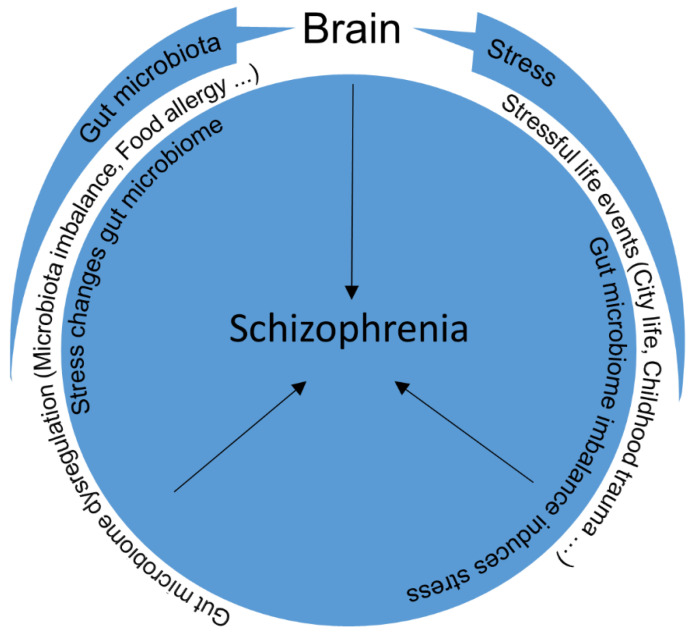
Schizophrenia is a severe neuropsychiatric disorder, and its etiology remains largely unknown. Environmental factors have been reported to play roles in the pathogenesis of schizophrenia, and one of the major environmental factors identified for this disorder is psychosocial stress. Several studies have suggested that stressful life events, as well as the chronic social stress associated with city life, may lead to the development of schizophrenia. The other factor is the gut-brain axis. The composition of the gut microbiome and alterations thereof may affect the brain and may lead to schizophrenia. The main interest of this review article is in overviewing the major recent findings on the effects of stress and the gut-brain axis, as well as their possible bidirectional effects, in the pathogenesis of schizophrenia.
精神分裂症是一种严重的神经精神疾病,其病因在很大程度上仍然未知。环境因素被报道在精神分裂症的发病机制中起作用,为这种疾病确定的主要环境因素之一是心理社会压力。几项研究表明,紧张的生活事件以及与城市生活相关的慢性社会压力,可能导致精神分裂症的发展。另一个因素是肠脑轴。肠道微生物组的组成及其改变可能会影响大脑,并可能导致精神分裂症。本文综述的主要兴趣在于概述压力和肠脑轴的主要最新发现,以及它们在精神分裂症发病机制中的可能双向作用。