Department of Crop Physiology, Tamil Nadu Agricultural University, Madras 641 003, India.
International Crops Research Institute for the Semi-Arid Tropics (ICRISAT), Patancheru 502 324, India.
Int J Mol Sci. 2021 Sep 11;22(18):9826. doi: 10.3390/ijms22189826.
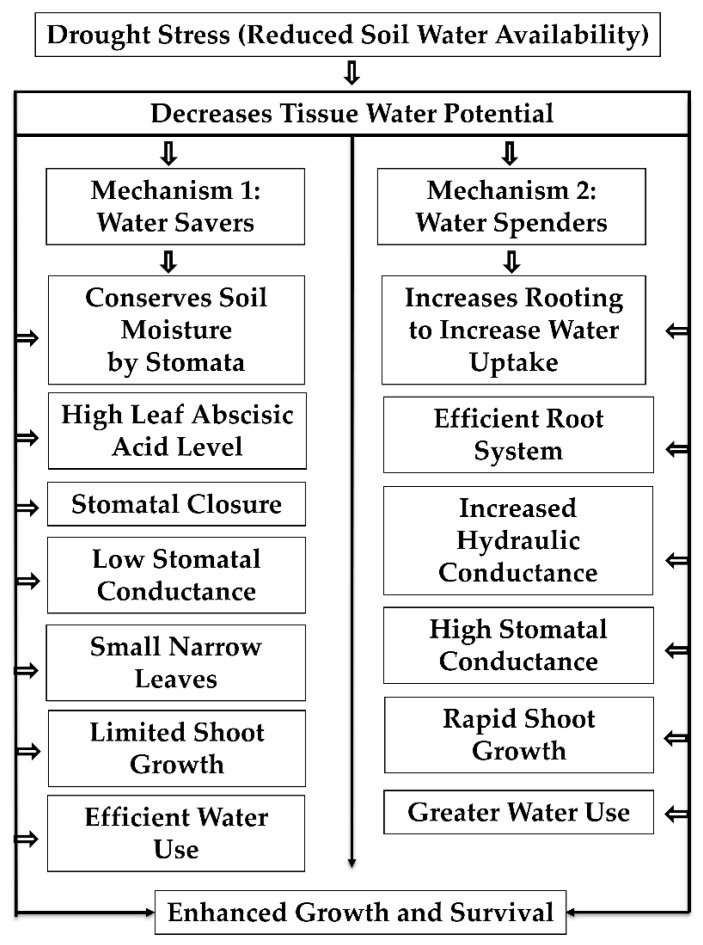
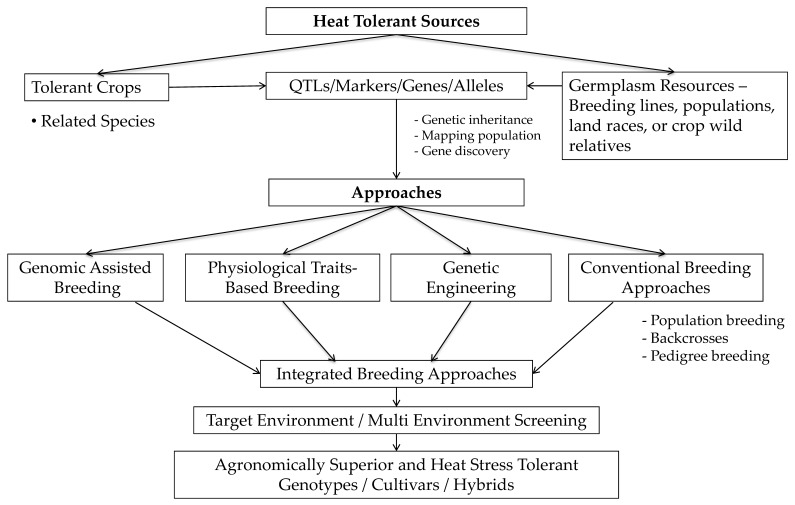
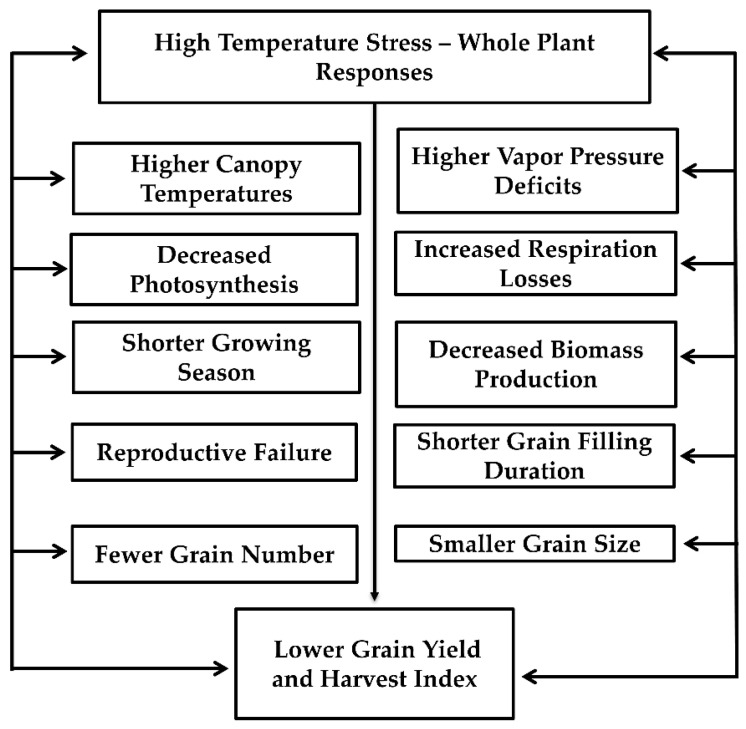
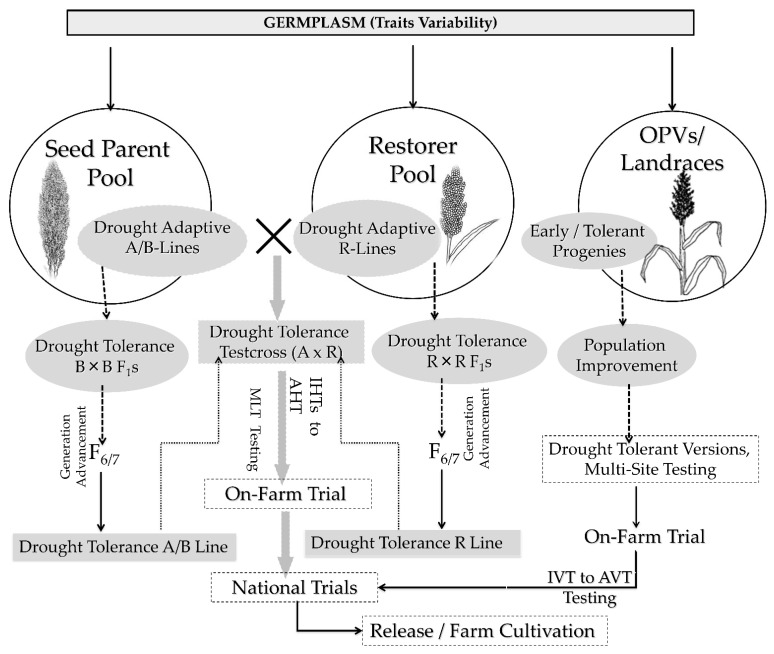
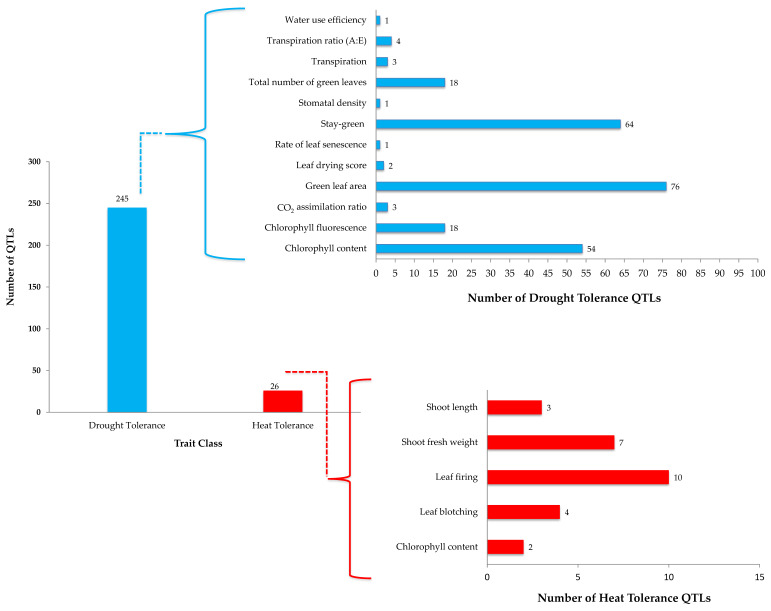
Sorghum is one of the staple crops for millions of people in Sub-Saharan Africa (SSA) and South Asia (SA). The future climate in these sorghum production regions is likely to have unexpected short or long episodes of drought and/or high temperature (HT), which can cause significant yield losses. Therefore, to achieve food and nutritional security, drought and HT stress tolerance ability in sorghum must be genetically improved. Drought tolerance mechanism, stay green, and grain yield under stress has been widely studied. However, novel traits associated with drought (restricted transpiration and root architecture) need to be explored and utilized in breeding. In sorghum, knowledge on the traits associated with HT tolerance is limited. Heat shock transcription factors, dehydrins, and genes associated with hormones such as auxin, ethylene, and abscisic acid and compatible solutes are involved in drought stress modulation. In contrast, our understanding of HT tolerance at the omic level is limited and needs attention. Breeding programs have exploited limited traits with narrow genetic and genomic resources to develop drought or heat tolerant lines. Reproductive stages of sorghum are relatively more sensitive to stress compared to vegetative stages. Therefore, breeding should incorporate appropriate pre-flowering and post-flowering tolerance in a broad genetic base population and in heterotic hybrid breeding pipelines. Currently, more than 240 QTLs are reported for drought tolerance-associated traits in sorghum prospecting discovery of trait markers. Identifying traits and better understanding of physiological and genetic mechanisms and quantification of genetic variability for these traits may enhance HT tolerance. Drought and HT tolerance can be improved by better understanding mechanisms associated with tolerance and screening large germplasm collections to identify tolerant lines and incorporation of those traits into elite breeding lines. Systems approaches help in identifying the best donors of tolerance to be incorporated in the SSA and SA sorghum breeding programs. Integrated breeding with use of high-throughput precision phenomics and genomics can deliver a range of drought and HT tolerant genotypes that can improve yield and resilience of sorghum under drought and HT stresses.
高粱是撒哈拉以南非洲(SSA)和南亚(SA)数百万人的主食作物之一。这些高粱生产地区未来的气候可能会出现意想不到的短期或长期干旱和/或高温(HT)事件,这可能会导致产量大幅下降。因此,要实现粮食和营养安全,必须从遗传上提高高粱的抗旱和 HT 胁迫耐受能力。高粱的抗旱机制、胁迫下的持绿性和籽粒产量已经得到了广泛的研究。然而,需要探索和利用与干旱相关的新特性(限制蒸腾和根系结构)。在高粱中,与 HT 耐受相关的特性的知识有限。热休克转录因子、脱水素和与激素(如生长素、乙烯和脱落酸)和相容性溶质相关的基因参与了干旱胁迫的调节。相比之下,我们对高通量水平的 HT 耐受的理解是有限的,需要关注。育种计划利用有限的具有狭窄遗传和基因组资源的特性来开发耐旱或耐热品系。与营养生长阶段相比,高粱的生殖阶段对胁迫更为敏感。因此,在广泛的遗传基础群体和杂种优势杂交育种管道中,应将开花前和开花后的适当耐受纳入其中。目前,在高粱中已经发现了 240 多个与耐旱性相关的性状的 QTL,用于性状标记的探测。鉴定性状以及更好地理解生理和遗传机制,并对这些性状的遗传变异进行量化,可能会提高 HT 耐受性。通过更好地了解与耐受性相关的机制和筛选大量种质资源来鉴定耐受品系,并将这些性状纳入优良的育种系中,可以提高耐旱性和 HT 耐受性。系统方法有助于确定最佳的耐受供体,以纳入 SSA 和 SA 的高粱育种计划。利用高通量精确表型和基因组学的综合育种,可以提供一系列耐旱和 HT 耐受的基因型,可提高高粱在干旱和 HT 胁迫下的产量和恢复力。