Richard Jordan C, Campbell Lewis J, Leis Eric M, Agbalog Rose E, Dunn Chris D, Waller Diane L, Knowles Susan, Putnam Joel G, Goldberg Tony L
Department of Pathobiological Sciences and Freshwater & Marine Sciences Program, University of Wisconsin-Madison, Madison, WI 53711, USA.
Southwestern Virginia Field Office, US Fish and Wildlife Service, Abingdon, VA 24210, USA.
Microorganisms. 2021 Sep 17;9(9):1976. doi: 10.3390/microorganisms9091976.
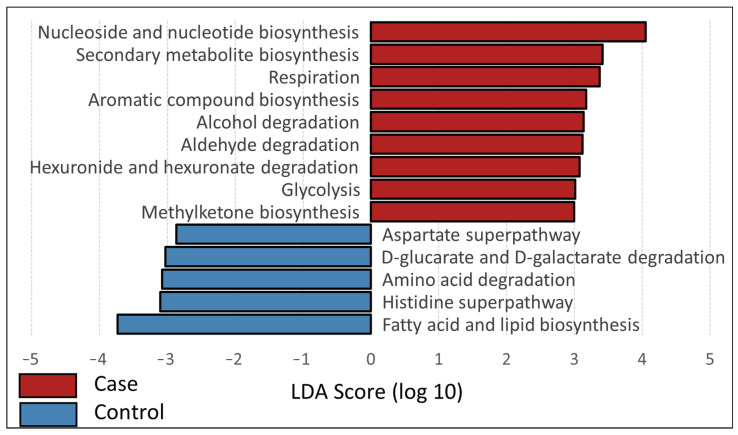
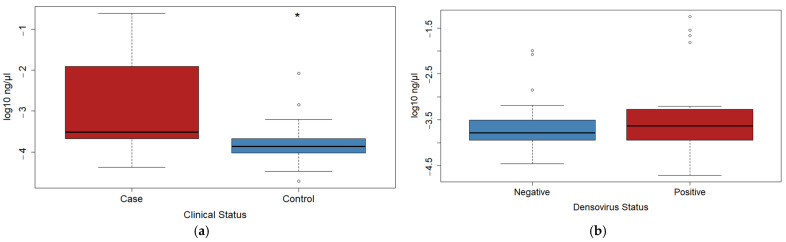
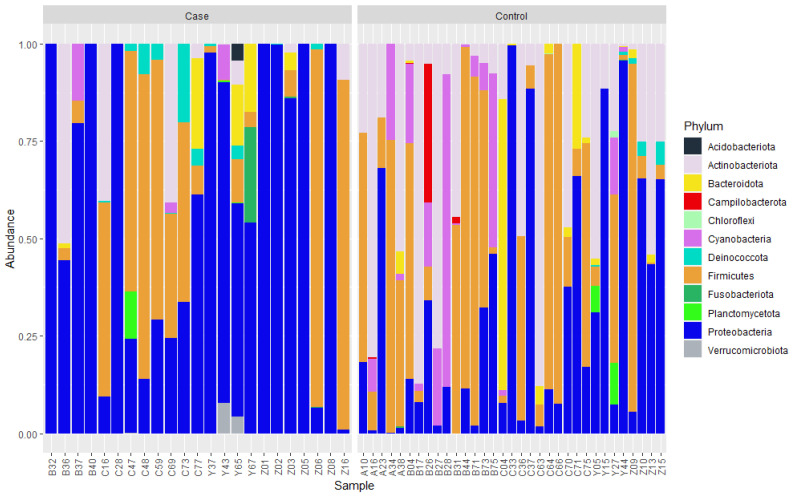
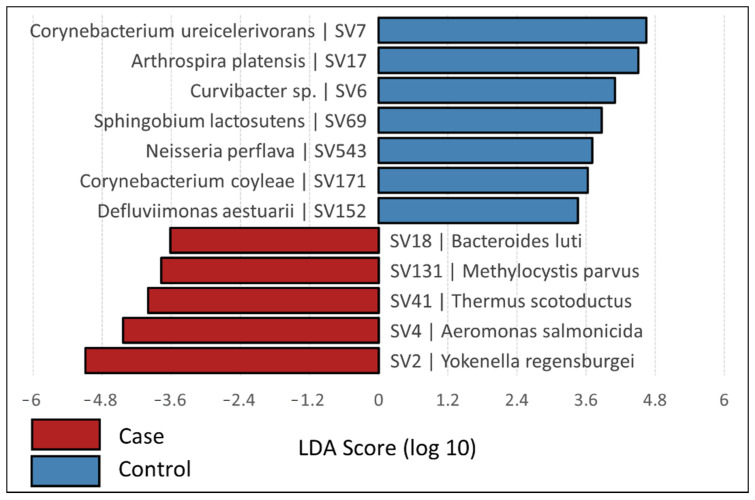
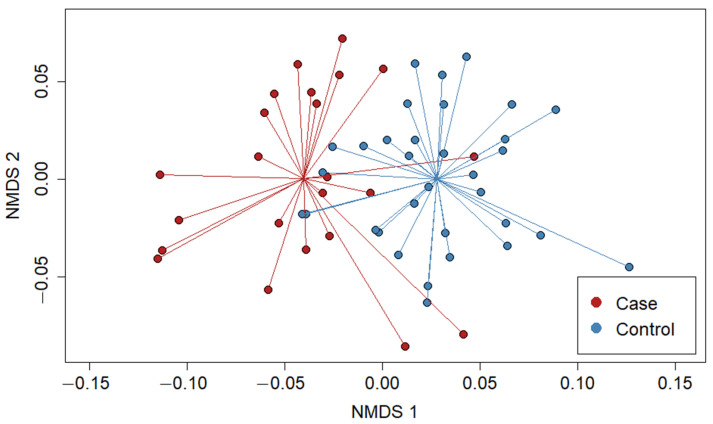
Freshwater mussels (Unionida) are suffering mass mortality events worldwide, but the causes remain enigmatic. Here, we describe an analysis of bacterial loads, community structure, and inferred metabolic pathways in the hemolymph of pheasantshells () from the Clinch River, USA, during a multi-year mass mortality event. Bacterial loads were approximately 2 logs higher in moribund mussels (cases) than in apparently healthy mussels (controls). Bacterial communities also differed between cases and controls, with fewer sequence variants (SVs) and higher relative abundances of the proteobacteria and in cases than in controls. Inferred bacterial metabolic pathways demonstrated a predominance of degradation, utilization, and assimilation pathways in cases and a predominance of biosynthesis pathways in controls. Only two SVs correlated with Clinch densovirus 1, a virus previously shown to be strongly associated with mortality in this system: Deinococcota and Actinobacteriota, which were associated with densovirus-positive and densovirus-negative mussels, respectively. Overall, our results suggest that bacterial invasion and shifts in the bacterial microbiome during unionid mass mortality events may result from primary insults such as viral infection or environmental stressors. If so, bacterial communities in mussel hemolymph may be sensitive, if generalized, indicators of declining mussel health.
淡水贻贝(蚌目)在全球范围内正经历大规模死亡事件,但其原因仍然成谜。在此,我们描述了对美国克林奇河的雉壳蚌()在多年大规模死亡事件期间血淋巴中的细菌载量、群落结构及推断的代谢途径的分析。濒死贻贝(病例)中的细菌载量比明显健康的贻贝(对照)高出约2个对数。病例组和对照组的细菌群落也存在差异,病例组的序列变体(SV)较少,变形菌门和的相对丰度高于对照组。推断的细菌代谢途径表明,病例组中降解、利用和同化途径占主导,而对照组中生物合成途径占主导。只有两个SV与克林奇浓病毒1相关,该病毒此前已被证明与该系统中的死亡率密切相关:分别与浓病毒阳性和浓病毒阴性贻贝相关的异常球菌门和放线菌门。总体而言,我们的结果表明,在蚌类大规模死亡事件期间,细菌入侵和细菌微生物组的变化可能是由病毒感染或环境压力源等原发性损伤导致的。如果是这样,贻贝血淋巴中的细菌群落可能是贻贝健康状况下降的敏感(如果具有普遍性)指标。