Cognitive Neuroscience Department, Research and Development Institute "Life Activities Advancement Centre", 11000 Belgrade, Serbia.
Department of Speech, Language and Hearing Sciences, Institute for Experimental Phonetics and Speech Pathology, 11000 Belgrade, Serbia.
Medicina (Kaunas). 2021 Aug 28;57(9):893. doi: 10.3390/medicina57090893.
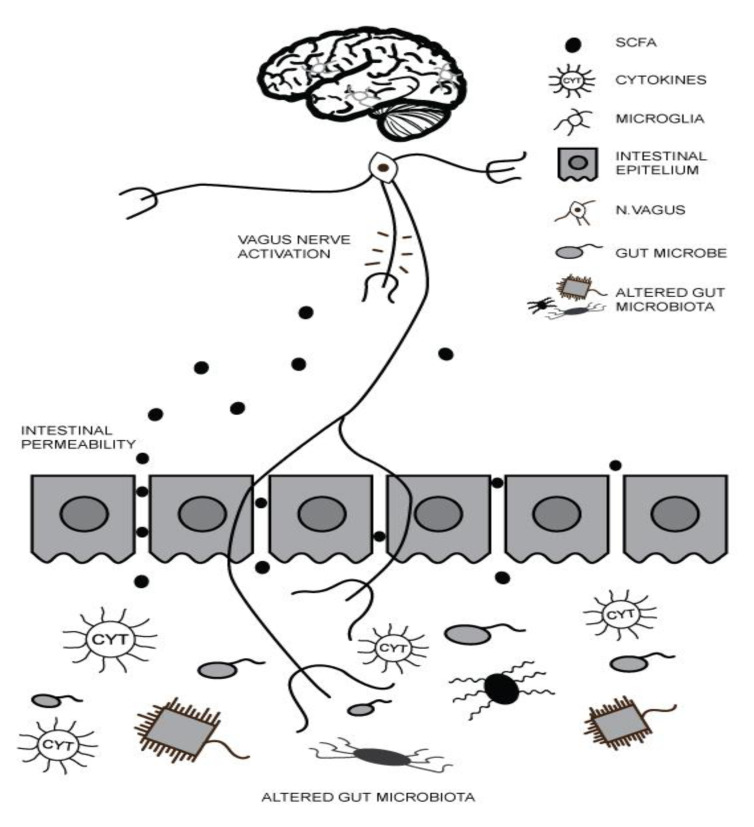
Autism Spectrum Disorder (ASD) is a complex neurodevelopmental disorder characterized by persistent deficits in social communication and social interaction across multiple contexts and restricted, repetitive patterns of behavior, interests and activities. The maternal status of polyunsaturated fatty acids (PUFA) regulates microglial activity and neuroinflammatory pathways during a child's brain development. In children with ASD, the metabolism of PUFA is thought to be deficient or abnormal, leading to increased production of proinflammatory cytokines, increased oxidative stress and an imbalance in the formation and action of neurotransmitters. In addition, nutritional deficits in omega-3 PUFA may affect gut microbiota and contribute to ASD by the gut-brain axis. The aim of this study was to review the possible role of neuroinflammation in ASD development and the effect of omega-3 PUFA supplementation in children with ASD. Due to a wide heterogeneity across RCTs, no definitive conclusion about omega-3 PUFA effects in ASD can be drawn. Supplementation with PUFA could be considered as one of the aspects in regulating the biological status of the organism and could provide added value to standard medical and psychological interventions for reducing behavioral deficits.
自闭症谱系障碍(ASD)是一种复杂的神经发育障碍,其特征是在多个环境中持续存在社交沟通和社交互动缺陷,以及受限的、重复的行为、兴趣和活动模式。多不饱和脂肪酸(PUFA)的母体状态调节儿童大脑发育过程中的小胶质细胞活性和神经炎症途径。在 ASD 儿童中,PUFA 的代谢被认为是不足或异常的,导致促炎细胞因子的产生增加,氧化应激增加以及神经递质的形成和作用失衡。此外,ω-3 PUFA 的营养不足可能会影响肠道微生物群,并通过肠道-大脑轴导致 ASD。本研究旨在综述神经炎症在 ASD 发展中的可能作用,以及 ω-3 PUFA 补充对 ASD 儿童的影响。由于 RCT 之间存在广泛的异质性,因此不能得出关于 ω-3 PUFA 在 ASD 中的作用的明确结论。补充 PUFA 可以被认为是调节机体生物学状态的一个方面,并可以为减少行为缺陷的标准医学和心理干预提供附加价值。