Oh Jae-Wook, Shin Juhyun, Chun Sechul, Muthu Manikandan, Gopal Judy
Department of Stem Cell and Regenerative Biotechnology, Konkuk University, Seoul 143-701, Korea.
Department of Environmental Health Science, Konkuk University, Seoul 143-701, Korea.
Polymers (Basel). 2021 Sep 17;13(18):3138. doi: 10.3390/polym13183138.
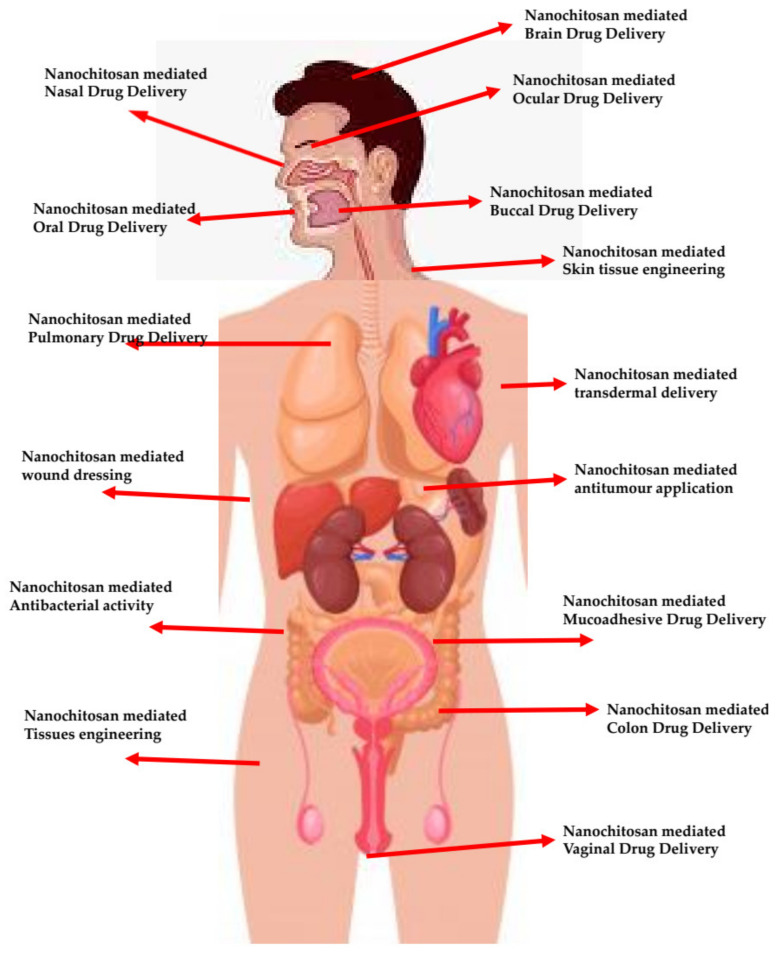
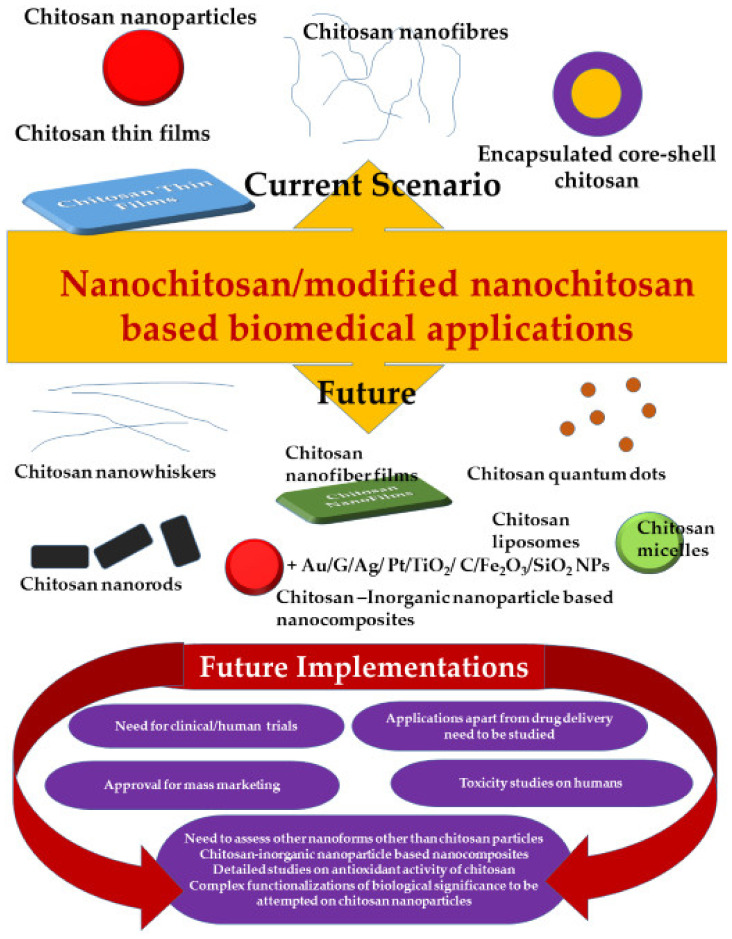
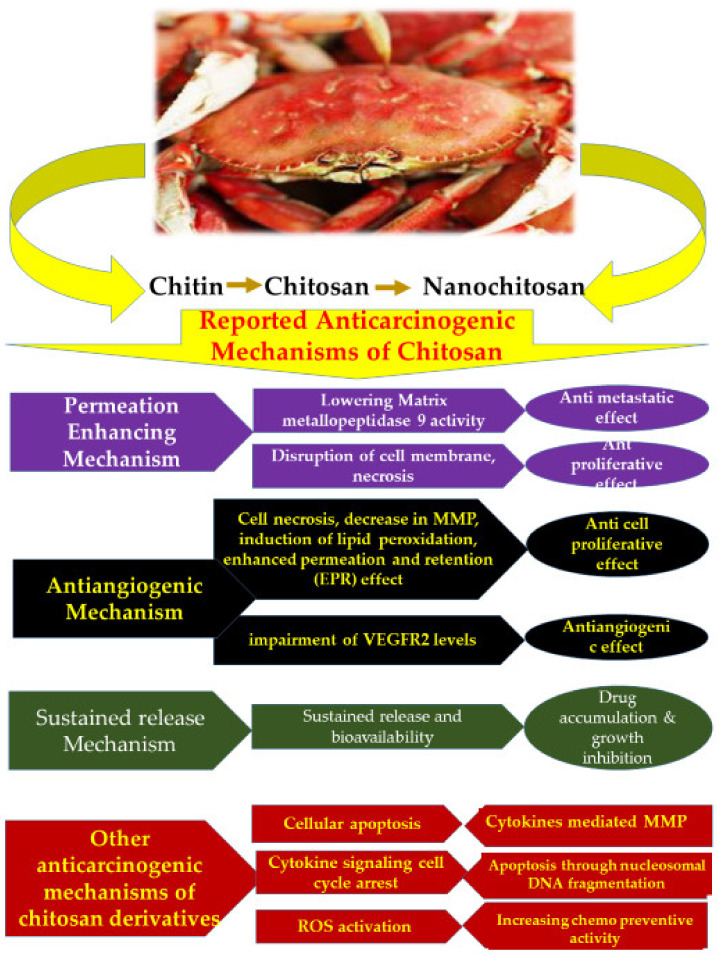
Chitosan begins its humble journey from marine food shell wastes and ends up as a versatile nutraceutical. This review focuses on briefly discussing the antioxidant activity of chitosan and retrospecting the accomplishments of chitosan nanoparticles as an anticarcinogen. The various modified/functionalized/encapsulated chitosan nanoparticles and nanoforms have been listed and their biomedical deliverables presented. The anticancer accomplishments of chitosan and its modified composites have been reviewed and presented. The future of surface modified chitosan and the lacunae in the current research focus have been discussed as future perspective. This review puts forth the urge to expand the scientific curiosity towards attempting a variety of functionalization and surface modifications to chitosan. There are few well known modifications and functionalization that benefit biomedical applications that have been proven for other systems. Being a biodegradable, biocompatible polymer, chitosan-based nanomaterials are an attractive option for medical applications. Therefore, maximizing expansion of its bioactive properties are explored. The need for applying the ideal functionalization that will significantly promote the anticancer contributions of chitosan nanomaterials has also been stressed.
壳聚糖始于海洋食品壳类废弃物这一平凡起点,最终成为一种多功能营养保健品。本综述着重简要讨论壳聚糖的抗氧化活性,并回顾壳聚糖纳米颗粒作为抗癌剂所取得的成果。已列出各种改性/功能化/包封的壳聚糖纳米颗粒和纳米形式,并介绍了它们的生物医学应用。对壳聚糖及其改性复合材料的抗癌成果进行了综述和介绍。作为未来展望,讨论了表面改性壳聚糖的未来以及当前研究重点中的不足。本综述提出了激发科学好奇心的迫切需求,以尝试对壳聚糖进行各种功能化和表面改性。对于其他系统已证明有少数知名的改性和功能化有益于生物医学应用。作为一种可生物降解、生物相容的聚合物,基于壳聚糖的纳米材料是医学应用的一个有吸引力的选择。因此,探索如何最大程度地扩展其生物活性特性。还强调了应用理想的功能化以显著促进壳聚糖纳米材料抗癌作用的必要性。