Fabrizi Fabrizio, Cerutti Roberta, Messa Piergiorgio
Department of Nephrology, Dialysis and Renal Transplantation, Fondazione IRCCS Cà Granda Ospedale Maggiore Policlinico, 20122 Milan, Italy.
Department of Clinical Sciences and Community Health, University of Milan, 20137 Milan, Italy.
Pathogens. 2021 Sep 7;10(9):1149. doi: 10.3390/pathogens10091149.
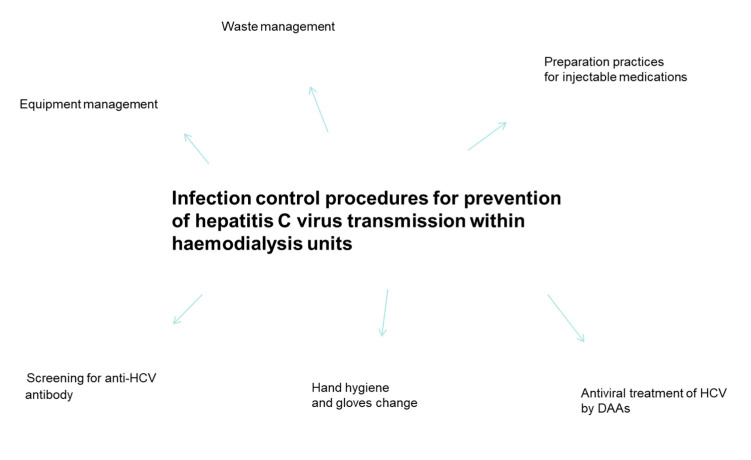
Prevalence rates of HCV infection are decreasing in hemodialysis units of most developed countries; however, nosocomial transmission of HCV continues to occur in the hemodialysis setting, not only in the emerging world. According to the Dialysis Outcomes and Practice Patterns Study (DOPPS, 2012-2015), the prevalence of HCV among patients on regular hemodialysis was 9.9%; in incident patients, the frequency of HCV was approximately 5%. Outbreaks of HCV have been investigated by epidemiologic and phylogenetic data obtained by sequencing of the HCV genome; no single factor was retrieved as being associated with nosocomial transmission of HCV within hemodialysis units. Transmission of HCV within HD units can be prevented successfully by full compliance with infection control practices; also, antiviral treatment and serologic screening for anti-HCV can be useful in achieving this aim. Infection control practices in hemodialysis units include barrier precautions to prevent exposure to blood-borne pathogens and other procedures specific to the hemodialysis environment. Isolating HCV-infected hemodialysis patients or using dedicated dialysis machines for HCV-infected patients are not currently recommended; reuse of dialyzers of HCV-infected patients should be made, according to recent guidelines. Randomized controlled trials regarding the impact of isolation on the risk of transmission of HCV to hemodialysis patients have not been published to date. At least two studies showed complete elimination of de novo HCV within HD units by implementation of strict infection control practices without isolation practices. De novo HCV within hemodialysis units has been independently associated with facility HCV prevalence, dialysis vintage, and low staff-to-patient ratio. Antiviral treatment of HCV-infected patients on hemodialysis should not replace the implementation of barrier precautions and other routine hemodialysis unit procedures.
在大多数发达国家的血液透析单位中,丙型肝炎病毒(HCV)感染的流行率正在下降;然而,HCV的医院内传播在血液透析环境中仍在继续发生,不仅在新兴国家如此。根据透析结果和实践模式研究(DOPPS,2012 - 2015年),接受定期血液透析的患者中HCV的流行率为9.9%;在新发病例中,HCV的感染率约为5%。通过对HCV基因组测序获得的流行病学和系统发育数据对HCV暴发进行了调查;未发现单一因素与血液透析单位内HCV的医院内传播相关。通过完全遵守感染控制措施,可以成功预防HD单位内HCV的传播;此外,抗病毒治疗和抗HCV血清学筛查有助于实现这一目标。血液透析单位的感染控制措施包括屏障预防措施,以防止接触血源性病原体以及其他针对血液透析环境的特定程序。目前不建议隔离HCV感染的血液透析患者或为HCV感染患者使用专用透析机;根据最新指南,应复用HCV感染患者的透析器。关于隔离对HCV传播给血液透析患者风险影响的随机对照试验迄今尚未发表。至少两项研究表明,通过实施严格的感染控制措施而非隔离措施,可使HD单位内的新发HCV完全消除。血液透析单位内的新发HCV与机构内HCV流行率、透析龄以及低医护比独立相关。对血液透析的HCV感染患者进行抗病毒治疗不应取代屏障预防措施和其他常规血液透析单位程序的实施。