Sharma Umesh C, Zhao Kanhao, Mentkowski Kyle, Sonkawade Swati D, Karthikeyan Badri, Lang Jennifer K, Ying Leslie
Department of Medicine, Division of Cardiology, Jacobs School of Medicine and Biomedical Sciences, Buffalo, NY, United States.
Department of Pharmacology and Toxicology, University at Buffalo, Buffalo, NY, United States.
Front Cardiovasc Med. 2021 Sep 13;8:726943. doi: 10.3389/fcvm.2021.726943. eCollection 2021.
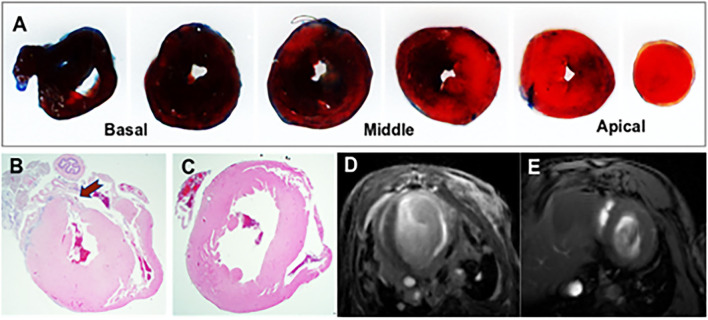
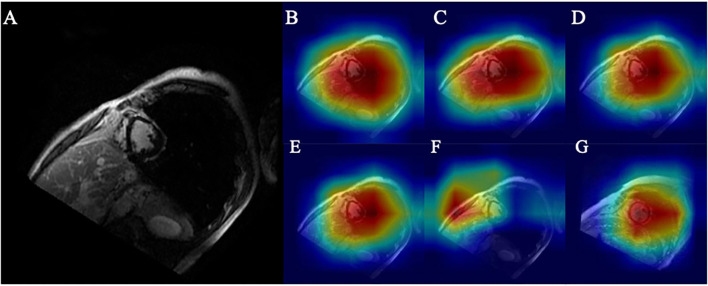
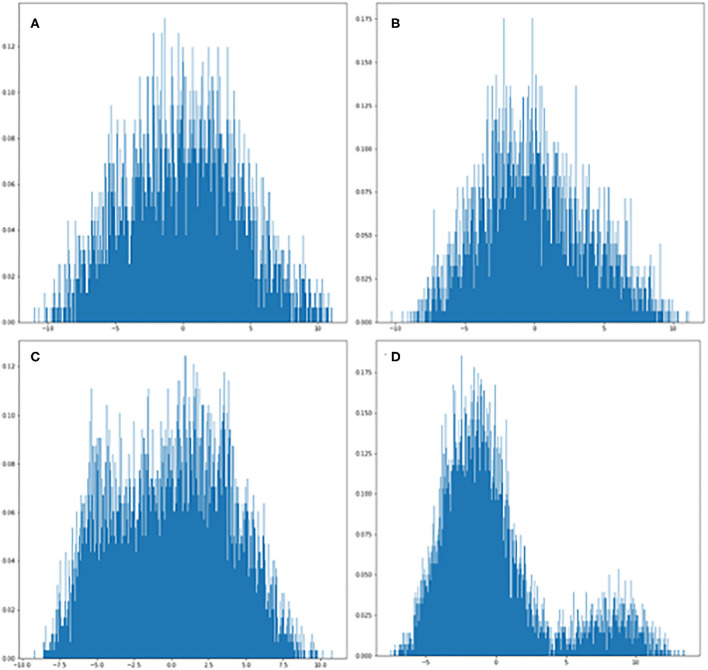
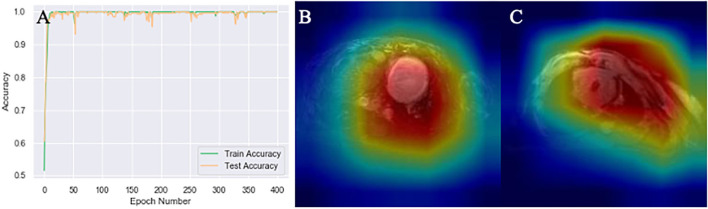
Contrast-enhanced cardiac magnetic resonance imaging (MRI) is routinely used to determine myocardial scar burden and make therapeutic decisions for coronary revascularization. Currently, there are no optimized deep-learning algorithms for the automated classification of scarred vs. normal myocardium. We report a modified Generative Adversarial Network (GAN) augmentation method to improve the binary classification of myocardial scar using both pre-clinical and clinical approaches. For the initial training of the MobileNetV2 platform, we used the images generated from a high-field (9.4T) cardiac MRI of a mouse model of acute myocardial infarction (MI). Once the system showed 100% accuracy for the classification of acute MI in mice, we tested the translational significance of this approach in 91 patients with an ischemic myocardial scar, and 31 control subjects without evidence of myocardial scarring. To obtain a comparable augmentation dataset, we rotated scar images 8-times and control images 72-times, generating a total of 6,684 scar images and 7,451 control images. In humans, the use of Progressive Growing GAN (PGGAN)-based augmentation showed 93% classification accuracy, which is far superior to conventional automated modules. The use of other attention modules in our CNN further improved the classification accuracy by up to 5%. These data are of high translational significance and warrant larger multicenter studies in the future to validate the clinical implications.
对比增强心脏磁共振成像(MRI)通常用于确定心肌瘢痕负荷,并为冠状动脉血运重建做出治疗决策。目前,尚无用于自动区分瘢痕心肌与正常心肌的优化深度学习算法。我们报告了一种改进的生成对抗网络(GAN)增强方法,采用临床前和临床方法来改善心肌瘢痕的二元分类。对于MobileNetV2平台的初始训练,我们使用了从急性心肌梗死(MI)小鼠模型的高场(9.4T)心脏MRI生成的图像。一旦该系统对小鼠急性MI分类显示出100%的准确率,我们就在91例有缺血性心肌瘢痕的患者和31例无心肌瘢痕证据的对照受试者中测试了该方法的转化意义。为了获得可比的增强数据集,我们将瘢痕图像旋转8次,对照图像旋转72次,共生成6684张瘢痕图像和7451张对照图像。在人类中,基于渐进式增长GAN(PGGAN)的增强方法显示出93%的分类准确率,远优于传统的自动模块。我们在卷积神经网络(CNN)中使用其他注意力模块进一步将分类准确率提高了5%。这些数据具有很高的转化意义,未来需要更大规模的多中心研究来验证其临床意义。