Sharifinejad Niusha, Mozhgani Seyed Hamidreza, Bakhtiyari Mahmood, Mahmoudi Elaheh
Student Research Committee, Alborz University of Medical Sciences, Karaj, Iran.
Alborz Office of USERN, Universal Scientific Education and Research Network (USERN), Alborz University of Medical Sciences, Karaj, Iran.
Gut Pathog. 2021 Sep 30;13(1):56. doi: 10.1186/s13099-021-00453-1.
Recently, the role of endogenous microbiota and the genotype-microbiota correlation in inflammatory bowel disease (IBD) pathogenesis have been highlighted. However, fungi, as the second most prevalent residents of the intestine, and their primary receptor, Dectin-1, are underrated. Thus, we conducted the first human study investigating the association of Leucine-rich repeat kinase 2 (LRRK2) polymorphism (rs11564258) with type and the extent of intestinal fungi in IBD patients.
A case-control study was performed on 79 ulcerative colitis (UC)-patients (case group) and 58 healthy subjects (HS group). DNA was extracted from blood samples of both groups and amplified with the primers designed for the specific locus containing the LRRK2 polymorphism (rs11564258) and then sequenced. Dectin-1 and LRRK2 mRNA expression levels were also determined. Furthermore, the type and prevalence of fecal yeast species were surveyed in case and control groups.
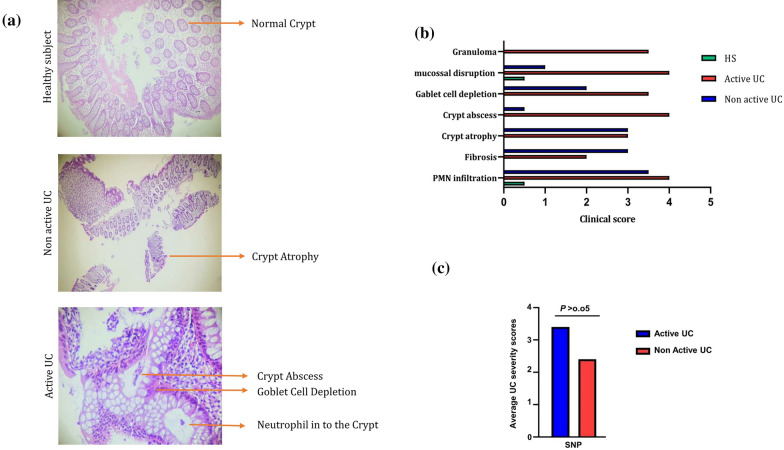
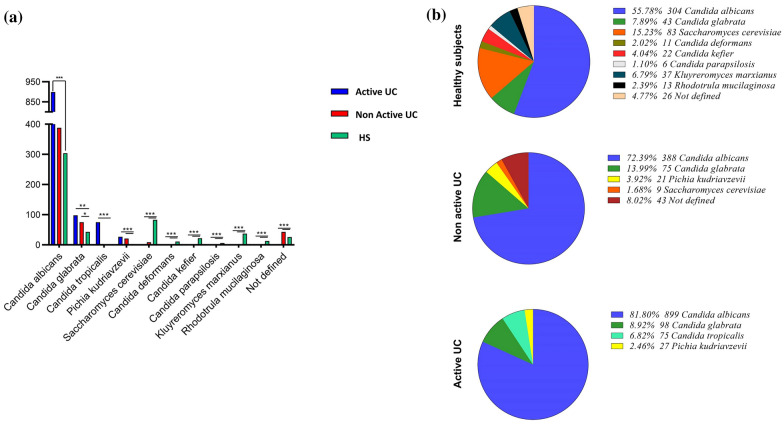
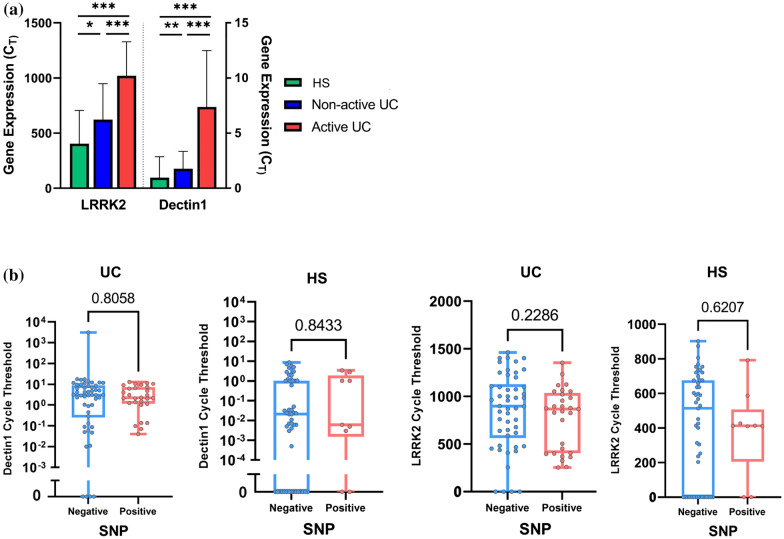
A positive correlation was observed between rs11564258 polymorphism and UC susceptibility (p = 0.008 vs. HS). Patients with active UC had the highest rate of isolated fungal colonies (50.41%), followed by patients with non-active UC (24.6%) and HS (25%). These results showed a relationship between UC severity with the increased fungal load. Candida albicans had the highest prevalence in both UC (78.7%) and HS groups (55.8%). Whereas Saccharomyces cerevisiae was the second most common species detected in HS (15.23%), it was significantly reduced in the UC patient group (1.68%) (P = 0.0001). On the other hand, single nucleotide polymorphism (SNP, rs11564258) was not correlated with the increased fungal flora in the UC patients. The expression of LRRK2 and Dectin-1 mRNA detected in blood samples was notably higher in the UC patients (P < 0.01) than in the HS group, without being affected by rs11564258 polymorphism.
Here, we disclosed that LRRK2 mediates Dectin-1 signaling pathway activation and subsequent inflammation in the UC patients without being affected by the presence of SNP rs11564258. Our data showed an increased global fungal load in the UC patients along with elevated UC susceptibility in cases carrying rs11564258 polymorphism. However, more clinical investigations, particularly in larger populations with different ethnic groups, are required to support this conclusion.
最近,内源性微生物群以及基因型-微生物群相关性在炎症性肠病(IBD)发病机制中的作用受到了关注。然而,作为肠道中第二大常见菌群的真菌及其主要受体——树突状细胞相关C型凝集素-1(Dectin-1)却被低估了。因此,我们开展了第一项人体研究,调查富含亮氨酸重复激酶2(LRRK2)基因多态性(rs11564258)与IBD患者肠道真菌的类型和程度之间的关联。
对79例溃疡性结肠炎(UC)患者(病例组)和58名健康受试者(HS组)进行了病例对照研究。从两组的血液样本中提取DNA,并用针对包含LRRK2基因多态性(rs11564258)的特定基因座设计的引物进行扩增,然后进行测序。同时还测定了Dectin-1和LRRK2的mRNA表达水平。此外,对病例组和对照组的粪便酵母种类及流行情况进行了调查。
观察到rs11564258多态性与UC易感性之间存在正相关(与HS组相比,p = 0.008)。活动期UC患者分离出的真菌菌落率最高(50.41%),其次是非活动期UC患者(24.6%)和HS组(25%)。这些结果表明UC严重程度与真菌负荷增加之间存在关联。白色念珠菌在UC组(78.7%)和HS组(55.8%)中的患病率均最高。酿酒酵母是在HS组中检测到的第二常见菌种(15.23%),而在UC患者组中显著减少(1.68%)(P = 0.0001)。另一方面,单核苷酸多态性(SNP,rs11564258)与UC患者真菌菌群增加无关。UC患者血液样本中检测到的LRRK2和Dectin-1 mRNA表达明显高于HS组(P < 0.01),且不受rs11564258多态性的影响。
在此,我们发现LRRK2介导了UC患者中Dectin-1信号通路的激活及随后的炎症反应,且不受SNP rs11564258存在与否的影响。我们的数据显示,携带rs11564258多态性的UC患者真菌总体负荷增加,同时UC易感性升高。然而,需要更多的临床研究,特别是在不同种族的更大人群中进行研究,以支持这一结论。