Department of Economics, University of Chicago, 5757 S University Ave, Chicago, IL, 60637, USA.
NBER, 1050 Massachusetts Ave., Cambridge, MA, 02138, USA.
Nat Commun. 2021 Oct 1;12(1):5765. doi: 10.1038/s41467-021-25964-y.
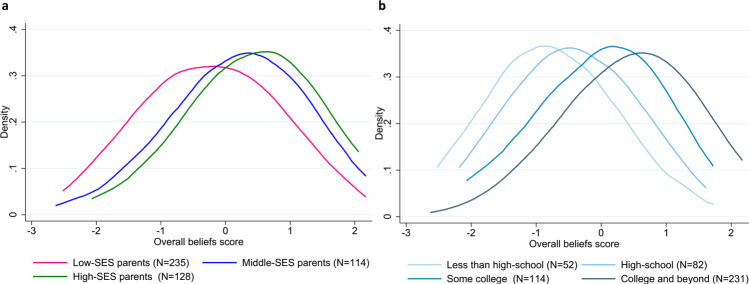
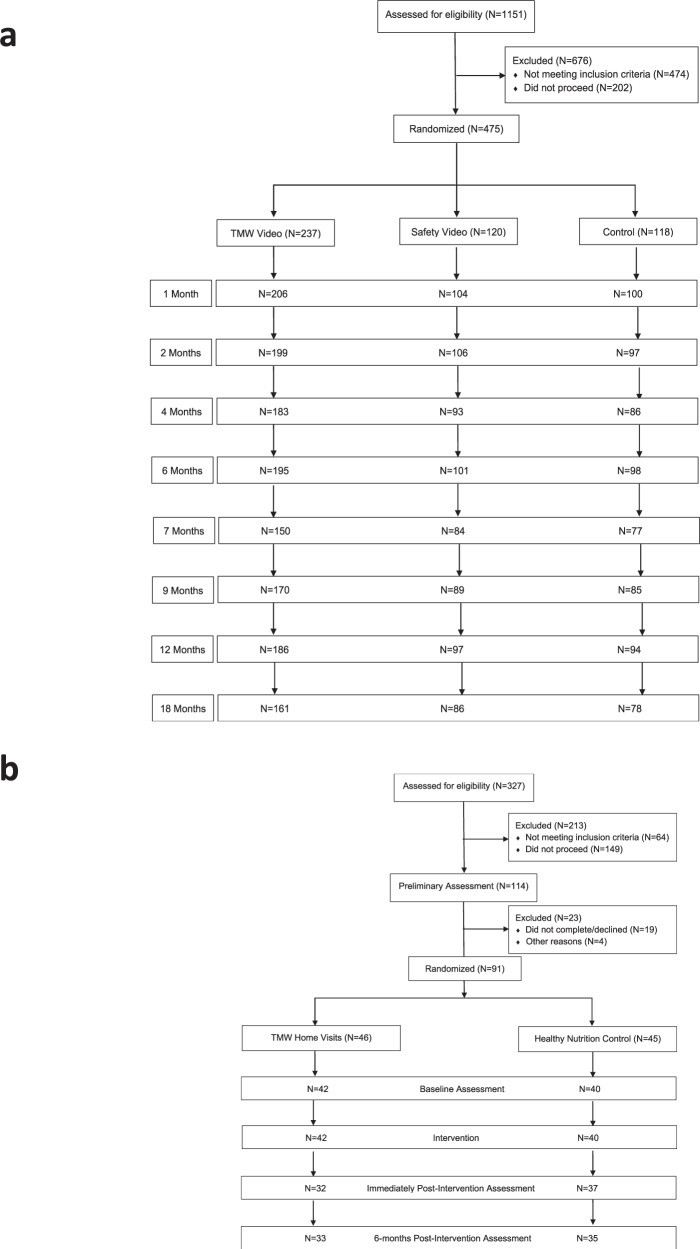
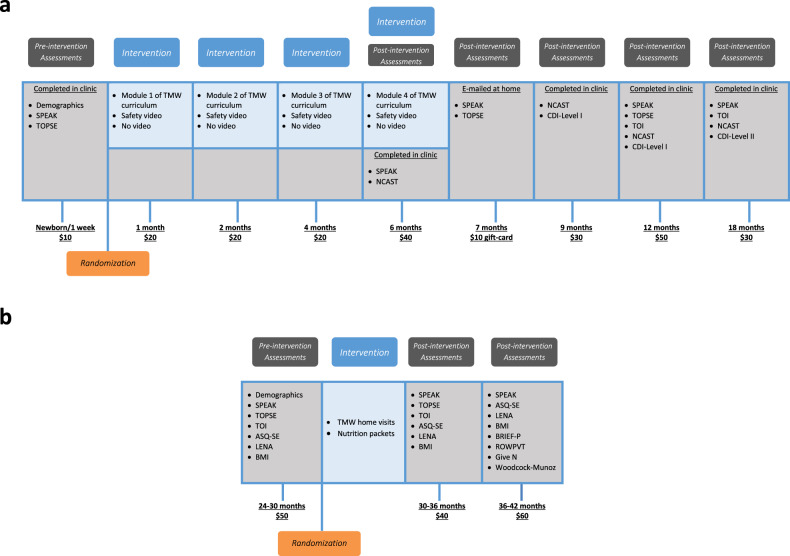
Socioeconomic gaps in child development open up early, with associated disparities in parental investments in children. Understanding the drivers of these disparities is key to designing effective policies. We first show that parental beliefs about the impact of early parental investments differ across socioeconomic status (SES), with parents of higher SES being more likely to believe that parental investments impact child development. We then use two randomized controlled trials to explore the mutability of such beliefs and their link to parental investments and child development, our three primary outcomes. In the first trial (NCT02812017 on clinicaltrials.gov), parents in the treatment group were asked to watch a short educational video during four well-child visits with their pediatrician while in the second trial (NCT03076268), parents in the treatment group received twelve home visits with feedback based on their daily interactions with their child. In both cases, we find that parental beliefs about child development are malleable. The first program changes parental beliefs but fails to lastingly increase parental investments and child outcomes. By contrast, in the more intensive program, all pre-specified endpoints are improved: the augmented beliefs are associated with enriched parent-child interactions and higher vocabulary, math, and social-emotional skills for the children.
社会经济差距在儿童发展中很早就出现了,随之而来的是父母在孩子身上投资的差异。了解这些差异的驱动因素是设计有效政策的关键。我们首先表明,父母对早期父母投资影响的看法因社会经济地位(SES)而异,SES 较高的父母更有可能相信父母的投资会影响孩子的发展。然后,我们使用两项随机对照试验来探索这些信念的可变性及其与父母投资和儿童发展(我们的三个主要结果)的联系。在第一项试验(clinicaltrials.gov 上的 NCT02812017)中,治疗组的父母被要求在与儿科医生的四次儿童保健访问中观看一段简短的教育视频,而在第二项试验(NCT03076268)中,治疗组的父母接受了十二次家访,并根据他们与孩子的日常互动提供反馈。在这两种情况下,我们都发现父母对儿童发展的信念是可以改变的。第一个项目改变了父母的信念,但未能持久地增加父母的投资和儿童的结果。相比之下,在更密集的项目中,所有预先指定的终点都得到了改善:增强的信念与丰富的亲子互动以及儿童更高的词汇量、数学和社会情感技能相关。