Molecular Pathology, Institute of Biomedicine and Translational Medicine, University of Tartu, Tartu, Estonia.
Children's Clinic of Tartu University Hospital, Tartu, Estonia.
Front Immunol. 2021 Sep 17;12:709759. doi: 10.3389/fimmu.2021.709759. eCollection 2021.
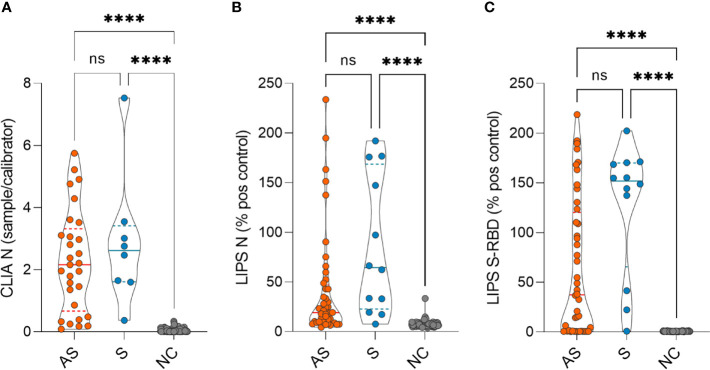
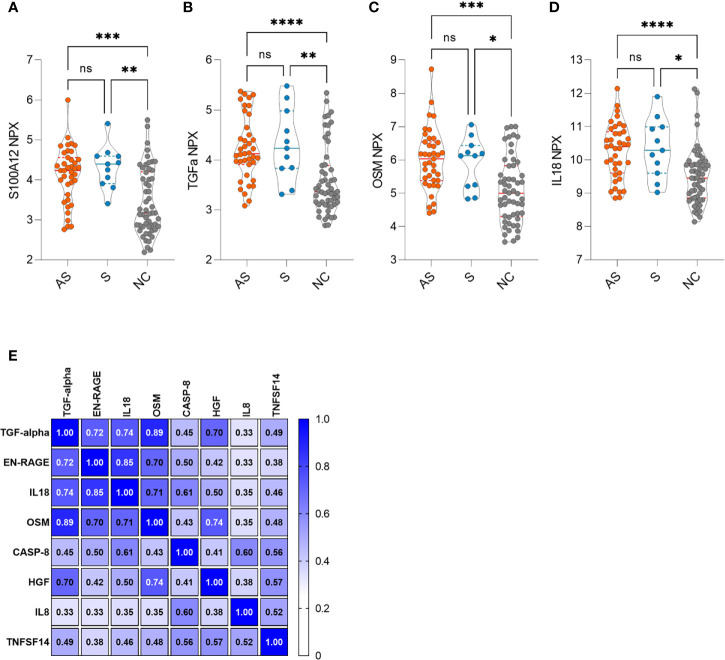
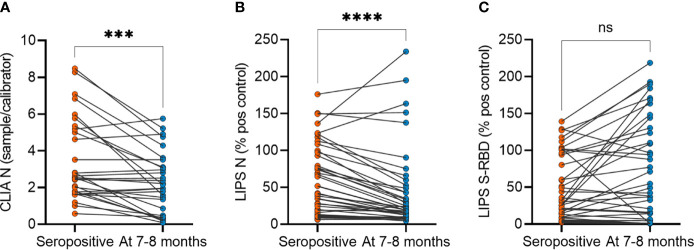
The clinical features of SARS-CoV-2 infection range from asymptomatic to severe disease with life-threatening complications. Understanding the persistence of immune responses in asymptomatic individuals merit special attention because of their importance in controlling the spread of the infections. We here studied the antibody and T cell responses, and a wide range of inflammation markers, in 56 SARS-CoV-2 antibody-positive individuals, identified by a population screen after the first wave of SARS-CoV-2 infection. These, mostly asymptomatic individuals, were reanalyzed 7-8 months after their infection together with 115 age-matched seronegative controls. We found that 7-8 months after the infection their antibodies to SARS-CoV-2 Nucleocapsid (N) protein declined whereas we found no decrease in the antibodies to Spike receptor-binding domain (S-RBD) when compared to the findings at seropositivity identification. In contrast to antibodies to N protein, the antibodies to S-RBD correlated with the viral neutralization capacity and with CD4 T cell responses as measured by antigen-specific upregulation of CD137 and CD69 markers. Unexpectedly we found the asymptomatic antibody-positive individuals to have increased serum levels of S100A12, TGF-alpha, IL18, and OSM, the markers of activated macrophages-monocytes, suggesting long-term persistent inflammatory effect associated with the viral infection in asymptomatic individuals. Our results support the evidence for the long-term persistence of the inflammation process and the need for post-infection clinical monitoring of SARS-CoV-2 infected asymptomatic individuals.
SARS-CoV-2 感染的临床特征从无症状到伴有危及生命的并发症的重症疾病不等。了解无症状个体中免疫反应的持久性值得特别关注,因为它们在控制感染传播方面很重要。我们在此研究了通过 SARS-CoV-2 感染第一波后的人群筛查确定的 56 名 SARS-CoV-2 抗体阳性个体的抗体和 T 细胞反应以及广泛的炎症标志物。这些个体主要是无症状个体,在感染后 7-8 个月与 115 名年龄匹配的血清阴性对照者一起重新进行了分析。我们发现,在感染后 7-8 个月时,他们对 SARS-CoV-2 核衣壳(N)蛋白的抗体下降,而与血清阳性鉴定时相比,对 Spike 受体结合域(S-RBD)的抗体没有下降。与 N 蛋白抗体相反,S-RBD 抗体与病毒中和能力以及通过抗原特异性上调 CD137 和 CD69 标志物来衡量的 CD4 T 细胞反应相关。出乎意料的是,我们发现无症状抗体阳性个体的血清 S100A12、TGF-α、IL18 和 OSM 水平升高,这些标志物是活化的巨噬细胞-单核细胞的标志物,表明与无症状个体中的病毒感染相关的长期持续炎症效应。我们的结果支持长期存在炎症过程的证据,并需要对 SARS-CoV-2 感染无症状个体进行感染后临床监测。