Frontier Research Center, Toyota Motor Corporation, Toyota, Japan.
Department of Dermatology, Kyoto University Graduate School of Medicine, Kyoto, Japan.
Front Cell Infect Microbiol. 2021 Sep 16;11:712360. doi: 10.3389/fcimb.2021.712360. eCollection 2021.
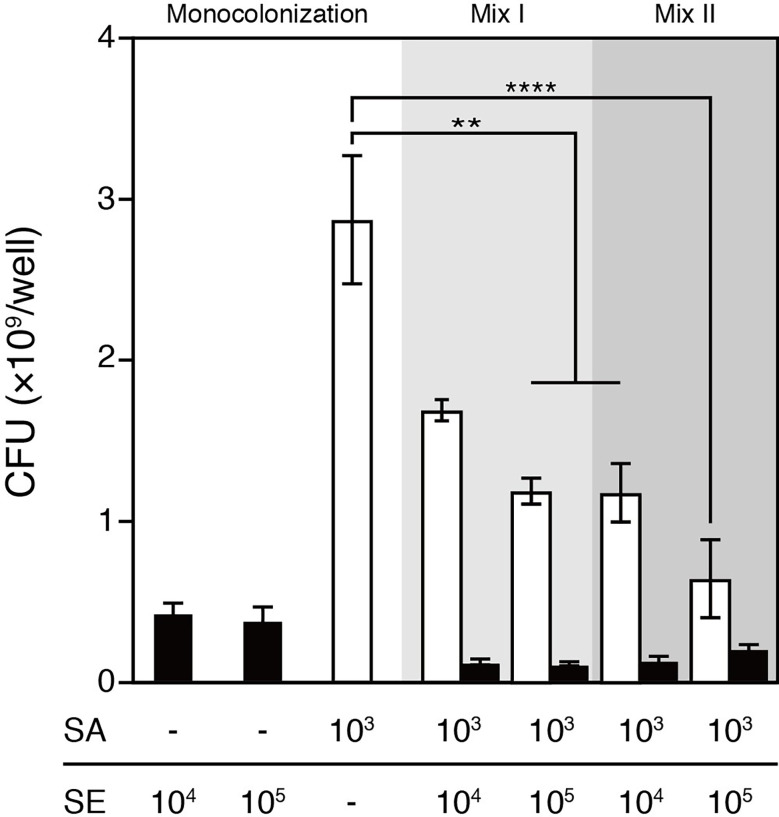
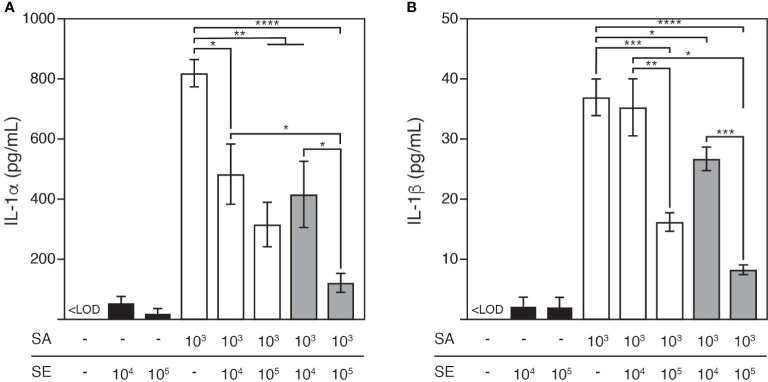
The skin microbiota has been recognized to play an integral role in the physiology and pathology of the skin. The crosstalk between skin and the resident microbes has been extensively investigated using two-dimensional (2D) and three-dimensional (3D) cell cultures ; however, skin colonization by multiple species and the effects of interspecific interactions on the structure and function of skin remains to be elucidated. This study reports the establishment of a mixed infection model, incorporating both commensal () and pathogenic () bacteria, based on a 3D human epidermal model. We observed that co-infecting the 3D epidermal model with and restricted the growth of . In addition, induced epidermal cytotoxicity, and the release of proinflammatory cytokines was attenuated by the - mixed infection model. also inhibited the invasion of the deeper epidermis by , eliciting protective effects on the integrity of the epidermal barrier. This 3D culture-based mixed infection model would be an effective replacement for existing animal models and 2D cell culture approaches for the evaluation of diverse biotic and abiotic factors involved in maintaining skin health.
皮肤微生物群已被认为在皮肤的生理和病理中起着至关重要的作用。已经使用二维(2D)和三维(3D)细胞培养广泛研究了皮肤与常驻微生物之间的串扰;然而,多种物种对皮肤的定植以及种间相互作用对皮肤结构和功能的影响仍有待阐明。本研究报告了一种混合感染模型的建立,该模型基于 3D 人表皮模型,同时包含共生()和致病()细菌。我们观察到,与 3D 表皮模型共同感染 和 限制了 的生长。此外, 诱导表皮细胞毒性,而 混合感染模型减弱了促炎细胞因子的释放。 还抑制了 的深层表皮入侵,对表皮屏障的完整性产生了保护作用。这种基于 3D 培养的混合感染模型将是现有动物模型和 2D 细胞培养方法的有效替代方法,可用于评估维持皮肤健康所涉及的各种生物和非生物因素。