Immunology Research Center, National Health Research Institutes, Zhunan, Taiwan
Division of Allergy, Immunology and Rheumatology, Taichung Veterans General Hospital, Taichung, Taiwan.
Ann Rheum Dis. 2022 Feb;81(2):243-254. doi: 10.1136/annrheumdis-2021-221010. Epub 2021 Oct 5.
MAP4K3 (GLK) overexpression in T cells induces interleukin (IL)-17A production and autoimmune responses. GLK overexpressing T-cell population is correlated with severity of human systemic lupus erythematosus (SLE); however, it is unclear how GLK is upregulated in patients with SLE.
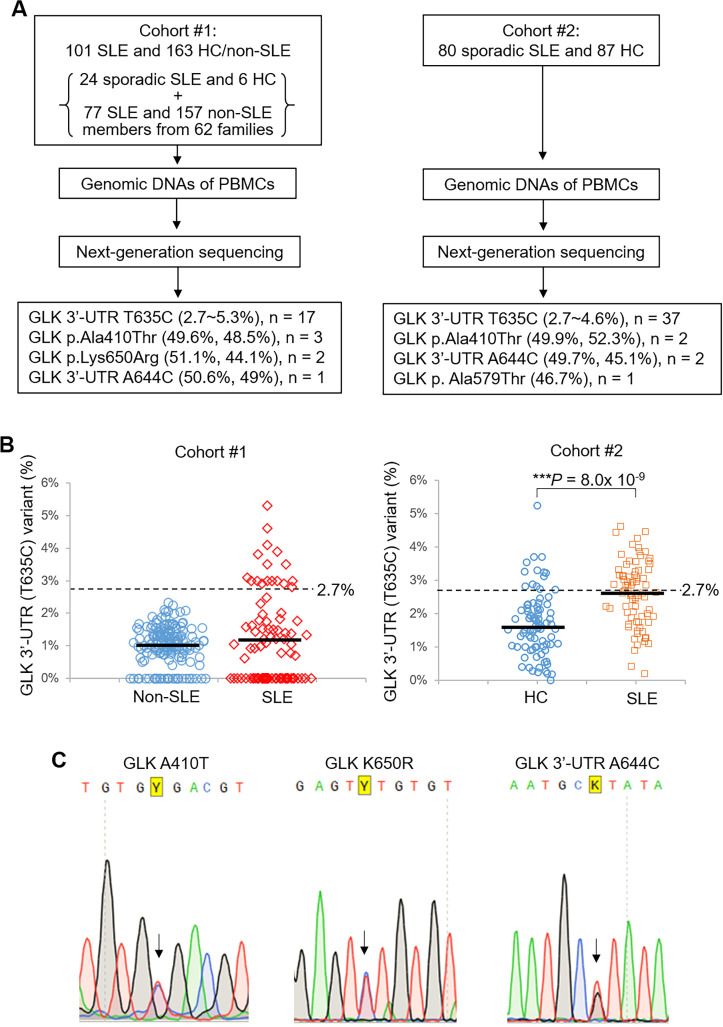
We enrolled 181 patients with SLE and 250 individuals without SLE (93 healthy controls and 157 family members of patients with SLE) in two independent cohorts from different hospitals/cities. Genomic DNAs of peripheral blood mononuclear cells were subjected to next-generation sequencing to identify GLK gene variants. The functional consequences of the identified GLK germline or somatic variants were investigated using site-directed mutagenesis and cell transfection, followed by reporter assays, mass spectrometry, immunoblotting, coimmunoprecipitation, and in situ proximity ligation assays.
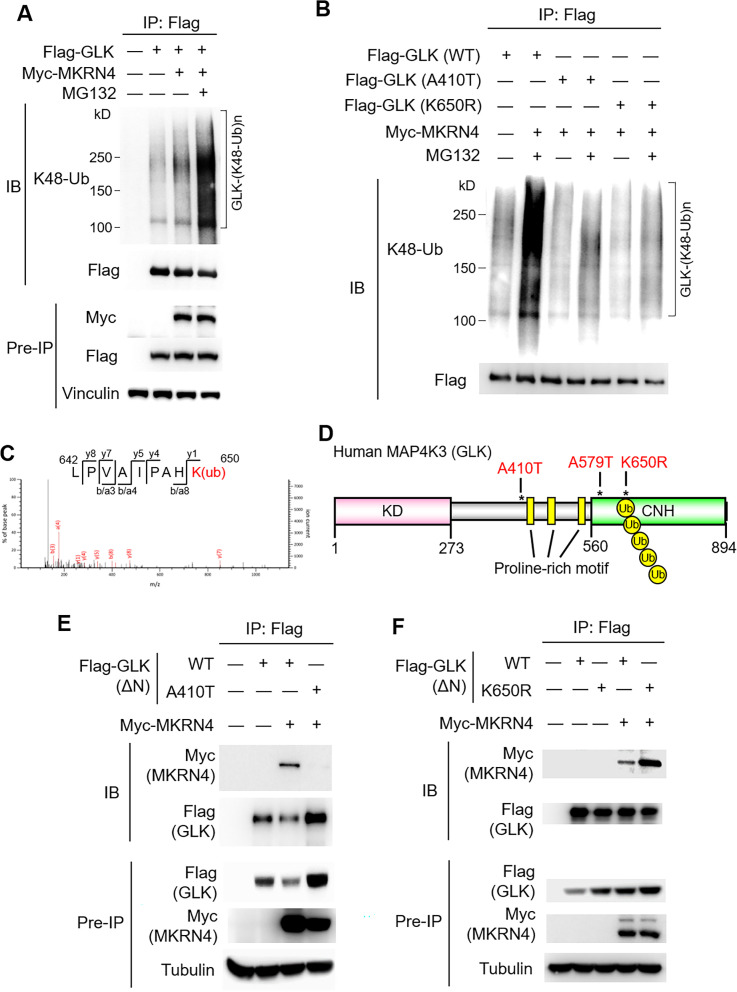
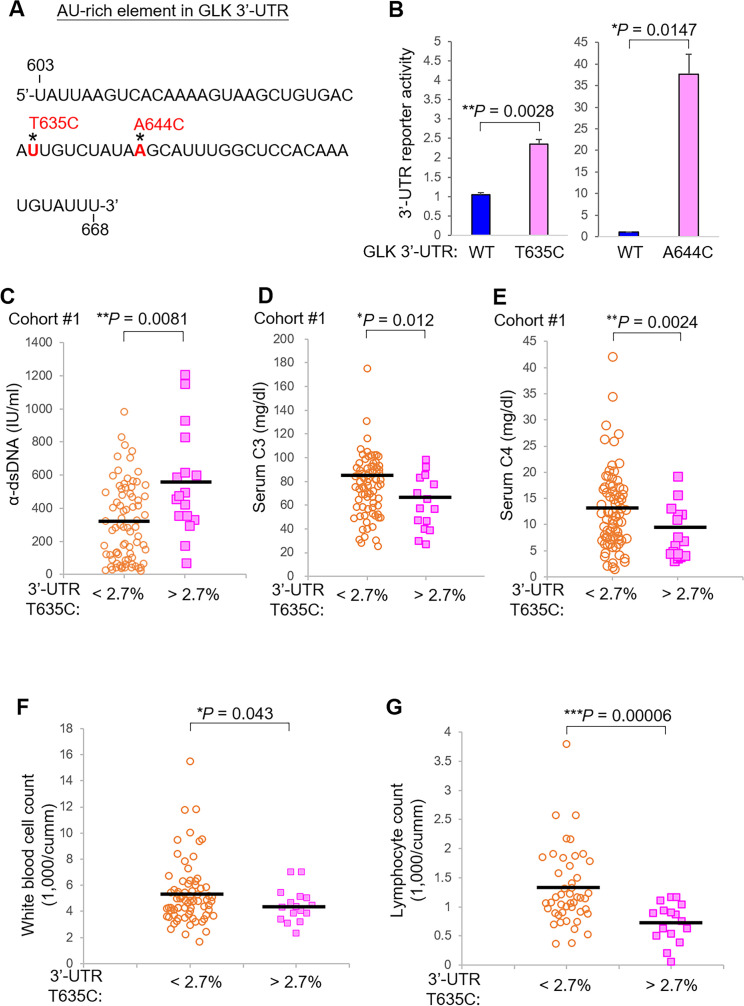
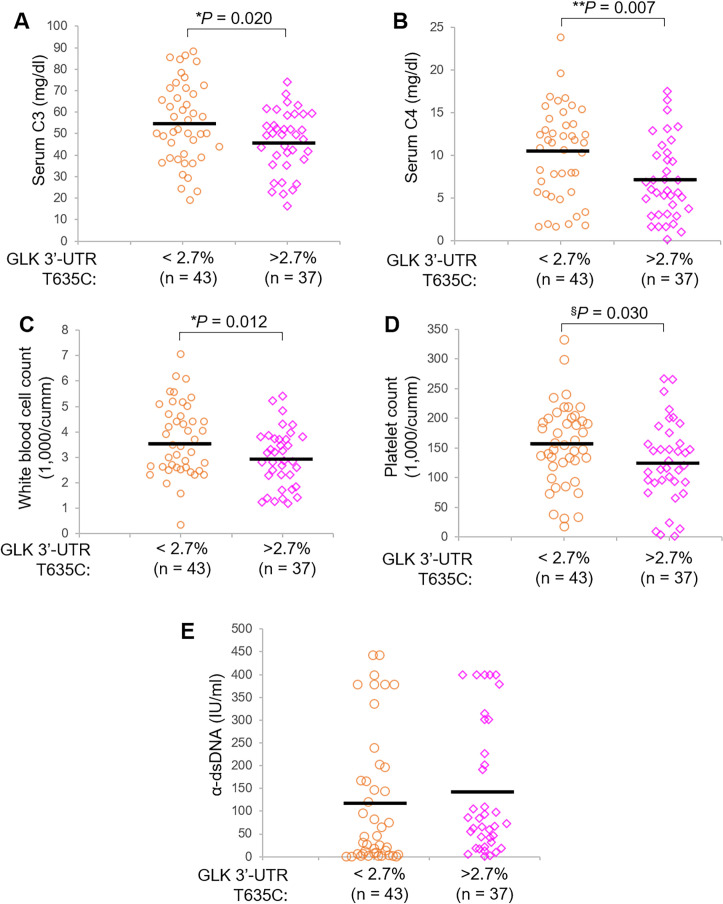
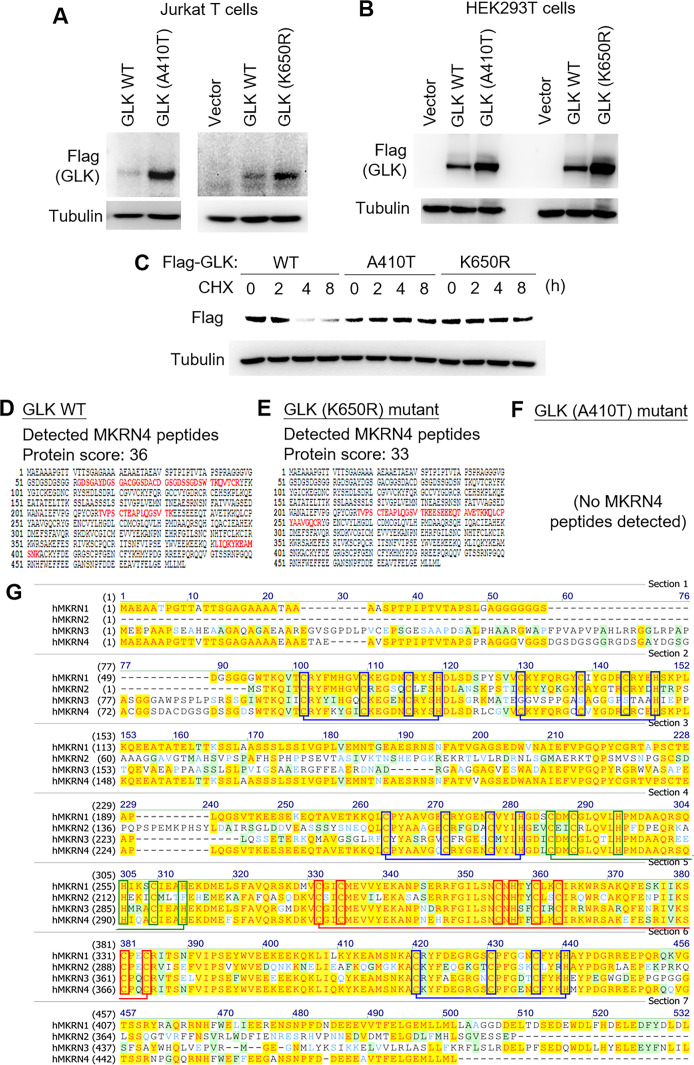
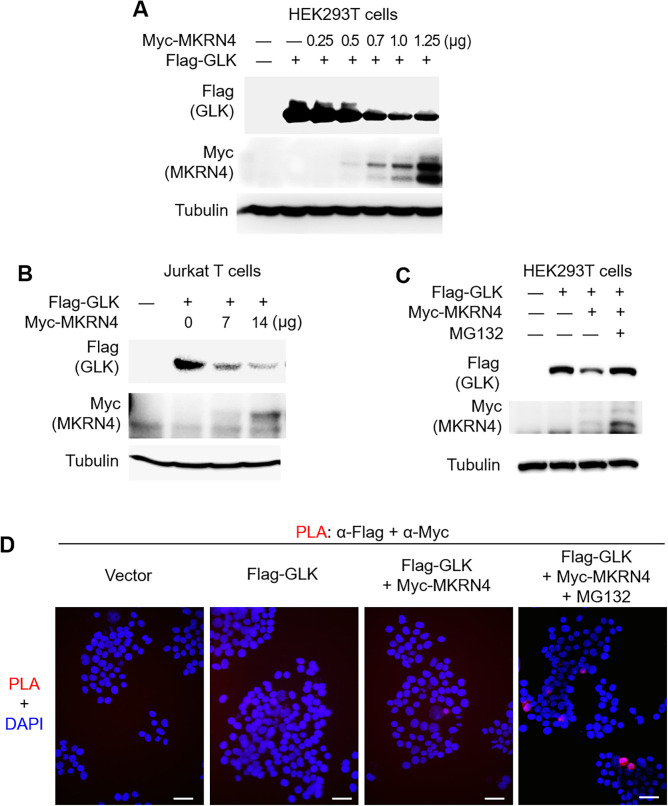
We identified 58 patients with SLE from Cohort #1 and #2 with higher frequencies of a somatic variant (chr2:39 477 124 A>G) in GLK 3'-untranslated region (UTR); these patients with SLE showed increased serum anti-double-stranded DNA levels and decreased serum C3/C4 levels. This somatic variant in 3'-UTR enhanced GLK mRNA levels in T cells. In addition, we identified five patients with SLE with GLK (A410T) germline variant in Cohort #1 and #2, as well as two other patients with SLE with GLK (K650R) germline variant in Cohort #1. Another GLK germline variant, A579T, was also detected in one patient with SLE from Cohort #2. Both GLK (A410T) and GLK (K650R) mutants inhibited GLK ubiquitination induced by the novel E3 ligase makorin ring-finger protein 4 (MKRN4), leading to GLK protein stabilisation.
Multiple GLK germline and somatic variants cause GLK induction by increasing mRNA or protein stability in patients with SLE.
T 细胞中 MAP4K3(GLK)的过表达会诱导白细胞介素(IL)-17A 的产生和自身免疫反应。GLK 过表达的 T 细胞群体与人类系统性红斑狼疮(SLE)的严重程度相关;然而,尚不清楚 GLK 在 SLE 患者中是如何上调的。
我们在两个不同医院/城市的两个独立队列中招募了 181 名 SLE 患者和 250 名无 SLE 的个体(93 名健康对照和 157 名 SLE 患者的家庭成员)。对外周血单核细胞的基因组 DNA 进行下一代测序,以鉴定 GLK 基因突变。通过定点诱变和细胞转染,然后进行报告基因检测、质谱分析、免疫印迹、共免疫沉淀和原位邻近连接分析,研究鉴定出的 GLK 种系或体细胞变体的功能后果。
我们从队列 #1 和 #2 中确定了 58 名 SLE 患者,他们的 GLK 3'-非翻译区(UTR)中存在更高频率的体细胞变体(chr2:39477124 A>G);这些 SLE 患者的血清抗双链 DNA 水平升高,血清 C3/C4 水平降低。UTR 中的这种体细胞变体增强了 T 细胞中的 GLK mRNA 水平。此外,我们在队列 #1 和 #2 中还鉴定了 5 名 SLE 患者的 GLK(A410T)种系变体,以及在队列 #1 中还鉴定了另外 2 名 SLE 患者的 GLK(K650R)种系变体。在队列 #2 中的 1 名 SLE 患者中还检测到另一个 GLK 种系变体 A579T。GLK(A410T)和 GLK(K650R)突变体均抑制了新型 E3 连接酶 makorin 环指蛋白 4(MKRN4)诱导的 GLK 泛素化,导致 GLK 蛋白稳定。
多个 GLK 种系和体细胞变体通过增加 SLE 患者的 mRNA 或蛋白稳定性来诱导 GLK。