Zhou Wusi, Dai Weidong
School of Public Administration, Hangzhou Normal University, China.
School of Public Administration, Zhejiang University of Finance and Economics, China.
Int J Integr Care. 2021 Sep 17;21(3):11. doi: 10.5334/ijic.5676. eCollection 2021 Jul-Sep.
Long-term care is an effective intervention that help older people cope with significant declines in capacity. The growing demand for long-term care signals a new social risk and has been given a higher political priority in China. In 2016, 15 local authorities have been selected to pilot the long-term care insurance programme. However, the current implementation of these programmes is fragmented, with a measure of uncertainty. This study aims to investigate the principles and characteristics of long-term care insurance policies across all pilot authorities. It seeks to examine the design of local long-term care insurance systems and their current status.
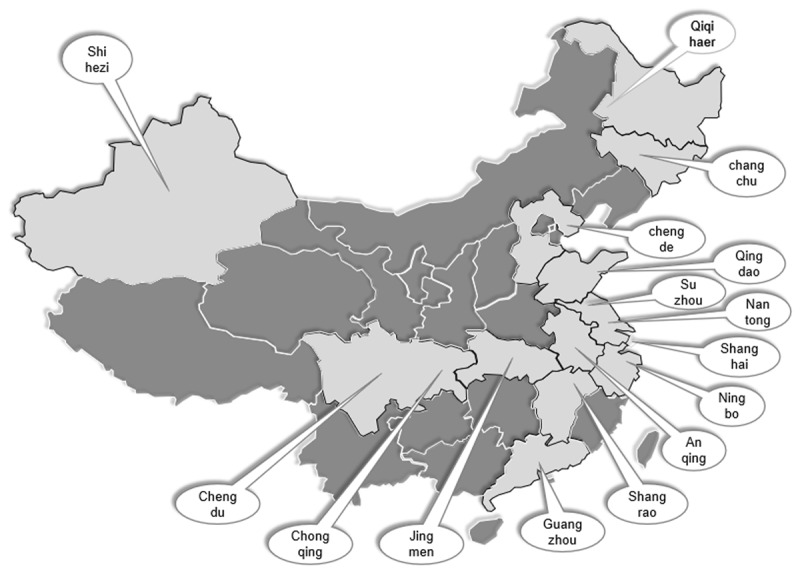
Based on the 2016 guidance, a systematic search for local policy documents on long-term care insurance across the 15 authorities was undertaken, followed by critical analysis to extract policy value and distinctive features in the delivery of long-term care.
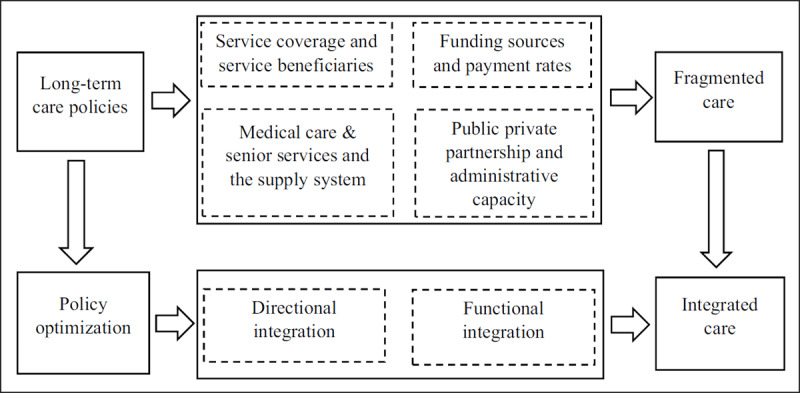
The results found that there were many inconsistencies in long-term care policies across local areas, leading to substantial variations in services to the beneficiaries, funding sources, benefit package, supply options and partnership working. Policy fragmentation has brought the postcode lottery and continued inequity for long-term care.
Moving forward, local authorities need to have a clear vision of inter-organisational collaboration from the macro to the micro levels in directional and functional dimensions. At the national level, vertical governance should be interacted to outline good practice guidelines and build right service infrastructure. At the local level, horizontal organizations can collaborate to achieve an effective and efficient delivery of long-term care.
长期护理是一项有效的干预措施,有助于老年人应对能力的显著下降。对长期护理需求的不断增长标志着一种新的社会风险,在中国已被赋予更高的政治优先级。2016年,15个地方政府被选定为长期护理保险计划的试点。然而,目前这些计划的实施是分散的,存在一定程度的不确定性。本研究旨在调查所有试点地区长期护理保险政策的原则和特点。它试图审视地方长期护理保险制度的设计及其现状。
基于2016年的指导意见,对15个地区有关长期护理保险的地方政策文件进行了系统检索,随后进行批判性分析,以提取长期护理服务中的政策价值和显著特征。
结果发现,各地长期护理政策存在诸多不一致之处,导致受益人所获服务、资金来源、福利套餐、供应选择和合作方式存在很大差异。政策碎片化带来了服务的不公平性以及长期护理方面持续存在的不平等现象。
展望未来,地方政府需要在宏观和微观层面的方向和功能维度上对组织间合作有清晰的愿景。在国家层面,应进行纵向治理互动,以勾勒出良好实践指南并构建合适的服务基础设施。在地方层面,横向组织可以合作,以实现长期护理服务的高效提供。