Division of Clinical Microbiology, Department of Laboratory Medicine, Karolinska Institute, ANA Futura, Campus Flemingsberg, Stockholm, Sweden.
Södersjukhuset (The South General Hospital), Stockholm, Sweden.
Mol Cell Proteomics. 2021;20:100159. doi: 10.1016/j.mcpro.2021.100159. Epub 2021 Oct 5.
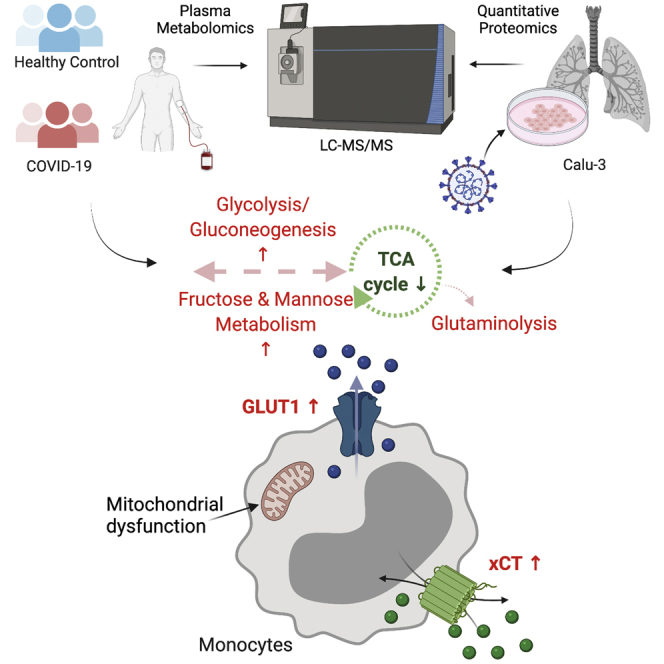
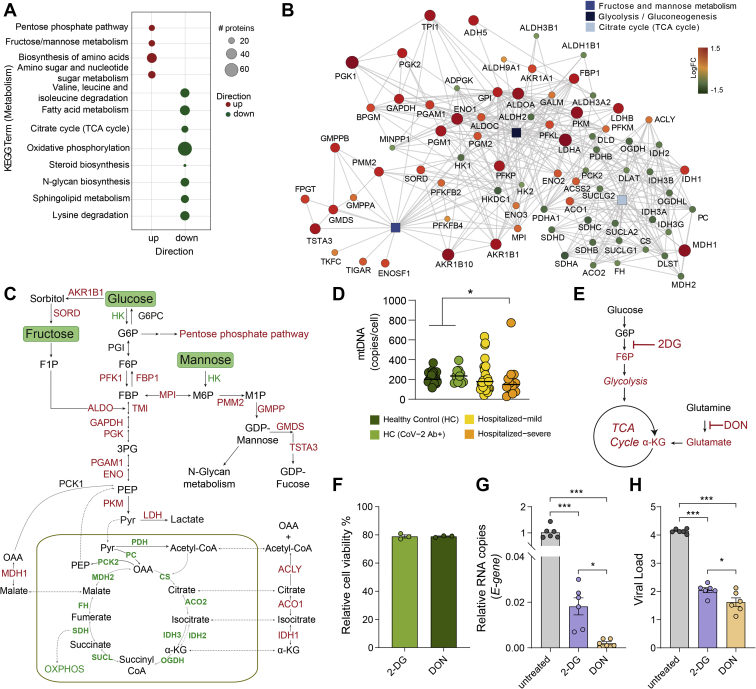
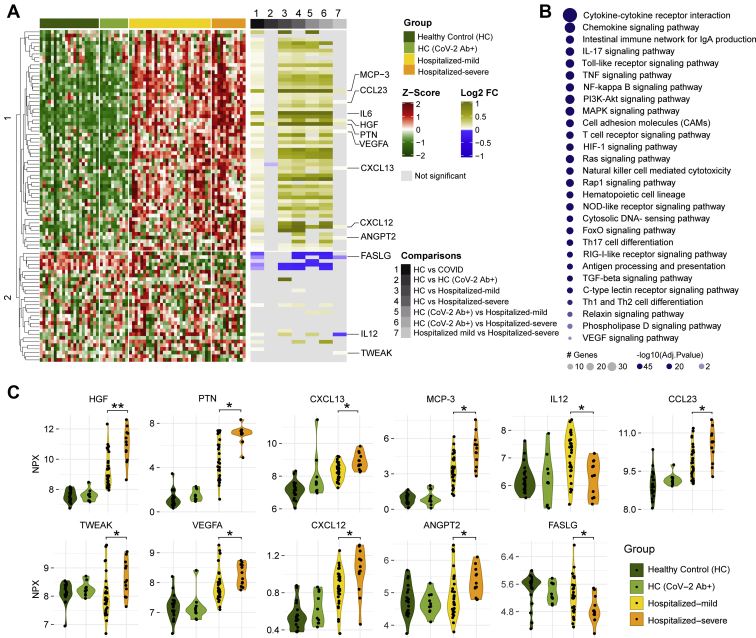
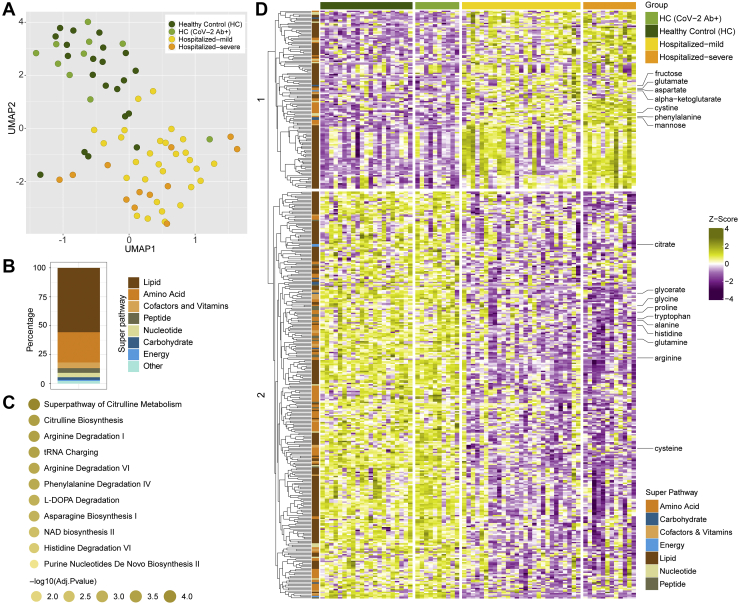
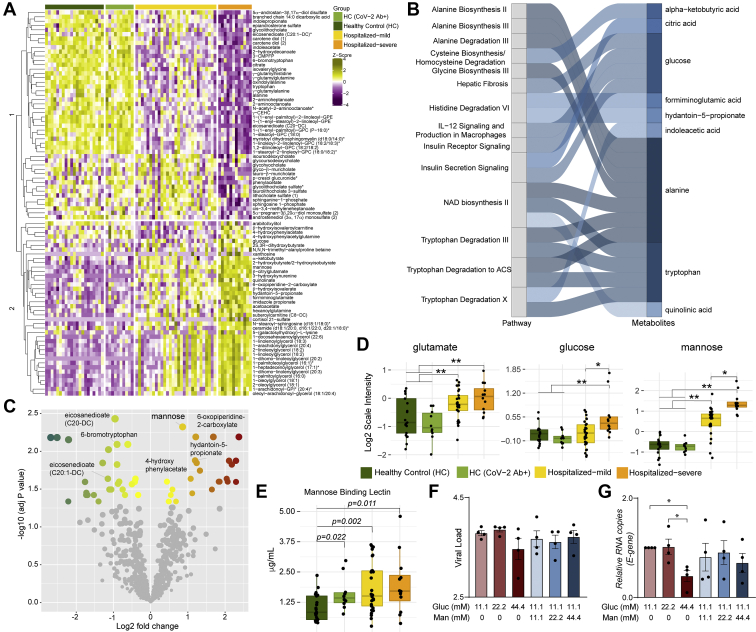
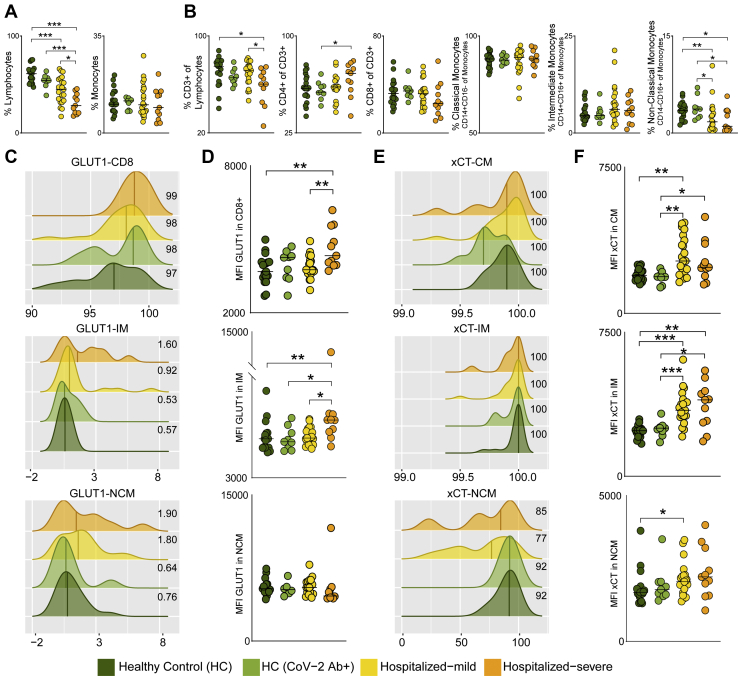
Viruses hijack host metabolic pathways for their replicative advantage. In this study, using patient-derived multiomics data and in vitro infection assays, we aimed to understand the role of key metabolic pathways that can regulate severe acute respiratory syndrome coronavirus-2 reproduction and their association with disease severity. We used multiomics platforms (targeted and untargeted proteomics and untargeted metabolomics) on patient samples and cell-line models along with immune phenotyping of metabolite transporters in patient blood cells to understand viral-induced metabolic modulations. We also modulated key metabolic pathways that were identified using multiomics data to regulate the viral reproduction in vitro. Coronavirus disease 2019 disease severity was characterized by increased plasma glucose and mannose levels. Immune phenotyping identified altered expression patterns of carbohydrate transporter, glucose transporter 1, in CD8 T cells, intermediate and nonclassical monocytes, and amino acid transporter, xCT, in classical, intermediate, and nonclassical monocytes. In in vitro lung epithelial cell (Calu-3) infection model, we found that glycolysis and glutaminolysis are essential for virus replication, and blocking these metabolic pathways caused significant reduction in virus production. Taken together, we therefore hypothesized that severe acute respiratory syndrome coronavirus-2 utilizes and rewires pathways governing central carbon metabolism leading to the efflux of toxic metabolites and associated with disease severity. Thus, the host metabolic perturbation could be an attractive strategy to limit the viral replication and disease severity.
病毒会劫持宿主的代谢途径,以获取复制优势。在这项研究中,我们使用患者来源的多组学数据和体外感染实验,旨在了解能够调节严重急性呼吸综合征冠状病毒 2 复制的关键代谢途径的作用,以及它们与疾病严重程度的关系。我们使用多组学平台(靶向和非靶向蛋白质组学和非靶向代谢组学)对患者样本和细胞系模型进行研究,并对患者血细胞中的代谢物转运蛋白进行免疫表型分析,以了解病毒诱导的代谢调节。我们还使用多组学数据来调节关键代谢途径,以在体外调节病毒的复制。2019 年冠状病毒病的严重程度表现为血浆葡萄糖和甘露糖水平升高。免疫表型分析确定了 CD8 T 细胞、中间和非经典单核细胞中碳水化合物转运蛋白、葡萄糖转运蛋白 1 的表达模式发生改变,以及经典、中间和非经典单核细胞中氨基酸转运蛋白 xCT 的表达模式发生改变。在体外肺上皮细胞(Calu-3)感染模型中,我们发现糖酵解和谷氨酰胺分解是病毒复制所必需的,阻断这些代谢途径会导致病毒产量显著减少。综上所述,我们因此假设严重急性呼吸综合征冠状病毒 2 利用并重新布线调节中心碳代谢的途径,导致有毒代谢物的外流,并与疾病严重程度相关。因此,宿主代谢的改变可能是限制病毒复制和疾病严重程度的一种有吸引力的策略。