Chen Zhongxin, Li Wenqiang, Sabuj Md Abdus, Li Yuan, Zhu Weiya, Zeng Miao, Sarap Chandra S, Huda Md Masrul, Qiao Xianfeng, Peng Xiaobin, Ma Dongge, Ma Yuguang, Rai Neeraj, Huang Fei
Institute of Polymer Optoelectronic Materials and Devices, State Key Laboratory of Luminescent Materials and Devices, South China University of Technology, Guangzhou, 510640, P. R. China.
Dave C. Swalm School of Chemical Engineering and Center for Advanced Vehicular Systems, Mississippi State University, Mississippi State, MS, 39762, United States.
Nat Commun. 2021 Oct 7;12(1):5889. doi: 10.1038/s41467-021-26173-3.
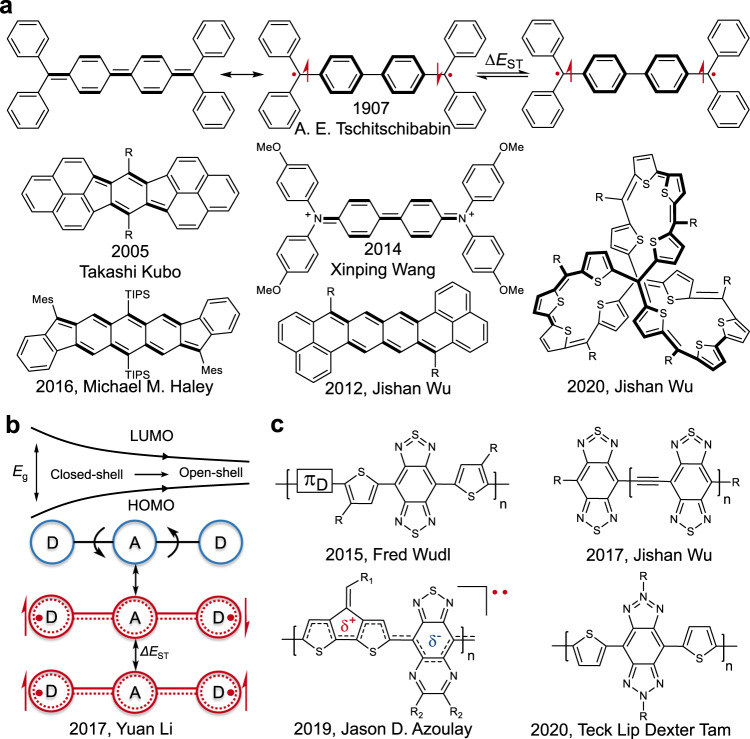
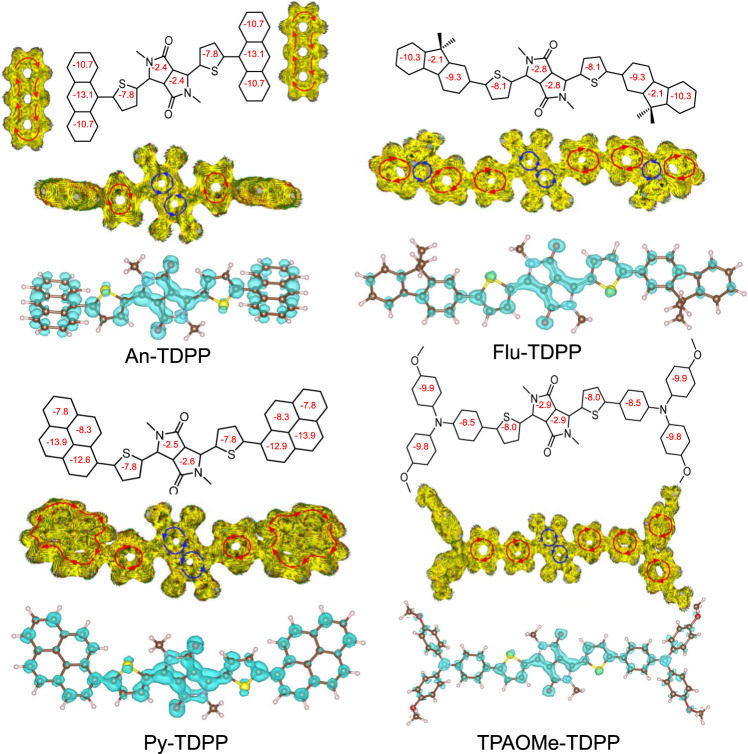
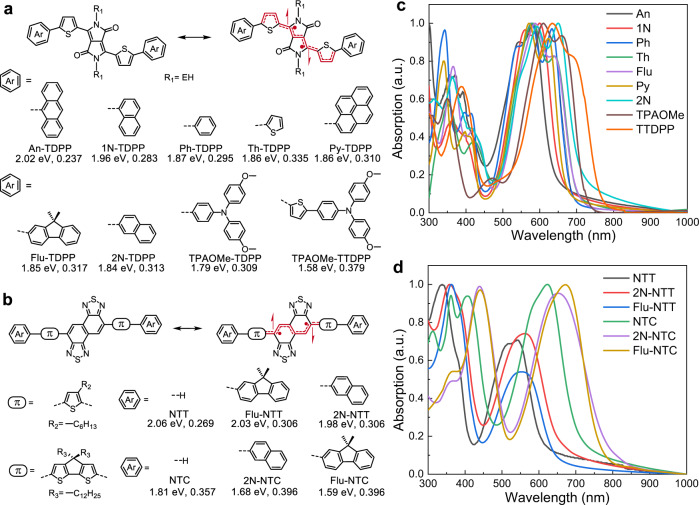
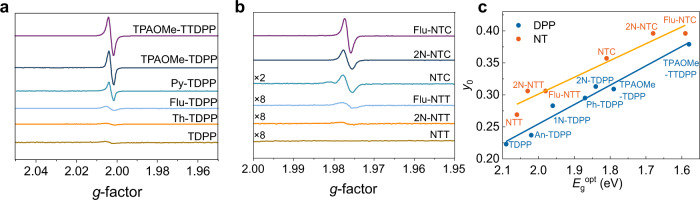
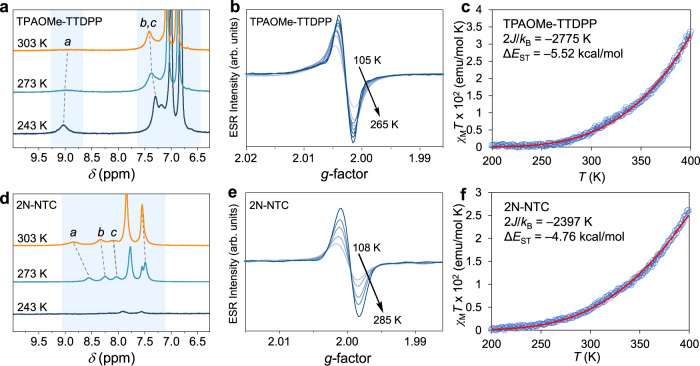
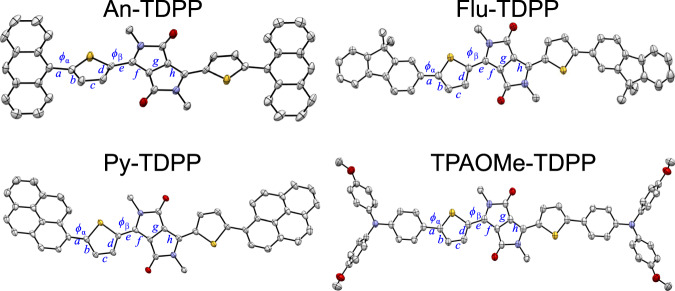
Most organic semiconductors have closed-shell electronic structures, however, studies have revealed open-shell character emanating from design paradigms such as narrowing the bandgap and controlling the quinoidal-aromatic resonance of the π-system. A fundamental challenge is understanding and identifying the molecular and electronic basis for the transition from a closed- to open-shell electronic structure and connecting the physicochemical properties with (opto)electronic functionality. Here, we report donor-acceptor organic semiconductors comprised of diketopyrrolopyrrole and naphthobisthiadiazole acceptors and various electron-rich donors commonly utilized in constructing high-performance organic semiconductors. Nuclear magnetic resonance, electron spin resonance, magnetic susceptibility measurements, single-crystal X-ray studies, and computational investigations connect the bandgap, π-extension, structural, and electronic features with the emergence of various degrees of diradical character. This work systematically demonstrates the widespread diradical character in the classical donor-acceptor organic semiconductors and provides distinctive insights into their ground state structure-property relationship.
大多数有机半导体具有闭壳层电子结构,然而,研究表明,通过诸如缩小带隙和控制π体系的醌式-芳香共振等设计范式会产生开壳层特性。一个基本挑战是理解和确定从闭壳层到开壳层电子结构转变的分子和电子基础,并将物理化学性质与(光)电子功能联系起来。在此,我们报道了由二酮吡咯并吡咯和萘并双噻二唑受体以及常用于构建高性能有机半导体的各种富电子供体组成的供体-受体有机半导体。核磁共振、电子自旋共振、磁化率测量、单晶X射线研究和计算研究将带隙、π扩展、结构和电子特征与不同程度的双自由基特性的出现联系起来。这项工作系统地证明了经典供体-受体有机半导体中广泛存在的双自由基特性,并为其基态结构-性质关系提供了独特的见解。