Sowers James L, Sowers Mark L, Shavkunov Alexander S, Hawkins Bridget E, Wu Ping, DeWitt Douglas S, Prough Donald S, Zhang Kangling
MD-PhD Combined Degree Program, University of Texas Medical Branch, Galveston, TX 77555, USA.
Department of Neuroscience, Cell Biology, and Anatomy, University of Texas Medical Branch, Galveston, TX 77555, USA.
iScience. 2021 Sep 9;24(10):103108. doi: 10.1016/j.isci.2021.103108. eCollection 2021 Oct 22.
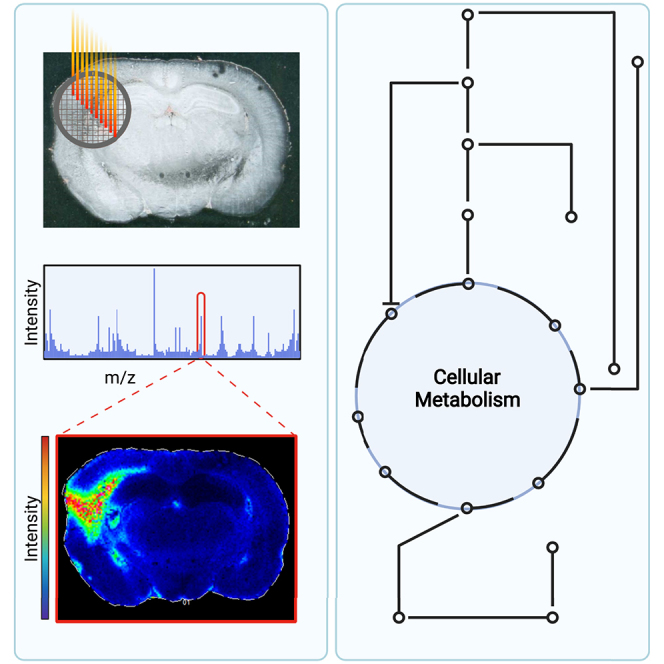
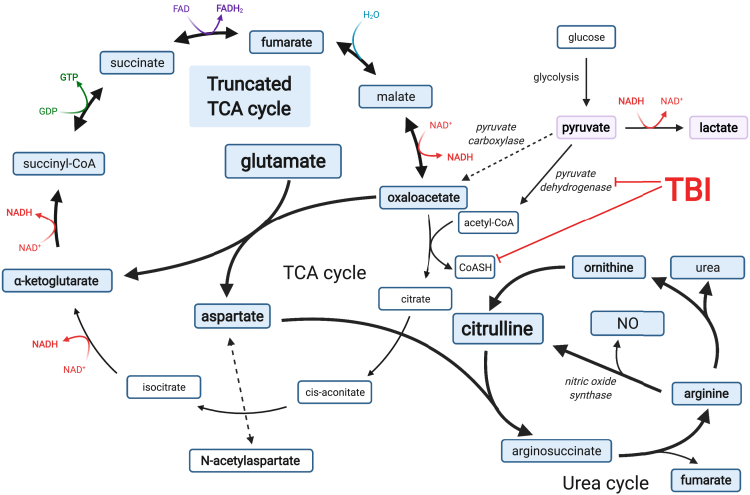
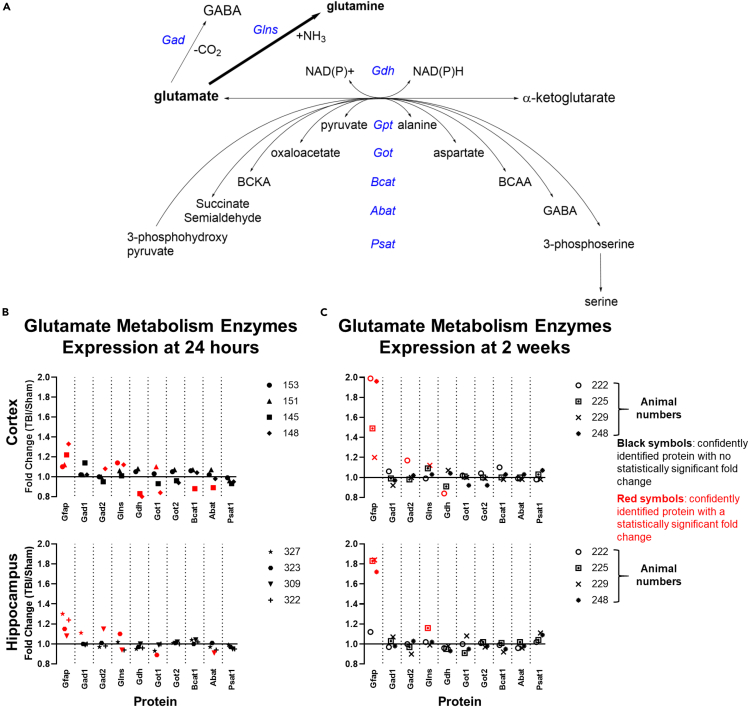
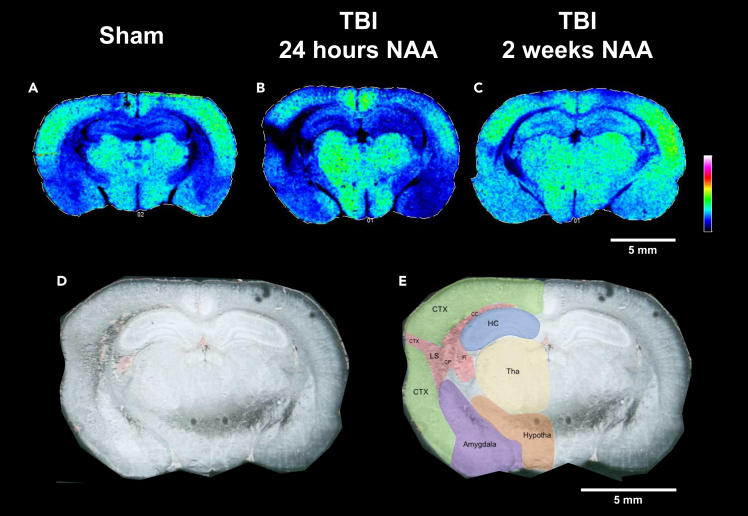
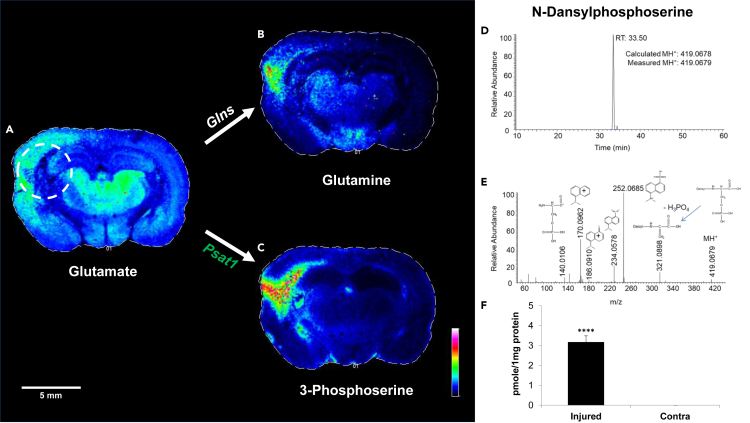
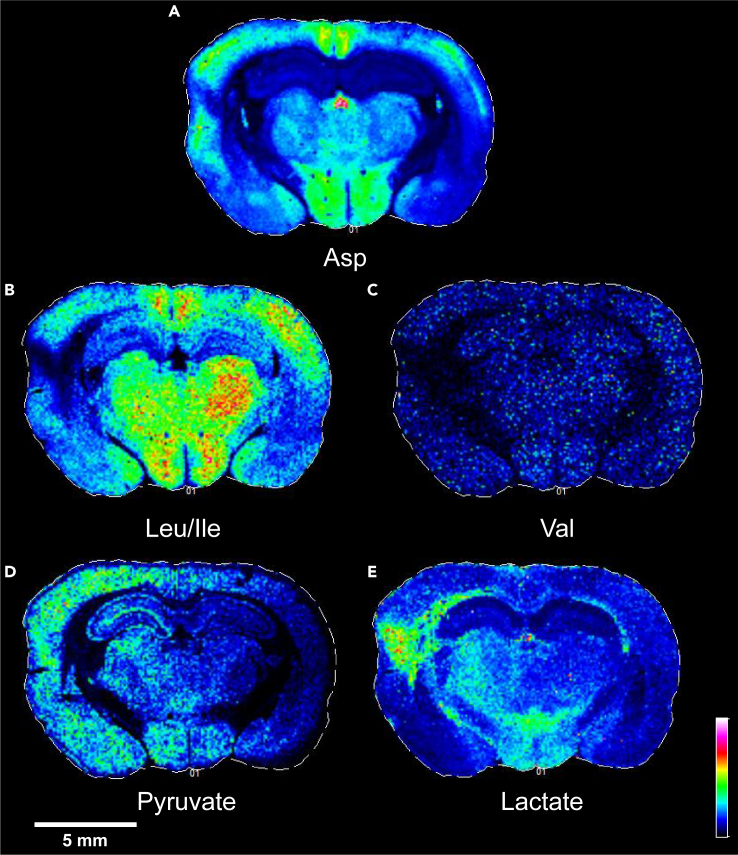
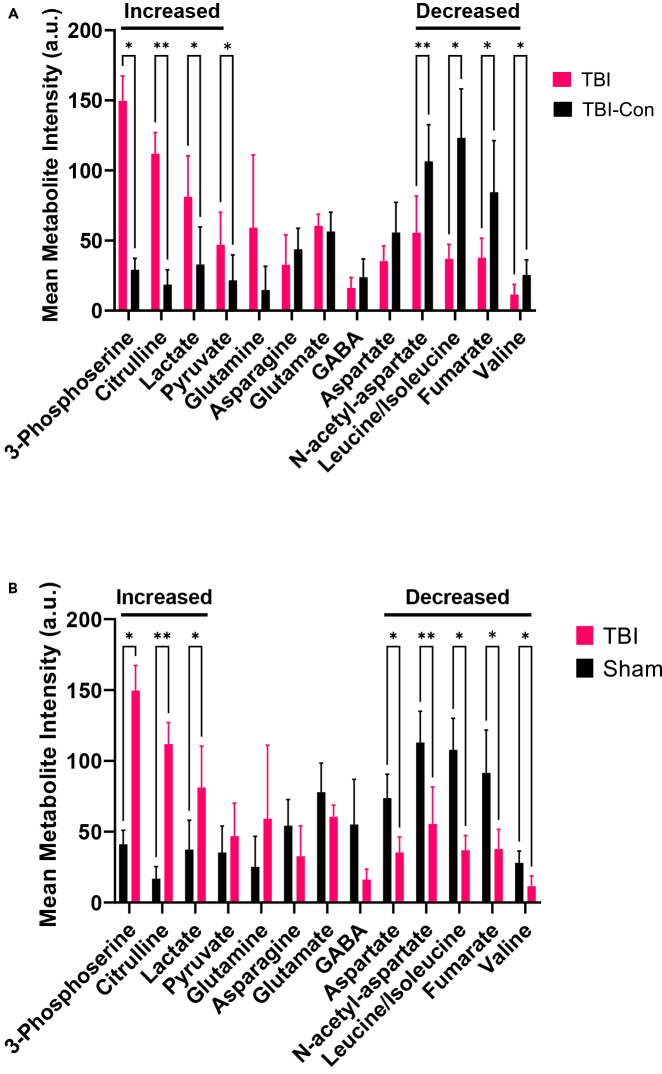
The release of excess glutamate following traumatic brain injury (TBI) results in glutamate excitotoxicity and metabolic energy failure. Endogenous mechanisms for reducing glutamate concentration in the brain parenchyma following TBI are poorly understood. Using multiple mass spectrometry approaches, we examined TBI-induced changes to glutamate metabolism. We present evidence that glutamate concentration can be reduced by glutamate oxidation via a "truncated" tricarboxylic acid cycle coupled to the urea cycle. This process reduces glutamate levels, generates carbon for energy metabolism, leads to citrulline accumulation, and produces nitric oxide. Several key metabolites are identified by metabolomics in support of this mechanism and the locations of these metabolites in the injured hemisphere are demonstrated by MALDI-MS imaging. The results of this study establish the advantages of multiple mass spectrometry approaches and provide insights into glutamate metabolism following TBI that could lead to improved treatment approaches.
创伤性脑损伤(TBI)后过量谷氨酸的释放会导致谷氨酸兴奋性毒性和代谢能量衰竭。目前对TBI后脑实质中降低谷氨酸浓度的内源性机制了解甚少。我们使用多种质谱方法,研究了TBI诱导的谷氨酸代谢变化。我们提供的证据表明,谷氨酸浓度可通过与尿素循环偶联的“截短”三羧酸循环进行谷氨酸氧化来降低。这一过程可降低谷氨酸水平,为能量代谢生成碳,导致瓜氨酸积累,并产生一氧化氮。代谢组学鉴定了几种关键代谢物以支持这一机制,基质辅助激光解吸电离质谱成像(MALDI-MS成像)显示了这些代谢物在受伤半球中的位置。本研究结果确立了多种质谱方法的优势,并为TBI后的谷氨酸代谢提供了见解,这可能会带来改进的治疗方法。