Laboratory of Ion Channels, Biological Membranes and Cell Signaling, Dept. of Biophysics, Facultad de Medicina, Universidad de la Republica, Montevideo, Uruguay.
Dept. of Neonatology, Facultad de Medicina, Universidad de la Republica, Montevideo, Uruguay.
Biochim Biophys Acta Mol Basis Dis. 2022 Jan 1;1868(1):166285. doi: 10.1016/j.bbadis.2021.166285. Epub 2021 Oct 6.
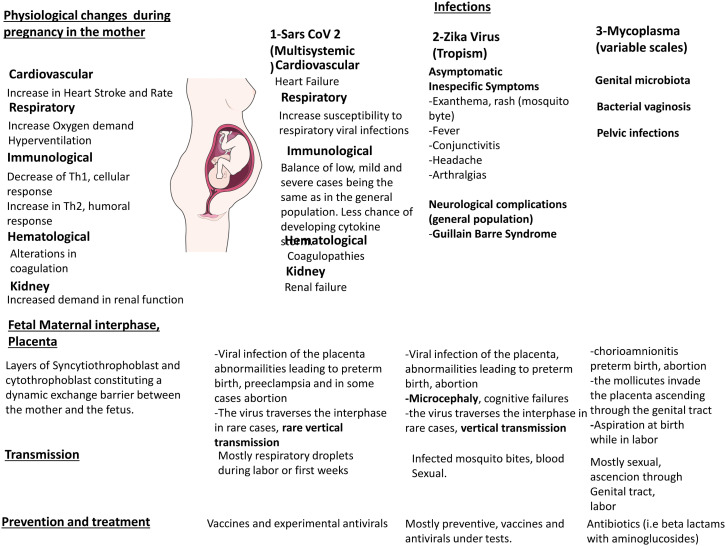
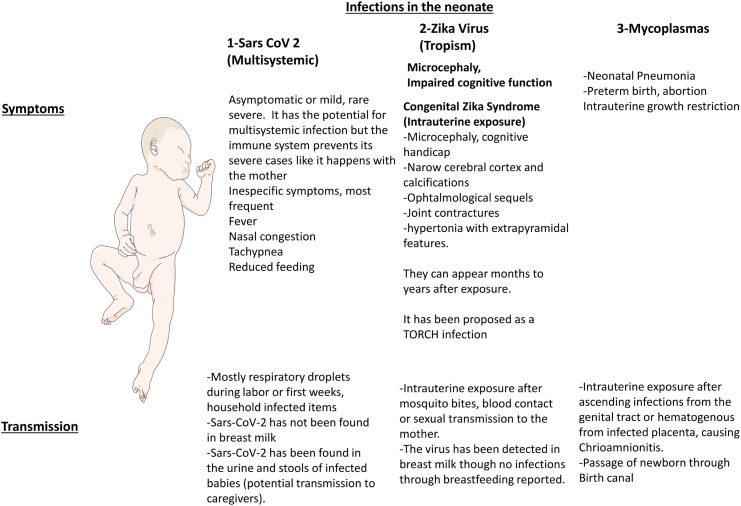
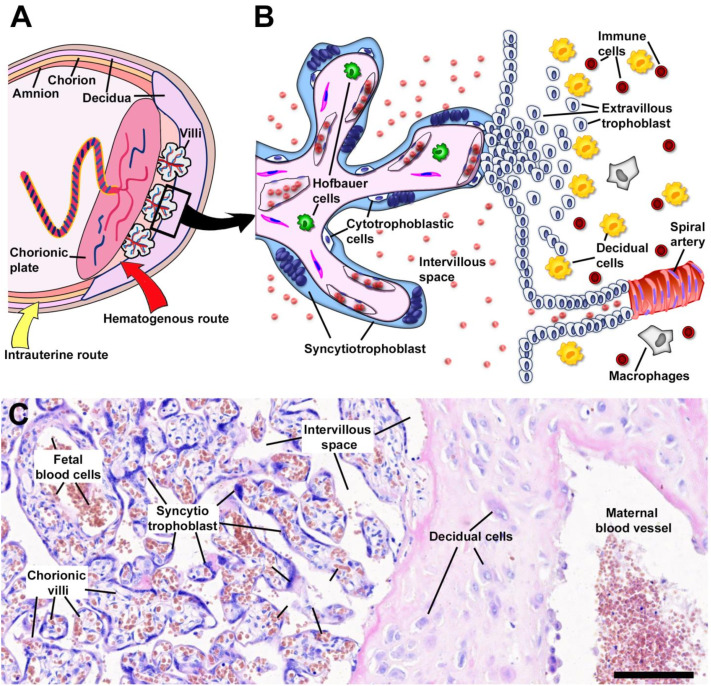
During pregnancy, a series of physiological changes are determined at the molecular, cellular and macroscopic level that make the mother and fetus more susceptible to certain viral and bacterial infections, especially the infections in this and the companion review. Particular situations increase susceptibility to infection in neonates. The enhanced susceptibility to certain infections increases the risk of developing particular diseases that can progress to become morbidly severe. For example, during the current pandemic caused by the SARS-CoV-2 virus, epidemiological studies have established that pregnant women with COVID-19 disease are more likely to be hospitalized. However, the risk for intensive care unit admission and mechanical ventilation is not increased compared with nonpregnant women. Although much remains unknown with this particular infection, the elevated risk of progression during pregnancy towards more severe manifestations of COVID-19 disease is not associated with an increased risk of death. In addition, the epidemiological data available in neonates suggest that their risk of acquiring COVID-19 is low compared with infants (<12 months of age). However, they might be at higher risk for progression to severe COVID-19 disease compared with older children. The data on clinical presentation and disease severity among neonates are limited and based on case reports and small case series. It is well documented the importance of the Zika virus infection as the main cause of several congenital anomalies and birth defects such as microcephaly, and also adverse pregnancy outcomes. Mycoplasma infections also increase adverse pregnancy outcomes. This review will focus on the molecular, pathophysiological and biophysical characteristics of the mother/placental-fetal/neonatal interactions and the possible mechanisms of these pathogens (SARS-CoV-2, ZIKV, and Mycoplasmas) for promoting disease at this level.
在妊娠期间,分子、细胞和宏观水平上发生了一系列生理变化,使母亲和胎儿更容易受到某些病毒和细菌感染,特别是本综述和同行评议中所述的感染。特殊情况会增加新生儿感染的易感性。对某些感染的易感性增加会增加发展特定疾病的风险,这些疾病可能会发展为严重疾病。例如,在当前由 SARS-CoV-2 病毒引起的大流行中,流行病学研究已经确定 COVID-19 疾病的孕妇更有可能住院。然而,与非孕妇相比,入住重症监护病房和接受机械通气的风险并没有增加。尽管对于这种特定感染还有很多未知之处,但妊娠期间 COVID-19 疾病向更严重表现发展的风险增加与死亡风险增加无关。此外,新生儿中可用的流行病学数据表明,与婴儿(<12 个月龄)相比,他们感染 COVID-19 的风险较低。然而,与年龄较大的儿童相比,他们可能有更高的进展为严重 COVID-19 疾病的风险。关于新生儿临床表现和疾病严重程度的数据有限,并且基于病例报告和小病例系列。寨卡病毒感染是导致几种先天性异常和出生缺陷(如小头畸形)以及不良妊娠结局的主要原因,这一点已得到充分证明。支原体感染也会增加不良妊娠结局。本综述将重点介绍母体/胎盘-胎儿/新生儿相互作用的分子、病理生理和生物物理特征,以及这些病原体(SARS-CoV-2、ZIKV 和支原体)在这一水平上促进疾病的可能机制。