Estévez-Herrera Judith, Pérez-Yanes Silvia, Cabrera-Rodríguez Romina, Márquez-Arce Daniel, Trujillo-González Rodrigo, Machado José-David, Madrid Ricardo, Valenzuela-Fernández Agustín
Laboratorio de Inmunología Celular y Viral, Unidad de Farmacología, Sección de Medicina, Facultad de Medicina, Universidad de La Laguna (ULL), La Laguna, 38320 Tenerife, Spain.
Unidad Virología y Microbiología del IUETSPC, Universidad de La Laguna (ULL), La Laguna, 38296 Tenerife, Spain.
Vaccines (Basel). 2021 Mar 22;9(3):294. doi: 10.3390/vaccines9030294.
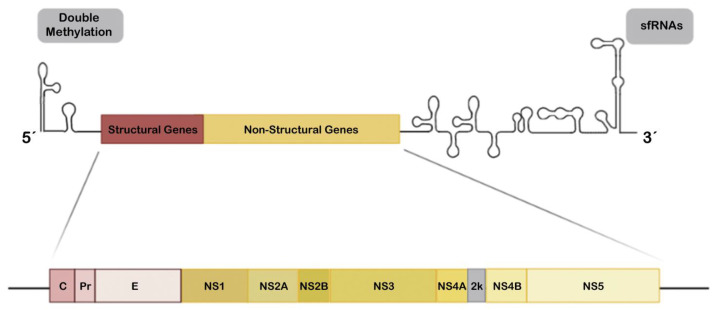
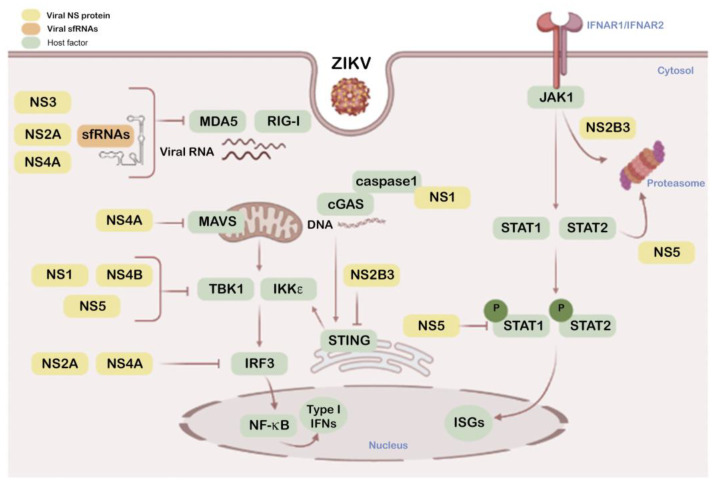
Zika virus (ZIKV) infection and its associated congenital and other neurological disorders, particularly microcephaly and other fetal developmental abnormalities, constitute a World Health Organization (WHO) Zika Virus Research Agenda within the WHO's R&D Blueprint for Action to Prevent Epidemics, and continue to be a Public Health Emergency of International Concern (PHEIC) today. ZIKV pathogenicity is initiated by viral infection and propagation across multiple placental and fetal tissue barriers, and is critically strengthened by subverting host immunity. ZIKV immune evasion involves viral non-structural proteins, genomic and non-coding RNA and microRNA (miRNA) to modulate interferon (IFN) signaling and production, interfering with intracellular signal pathways and autophagy, and promoting cellular environment changes together with secretion of cellular components to escape innate and adaptive immunity and further infect privileged immune organs/tissues such as the placenta and eyes. This review includes a description of recent advances in the understanding of the mechanisms underlying ZIKV immune modulation and evasion that strongly condition viral pathogenesis, which would certainly contribute to the development of anti-ZIKV strategies, drugs, and vaccines.
寨卡病毒(ZIKV)感染及其相关的先天性和其他神经系统疾病,特别是小头畸形和其他胎儿发育异常,构成了世界卫生组织(WHO)在其《预防流行病研发蓝图》中的寨卡病毒研究议程,并且至今仍是国际关注的突发公共卫生事件(PHEIC)。ZIKV的致病性始于病毒感染并跨越多个胎盘和胎儿组织屏障进行传播,并且通过颠覆宿主免疫而得到显著增强。ZIKV的免疫逃逸涉及病毒非结构蛋白、基因组和非编码RNA以及微小RNA(miRNA),以调节干扰素(IFN)信号传导和产生,干扰细胞内信号通路和自噬,并与细胞成分的分泌一起促进细胞环境变化,从而逃避先天免疫和适应性免疫,并进一步感染如胎盘和眼睛等特殊免疫器官/组织。本综述包括对ZIKV免疫调节和逃逸机制理解的最新进展的描述,这些机制强烈影响病毒发病机制,这肯定有助于抗ZIKV策略、药物和疫苗的开发。