School of Information Engineering, Huzhou University, Zhejiang, 313000, Huzhou, China.
Zhejiang Province Key Laboratory of Smart Management & Application of Modern Agricultural Resources, Huzhou University, 313000, Huzhou, China, Zhejiang Province.
BMC Health Serv Res. 2021 Oct 9;21(1):1067. doi: 10.1186/s12913-021-07044-5.
In the development of artificial intelligence in ophthalmology, the ophthalmic AI-related recognition issues are prominent, but there is a lack of research into people's familiarity with and their attitudes toward ophthalmic AI. This survey aims to assess medical workers' and other professional technicians' familiarity with, attitudes toward, and concerns about AI in ophthalmology.
This is a cross-sectional study design study. An electronic questionnaire was designed through the app Questionnaire Star, and was sent to respondents through WeChat, China's version of Facebook or WhatsApp. The participation was voluntary and anonymous. The questionnaire consisted of four parts, namely the respondents' background, their basic understanding of AI, their attitudes toward AI, and their concerns about AI. A total of 562 respondents were counted, with 562 valid questionnaires returned. The results of the questionnaires are displayed in an Excel 2003 form.
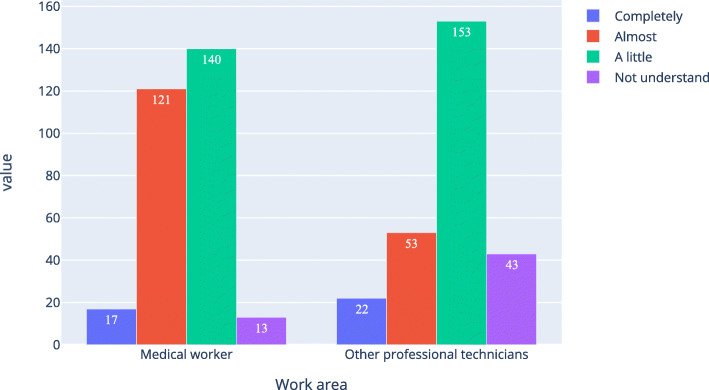
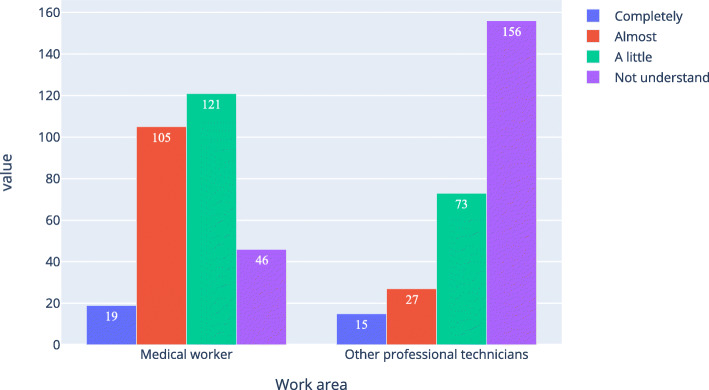
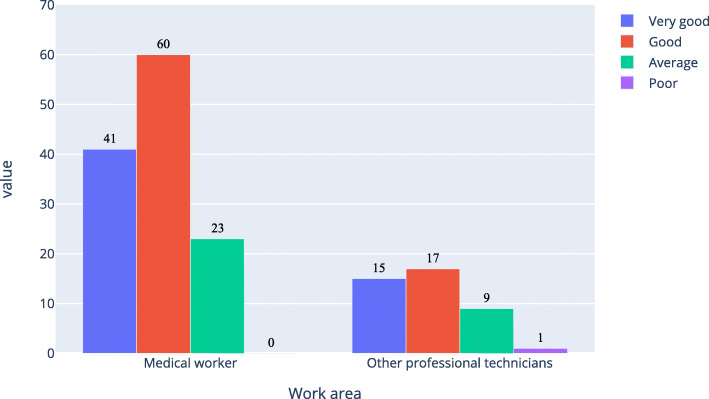
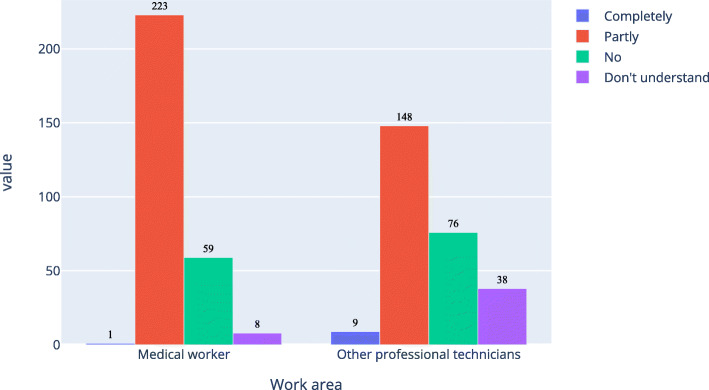
There were 291 medical workers and 271 other professional technicians completed the questionnaire. About 1/3 of the respondents understood AI and ophthalmic AI. The percentages of people who understood ophthalmic AI among medical workers and other professional technicians were about 42.6 % and 15.6 %, respectively. About 66.0 % of the respondents thought that AI in ophthalmology would partly replace doctors, about 59.07 % having a relatively high acceptance level of ophthalmic AI. Meanwhile, among those with AI in ophthalmology application experiences (30.6 %), above 70 % of respondents held a full acceptance attitude toward AI in ophthalmology. The respondents expressed medical ethics concerns about AI in ophthalmology. And among the respondents who understood AI in ophthalmology, almost all the people said that there was a need to increase the study of medical ethics issues in the ophthalmic AI field.
The survey results revealed that the medical workers had a higher understanding level of AI in ophthalmology than other professional technicians, making it necessary to popularize ophthalmic AI education among other professional technicians. Most of the respondents did not have any experience in ophthalmic AI but generally had a relatively high acceptance level of AI in ophthalmology, and there was a need to strengthen research into medical ethics issues.
在眼科人工智能的发展中,眼科 AI 相关识别问题较为突出,但对于人们对眼科人工智能的熟悉程度及其态度的研究较少。本调查旨在评估医务人员和其他专业技术人员对眼科人工智能的熟悉程度、态度和关注点。
这是一项横断面研究设计研究。通过应用程序 Questionnaire Star 设计电子问卷,并通过微信、中国版 Facebook 或 WhatsApp 将问卷发送给受访者。参与是自愿和匿名的。问卷由四部分组成,即受访者的背景、他们对 AI 的基本了解、他们对 AI 的态度以及他们对 AI 的担忧。共统计了 562 名受访者,收回了 562 份有效问卷。问卷结果以 Excel 2003 表格形式呈现。
共有 291 名医务人员和 271 名其他专业技术人员完成了问卷。约有 1/3的受访者了解 AI 和眼科 AI。医务人员和其他专业技术人员中了解眼科 AI 的比例分别约为 42.6%和 15.6%。约 66.0%的受访者认为眼科人工智能将部分取代医生,约 59.07%的人对眼科人工智能有较高的接受度。同时,在有眼科 AI 应用经验的受访者(30.6%)中,超过 70%的人对眼科 AI 持完全接受的态度。受访者对眼科人工智能表示出医学伦理方面的担忧。在了解眼科人工智能的受访者中,几乎所有人都表示有必要增加眼科人工智能领域医学伦理问题的研究。
调查结果显示,医务人员对眼科人工智能的理解程度高于其他专业技术人员,有必要在其他专业技术人员中普及眼科人工智能教育。大多数受访者没有眼科人工智能的经验,但总体上对眼科人工智能的接受程度较高,需要加强医学伦理问题的研究。