Department of Mathematics, Clarkson University, Potsdam, NY, USA.
David D. Reh School of Business, Clarkson University, Potsdam, NY, USA.
Sci Total Environ. 2022 Feb 10;807(Pt 1):150536. doi: 10.1016/j.scitotenv.2021.150536. Epub 2021 Sep 24.
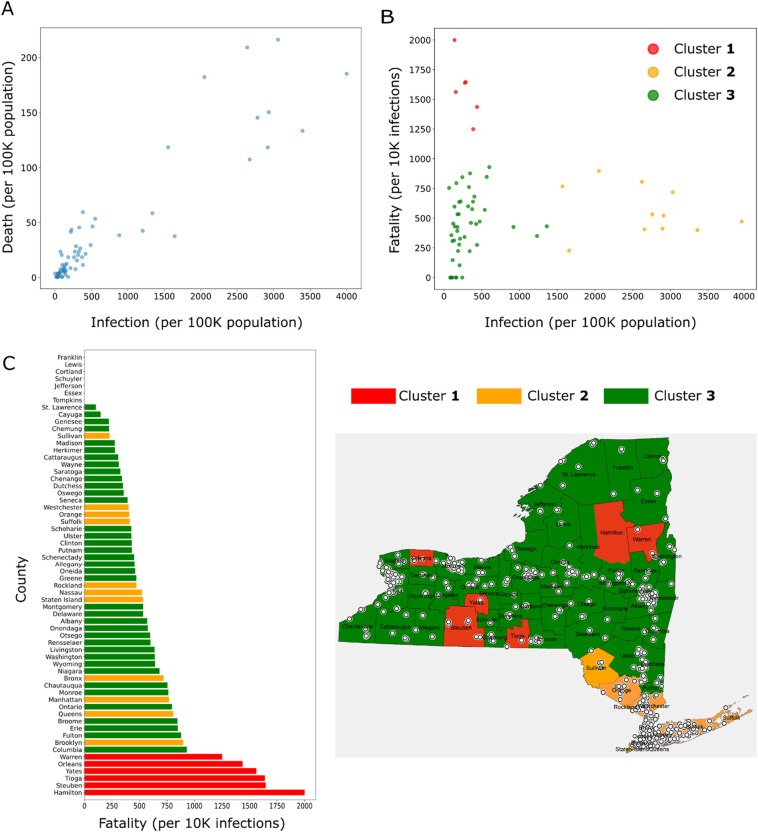
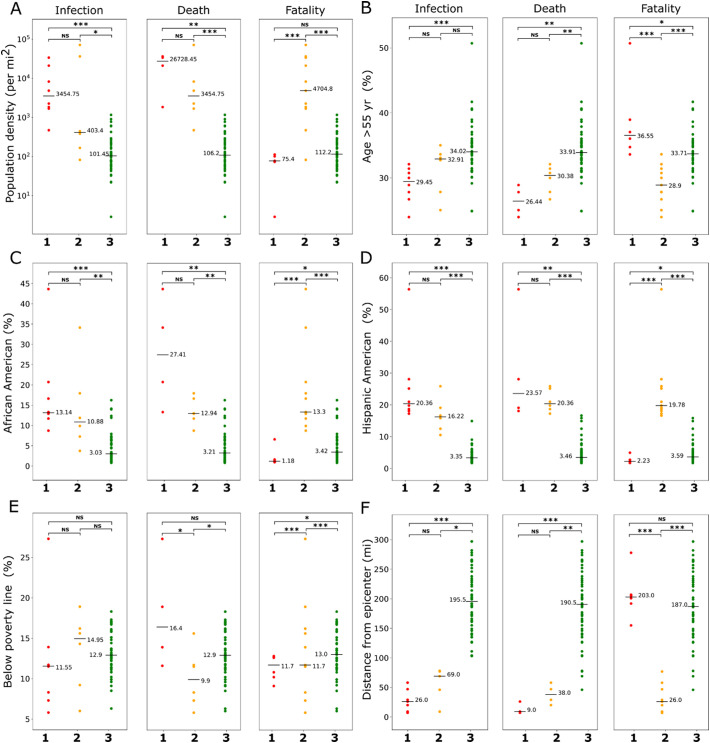
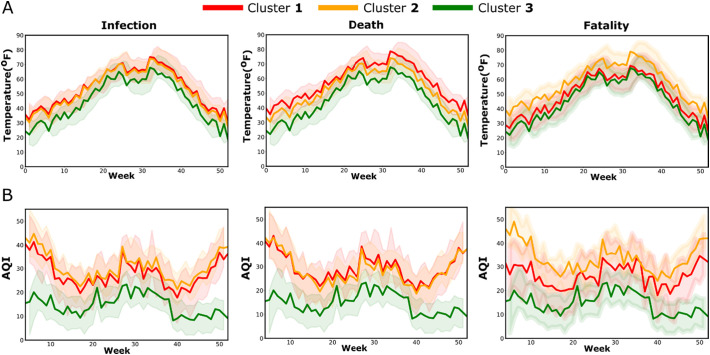
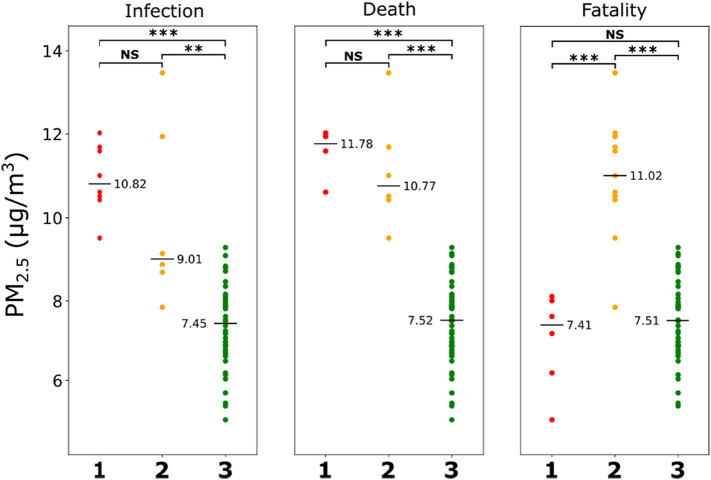
The coronavirus disease 2019 (COVID-19) has had a global impact that has been unevenly distributed among and even within countries. Multiple demographic and environmental factors have been associated with the risk of COVID-19 spread and fatality, including age, gender, ethnicity, poverty, and air quality among others. However, specific contributions of these factors are yet to be understood. Here, we attempted to explain the variability in infection, death, and fatality rates by understanding the contributions of a few selected factors. We compared the incidence of COVID-19 in New York State (NYS) counties during the first wave of infection and analyzed how different demographic and environmental variables associate with the variation observed across the counties. We observed that infection and death rates, two important COVID-19 metrics, to be highly correlated with both being highest in counties located near New York City, considered as one of the epicenters of the infection in the US. In contrast, disease fatality was found to be highest in a different set of counties despite registering a low infection rate. To investigate this apparent discrepancy, we divided the counties into three clusters based on COVID-19 infection, death, or fatality, and compared the differences in the demographic and environmental variables such as ethnicity, age, population density, poverty, temperature, and air quality in each of these clusters. Furthermore, a regression model built on this data reveals PM and distance from the epicenter are significant risk factors for infection, while disease fatality has a strong association with age and PM. Our results demonstrate that for the NYS, demographic components distinctly associate with specific aspects of COVID-19 burden and also highlight the detrimental impact of poor air quality. These results could help design and direct location-specific control and mitigation strategies.
新型冠状病毒病 2019(COVID-19)在全球范围内造成了影响,这些影响在国家之间甚至在国家内部的分布不均。多种人口统计学和环境因素与 COVID-19 的传播和致死风险相关,包括年龄、性别、种族、贫困和空气质量等。然而,这些因素的具体贡献仍有待了解。在这里,我们试图通过了解少数选定因素的贡献来解释感染、死亡和病死率的变化。我们比较了 COVID-19 在纽约州(NYS)各县在感染的第一波期间的发病率,并分析了不同的人口统计学和环境变量如何与各县观察到的变异相关联。我们发现,感染率和死亡率这两个重要的 COVID-19 指标与在纽约市附近的县最高,这些县被认为是美国感染的中心之一。相比之下,尽管发病率较低,但病死率最高的却是一组不同的县。为了研究这种明显的差异,我们根据 COVID-19 感染、死亡或病死率将各县分为三组,并比较了每组县的人口统计学和环境变量(如种族、年龄、人口密度、贫困、温度和空气质量)之间的差异。此外,基于该数据构建的回归模型揭示了 PM 和与震中之间的距离是感染的重要风险因素,而疾病病死率与年龄和 PM 有很强的关联。我们的研究结果表明,对于 NYS,人口统计学组成与 COVID-19 负担的特定方面明显相关,并且突出了空气质量差的有害影响。这些结果有助于设计和指导特定地点的控制和缓解策略。