Department of Radiology and Research Institute of Radiological Science, Severance Hospital, Yonsei University College of Medicine, 50-1 Yonsei-ro, Seodaemun-gu, Seoul, 03722, South Korea.
BMC Med Imaging. 2021 Oct 10;21(1):146. doi: 10.1186/s12880-021-00677-2.
Efforts to reduce the radiation dose have continued steadily, with new reconstruction techniques. Recently, image denoising algorithms using artificial neural networks, termed deep learning reconstruction (DLR), have been applied to CT image reconstruction to overcome the drawbacks of iterative reconstruction (IR). The purpose of our study was to compare the objective and subjective image quality of DLR and IR on pediatric abdomen and chest CT images.
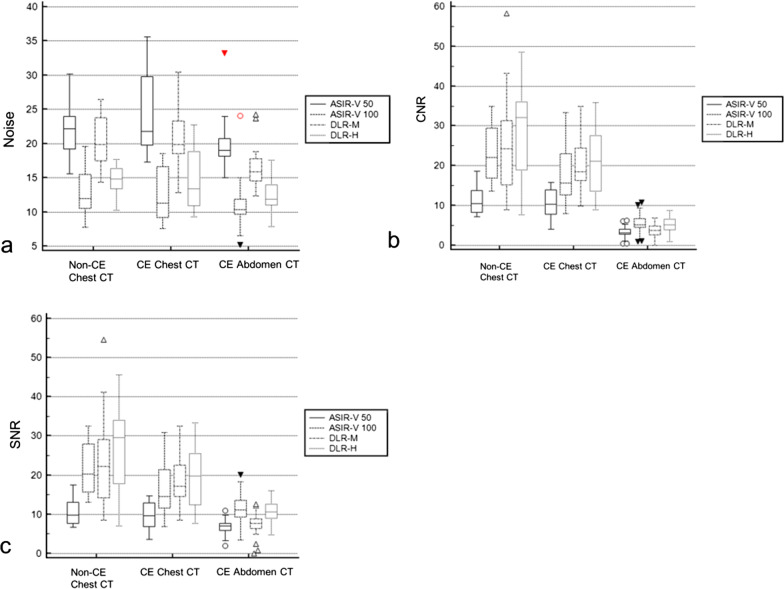
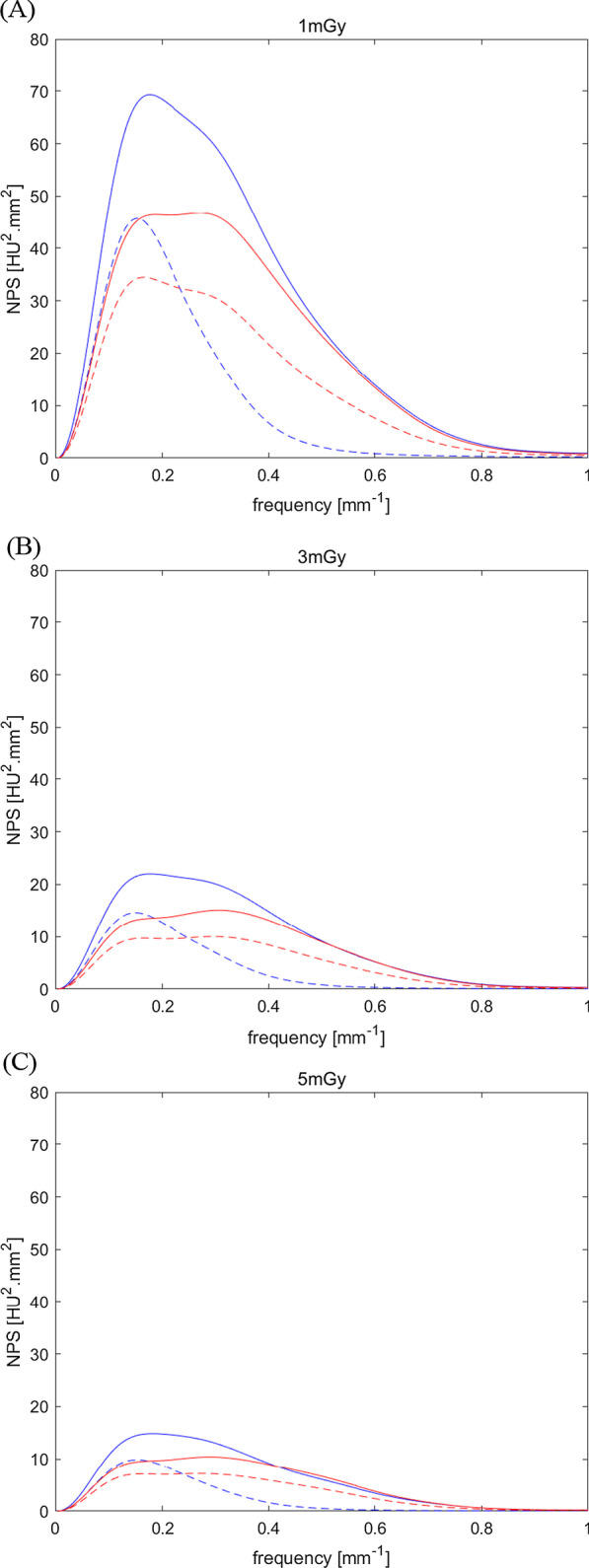
This retrospective study included pediatric body CT images from February 2020 to October 2020, performed on 51 patients (34 boys and 17 girls; age 1-18 years). Non-contrast chest CT (n = 16), contrast-enhanced chest CT (n = 12), and contrast-enhanced abdomen CT (n = 23) images were included. Standard 50% adaptive statistical iterative reconstruction V (ASIR-V) images were compared to images with 100% ASIR-V and DLR at medium and high strengths. Attenuation, noise, contrast to noise ratio (CNR), and signal to noise (SNR) measurements were performed. Overall image quality, artifacts, and noise were subjectively assessed by two radiologists using a four-point scale (superior, average, suboptimal, and unacceptable). A phantom scan was performed including the dose range of the clinical images used in our study, and the noise power spectrum (NPS) was calculated. Quantitative and qualitative parameters were compared using repeated-measures analysis of variance (ANOVA) with Bonferroni correction and Wilcoxon signed-rank tests.
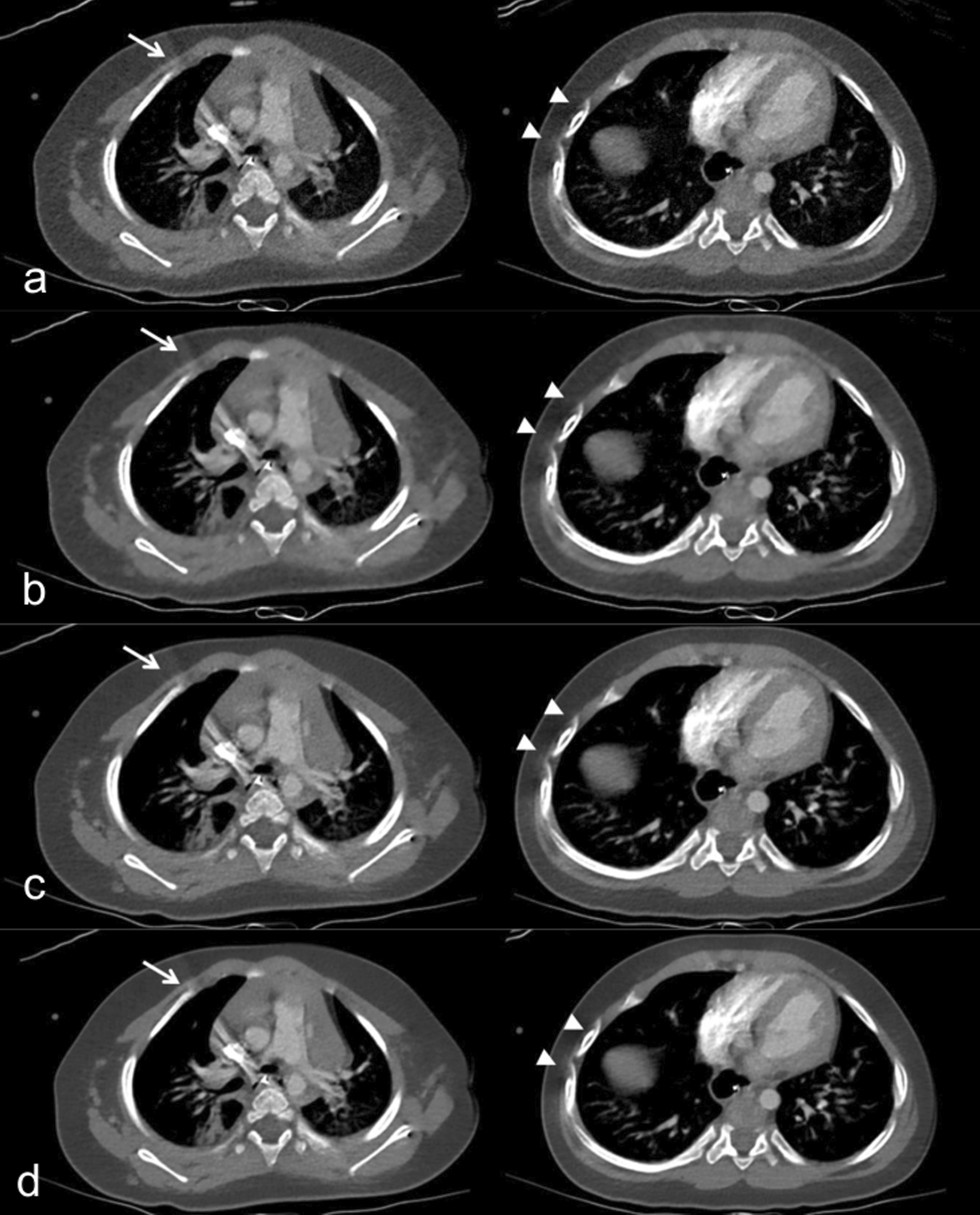
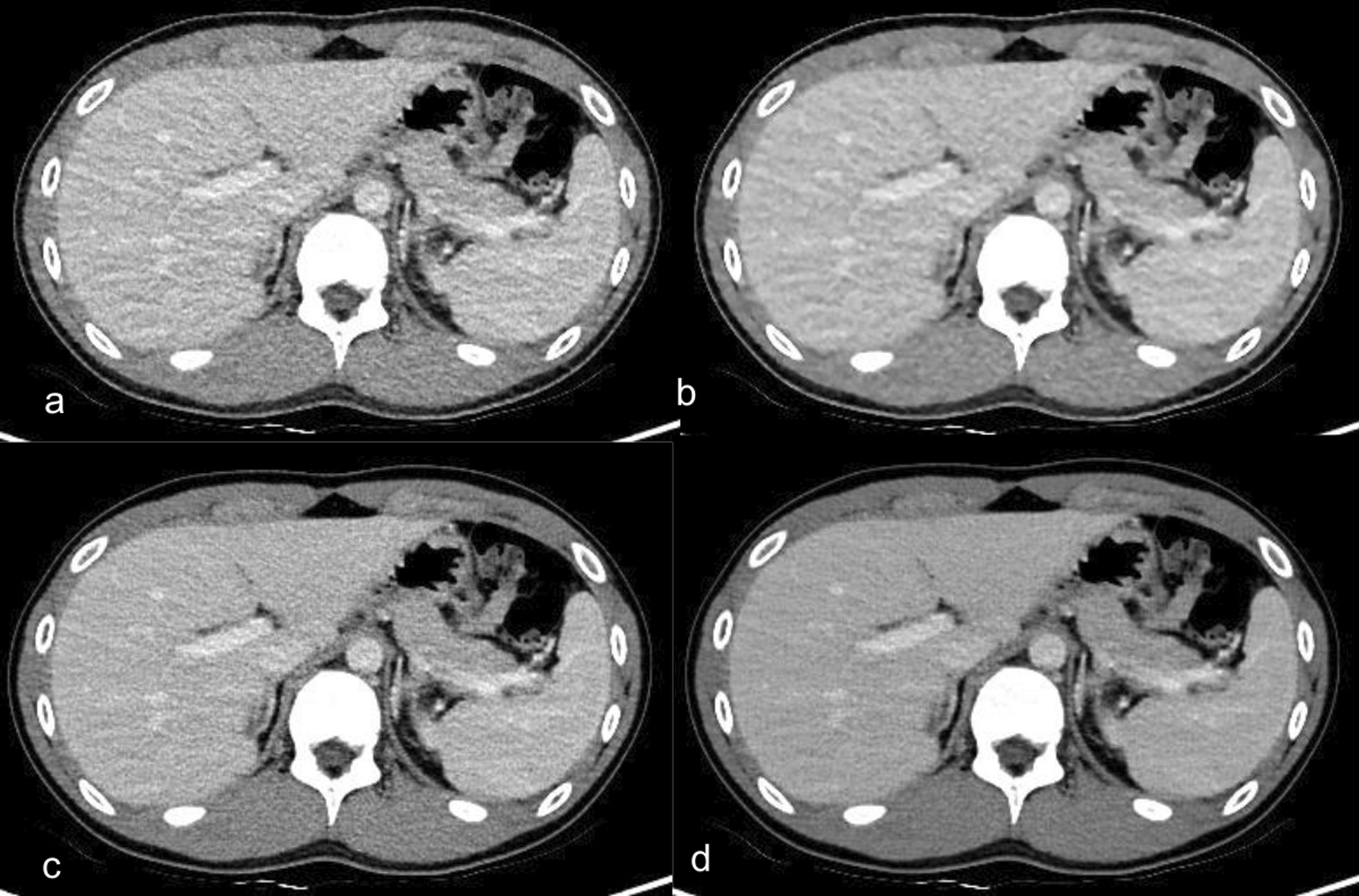
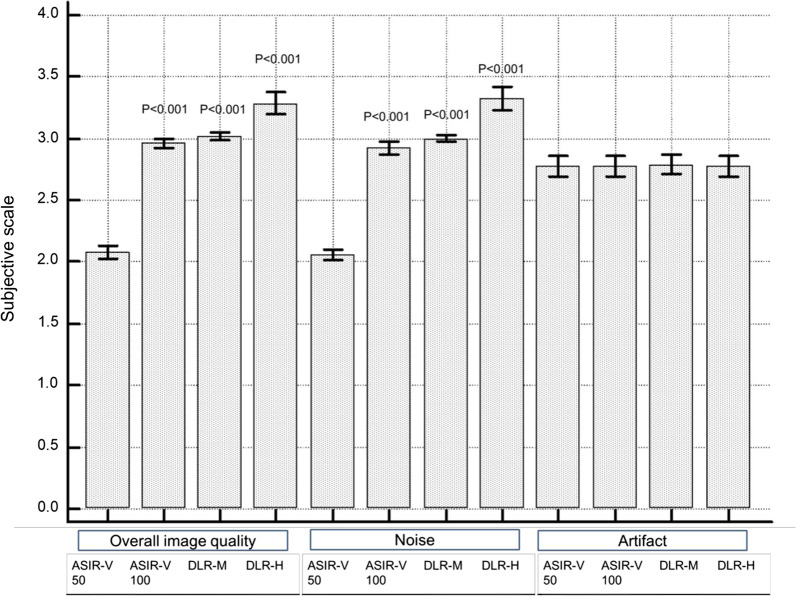
DLR had better CNR and SNR than 50% ASIR-V in both pediatric chest and abdomen CT images. When compared with 50% ASIR-V, high strength DLR was associated with noise reduction in non-contrast chest CT (33.0%), contrast-enhanced chest CT (39.6%), and contrast-enhanced abdomen CT (38.7%) with increases in CNR at 149.1%, 105.8%, and 53.1% respectively. The subjective assessment of overall image quality and the noise was also better on DLR images (p < 0.001). However, there was no significant difference in artifacts between reconstruction methods. From NPS analysis, DLR methods showed a pattern of reducing the magnitude of noise while maintaining the texture.
Compared with 50% ASIR-V, DLR improved pediatric body CT images with significant noise reduction. However, artifacts were not improved by DLR, regardless of strength.
随着新的重建技术的出现,降低辐射剂量的工作一直在稳步进行。最近,使用人工神经网络的图像降噪算法(称为深度学习重建(DLR))已应用于 CT 图像重建,以克服迭代重建(IR)的缺点。我们研究的目的是比较 DLR 和 IR 对儿科腹部和胸部 CT 图像的客观和主观图像质量。
这是一项回顾性研究,纳入了 2020 年 2 月至 2020 年 10 月期间的 51 名儿科身体 CT 图像,这些患者包括 34 名男孩和 17 名女孩(年龄 1-18 岁)。包括非增强胸部 CT(n=16)、增强胸部 CT(n=12)和增强腹部 CT(n=23)图像。比较了 50%的自适应统计迭代重建 V(ASIR-V)标准图像与 100%的 ASIR-V 和 DLR 图像在中强度和高强度下的图像质量。进行了衰减、噪声、对比噪声比(CNR)和信噪比(SNR)测量。两名放射科医生使用四点量表(优秀、平均、欠佳和不可接受)对整体图像质量、伪影和噪声进行主观评估。对包括我们研究中使用的临床图像剂量范围的体模进行扫描,并计算噪声功率谱(NPS)。使用重复测量方差分析(ANOVA)和 Bonferroni 校正以及 Wilcoxon 符号秩检验比较定量和定性参数。
在儿科胸部和腹部 CT 图像中,DLR 比 50%的 ASIR-V 具有更好的 CNR 和 SNR。与 50%的 ASIR-V 相比,高强度 DLR 与非增强胸部 CT(33.0%)、增强胸部 CT(39.6%)和增强腹部 CT(38.7%)的噪声降低相关,相应的 CNR 增加了 149.1%、105.8%和 53.1%。DLR 图像的整体图像质量和噪声的主观评估也更好(p<0.001)。然而,重建方法之间的伪影没有显著差异。从 NPS 分析,DLR 方法显示出降低噪声幅度而保持纹理的模式。
与 50%的 ASIR-V 相比,DLR 改善了儿科身体 CT 图像,显著降低了噪声。然而,DLR 并没有改善伪影,无论强度如何。