Department of Radiology, Pusan National University Yangsan Hospital, Yangsan, Korea.
School of Biomedical Convergence Engineering, Pusan National University, Busan, Korea.
Korean J Radiol. 2022 Jul;23(7):752-762. doi: 10.3348/kjr.2021.0466. Epub 2022 May 27.
To compare a deep learning-based reconstruction (DLR) algorithm for pediatric abdominopelvic computed tomography (CT) with filtered back projection (FBP) and iterative reconstruction (IR) algorithms.
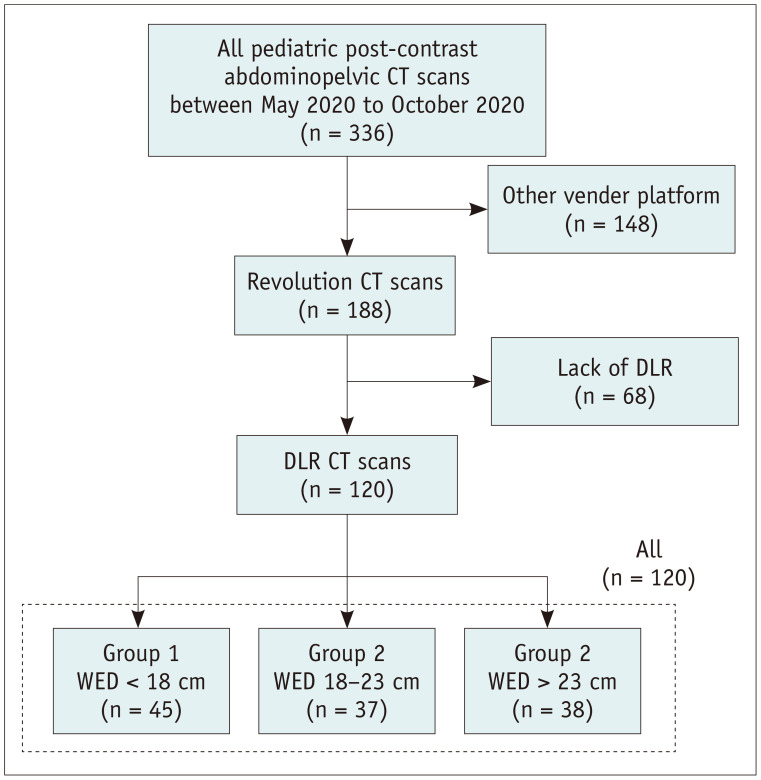
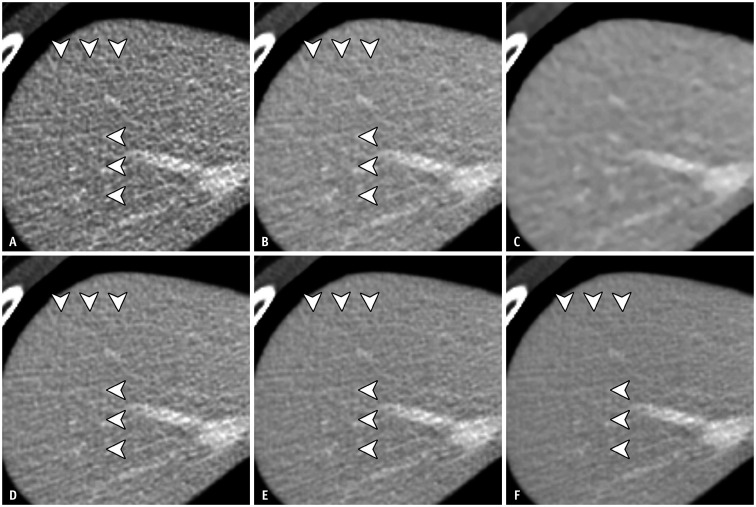
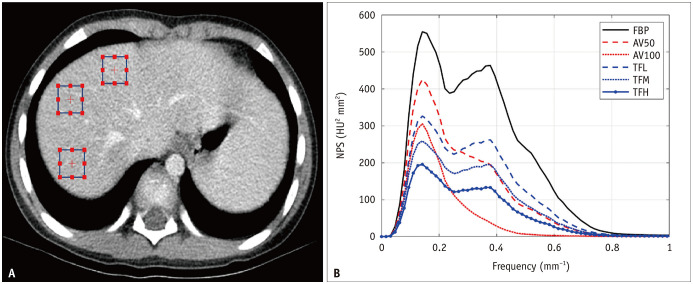
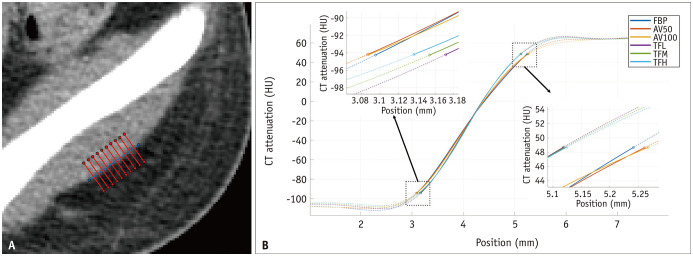
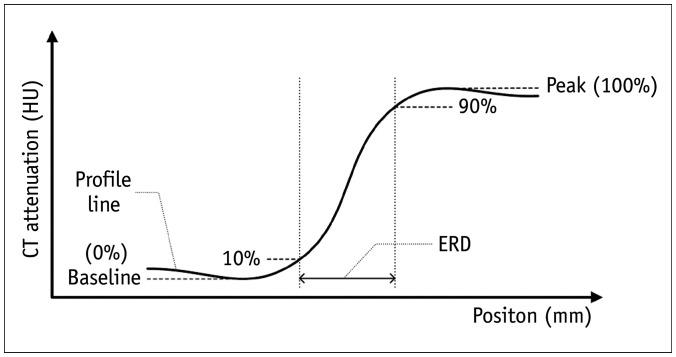
Post-contrast abdominopelvic CT scans obtained from 120 pediatric patients (mean age ± standard deviation, 8.7 ± 5.2 years; 60 males) between May 2020 and October 2020 were evaluated in this retrospective study. Images were reconstructed using FBP, a hybrid IR algorithm (ASiR-V) with blending factors of 50% and 100% (AV50 and AV100, respectively), and a DLR algorithm (TrueFidelity) with three strength levels (low, medium, and high). Noise power spectrum (NPS) and edge rise distance (ERD) were used to evaluate noise characteristics and spatial resolution, respectively. Image noise, edge definition, overall image quality, lesion detectability and conspicuity, and artifacts were qualitatively scored by two pediatric radiologists, and the scores of the two reviewers were averaged. A repeated-measures analysis of variance followed by the Bonferroni post-hoc test was used to compare NPS and ERD among the six reconstruction methods. The Friedman rank sum test followed by the Nemenyi-Wilcoxon-Wilcox all-pairs test was used to compare the results of the qualitative visual analysis among the six reconstruction methods.
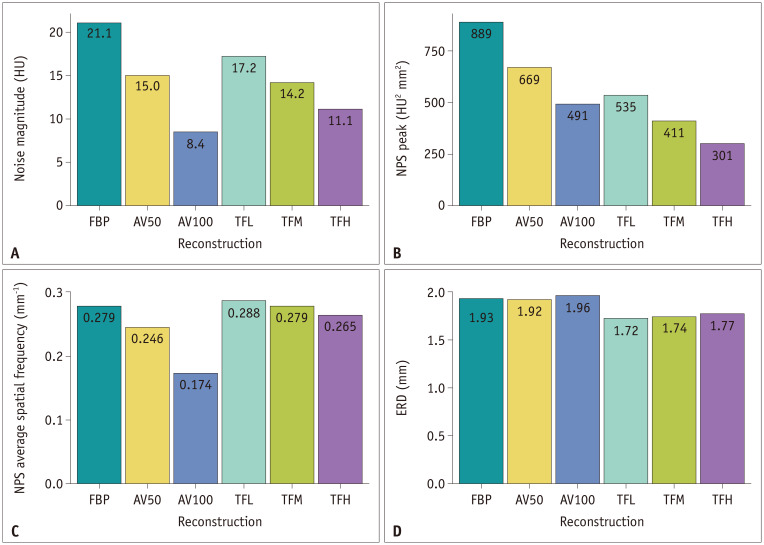
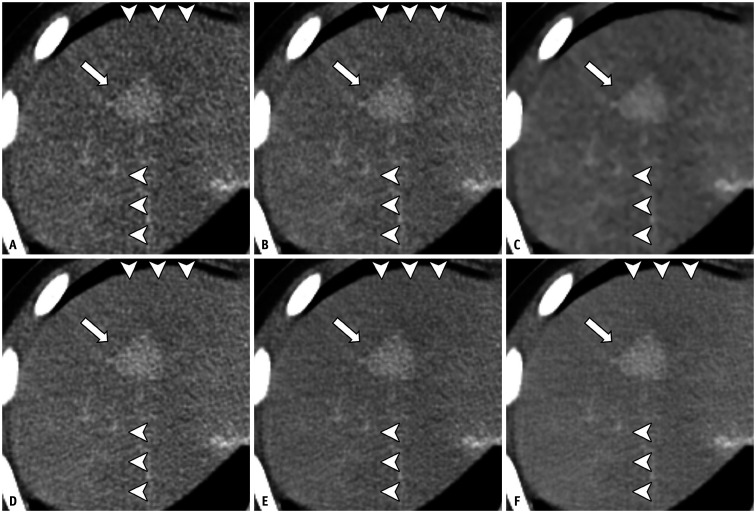
The NPS noise magnitude of AV100 was significantly lower than that of the DLR, whereas the NPS peak of AV100 was significantly higher than that of the high- and medium-strength DLR ( < 0.001). The NPS average spatial frequencies were higher for DLR than for ASiR-V ( < 0.001). ERD was shorter with DLR than with ASiR-V and FBP ( < 0.001). Qualitative visual analysis revealed better overall image quality with high-strength DLR than with ASiR-V ( < 0.001).
For pediatric abdominopelvic CT, the DLR algorithm may provide improved noise characteristics and better spatial resolution than the hybrid IR algorithm.
比较基于深度学习的重建(DLR)算法与滤波反投影(FBP)和迭代重建(IR)算法在儿科腹部 CT 中的应用。
本回顾性研究纳入了 2020 年 5 月至 10 月期间 120 例儿科患者(平均年龄±标准差,8.7±5.2 岁;男 60 例)的腹部增强 CT 扫描。图像采用 FBP、混合 IR 算法(ASiR-V,混合比分别为 50%和 100%,即 AV50 和 AV100)和 DLR 算法(TrueFidelity)进行重建,强度水平分别为低、中、高三档。使用噪声功率谱(NPS)和边缘上升距离(ERD)评估噪声特征和空间分辨率。两位儿科放射科医生对图像噪声、边缘清晰度、整体图像质量、病灶检出率和显影程度以及伪影进行了定性评分,两位审稿人的评分取平均值。采用重复测量方差分析,然后进行 Bonferroni 事后检验,比较 6 种重建方法的 NPS 和 ERD。采用 Friedman 等级和检验,然后进行 Nemenyi-Wilcoxon-Wilcox 全对检验,比较 6 种重建方法的定性视觉分析结果。
AV100 的 NPS 噪声幅度明显低于 DLR,而 AV100 的 NPS 峰值明显高于高强度和中强度 DLR(<0.001)。DLR 的 NPS 平均空间频率高于 ASiR-V(<0.001)。DLR 的 ERD 明显短于 ASiR-V 和 FBP(<0.001)。定性视觉分析显示高强度 DLR 的整体图像质量优于 ASiR-V(<0.001)。
对于儿科腹部 CT,DLR 算法在噪声特征和空间分辨率方面可能优于混合 IR 算法。