Department of Biochemistry, National University of Singapore, Singapore, 117596, Singapore.
Cancer and Stem Cell Biology Program, Duke-NUS Medical School, Singapore, 169857, Singapore.
Genome Med. 2021 Oct 11;13(1):158. doi: 10.1186/s13073-021-00970-3.
Enhancers are distal cis-regulatory elements required for cell-specific gene expression and cell fate determination. In cancer, enhancer variation has been proposed as a major cause of inter-patient heterogeneity-however, most predicted enhancer regions remain to be functionally tested.
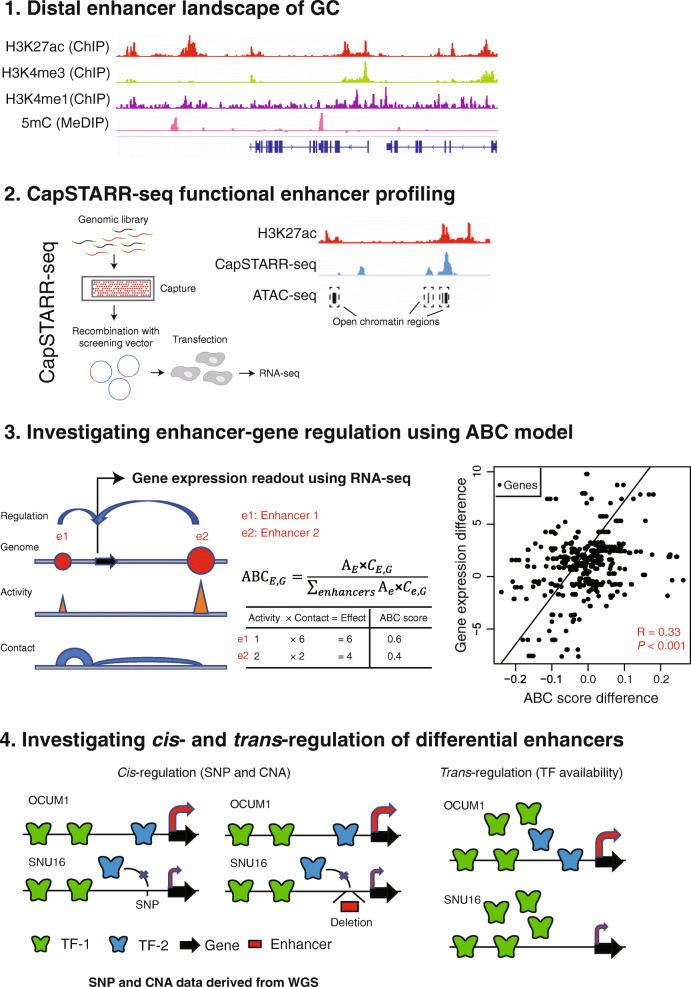
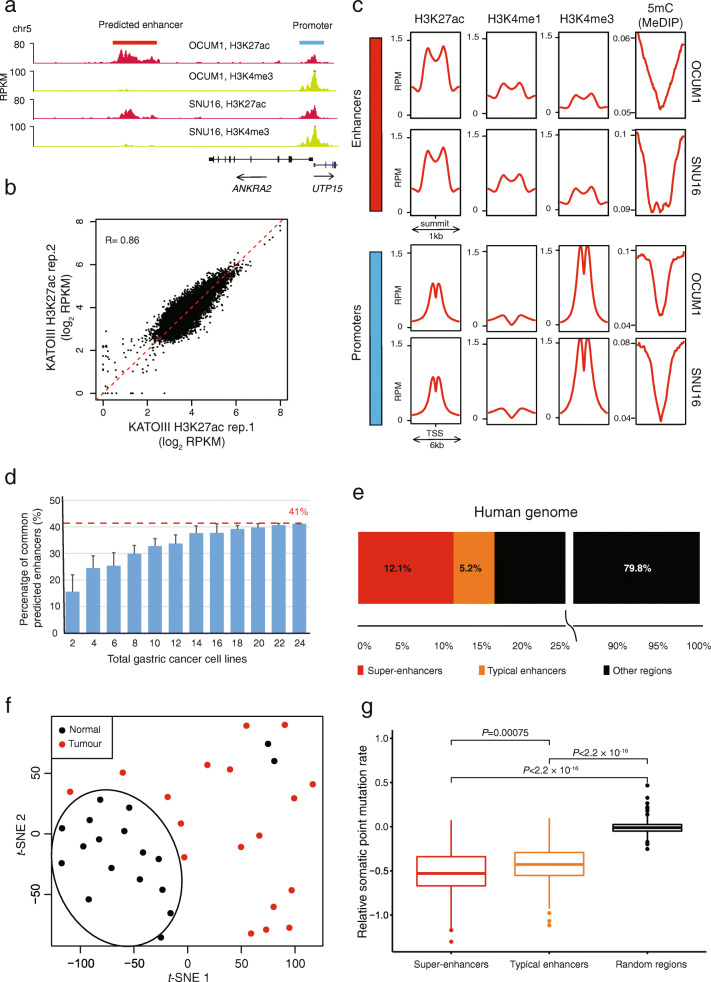
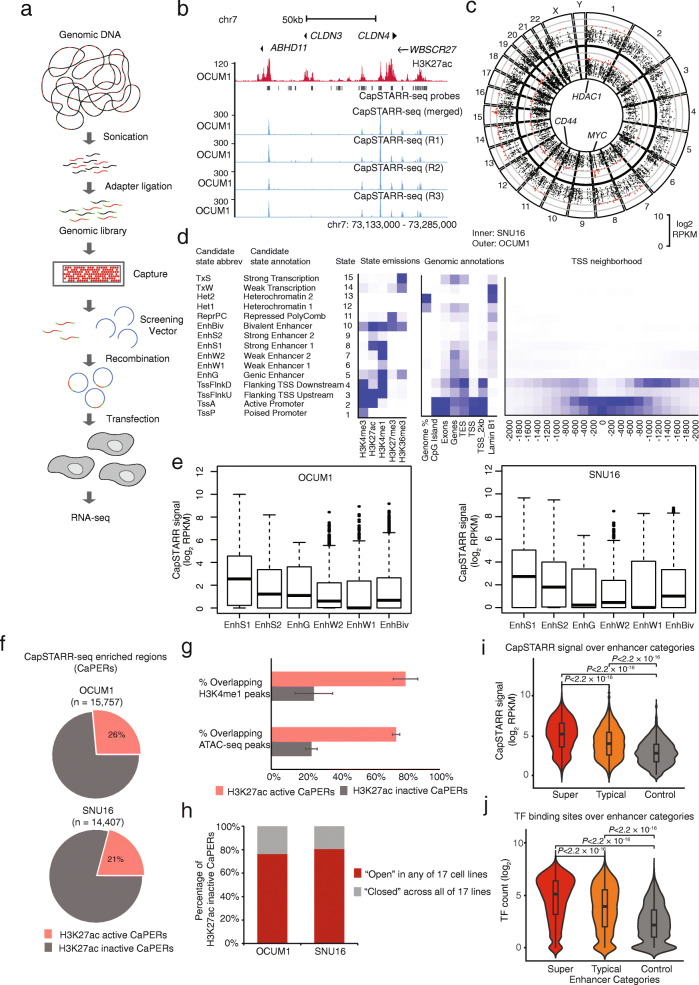
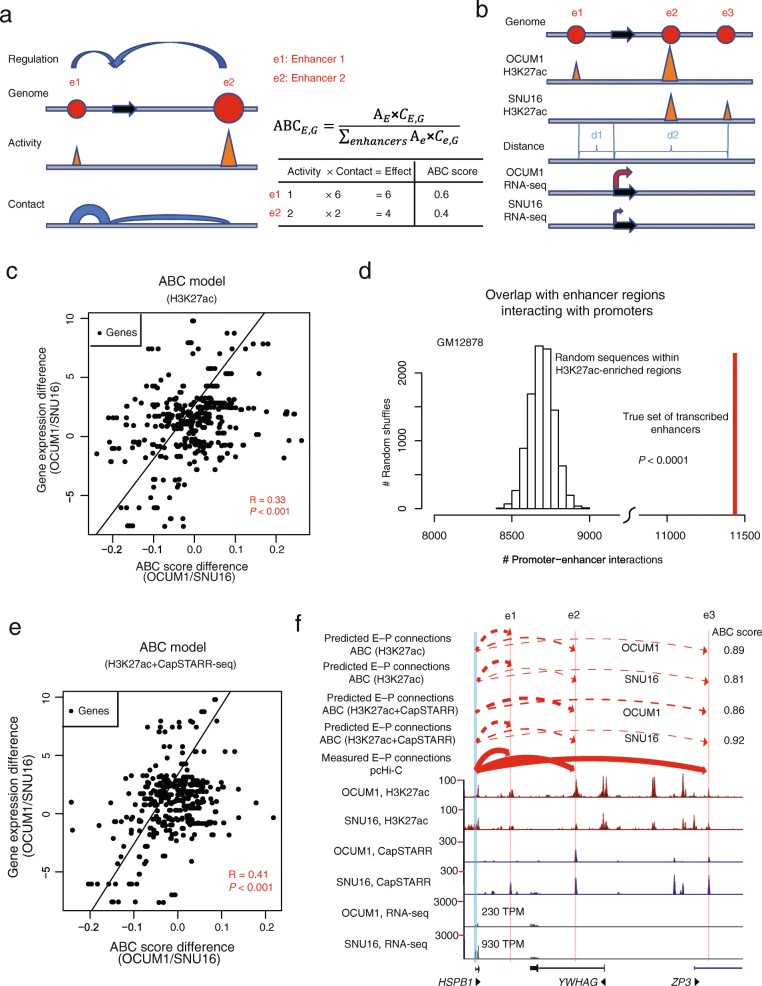
We analyzed 132 epigenomic histone modification profiles of 18 primary gastric cancer (GC) samples, 18 normal gastric tissues, and 28 GC cell lines using Nano-ChIP-seq technology. We applied Capture-based Self-Transcribing Active Regulatory Region sequencing (CapSTARR-seq) to assess functional enhancer activity. An Activity-by-contact (ABC) model was employed to explore the effects of histone acetylation and CapSTARR-seq levels on enhancer-promoter interactions.
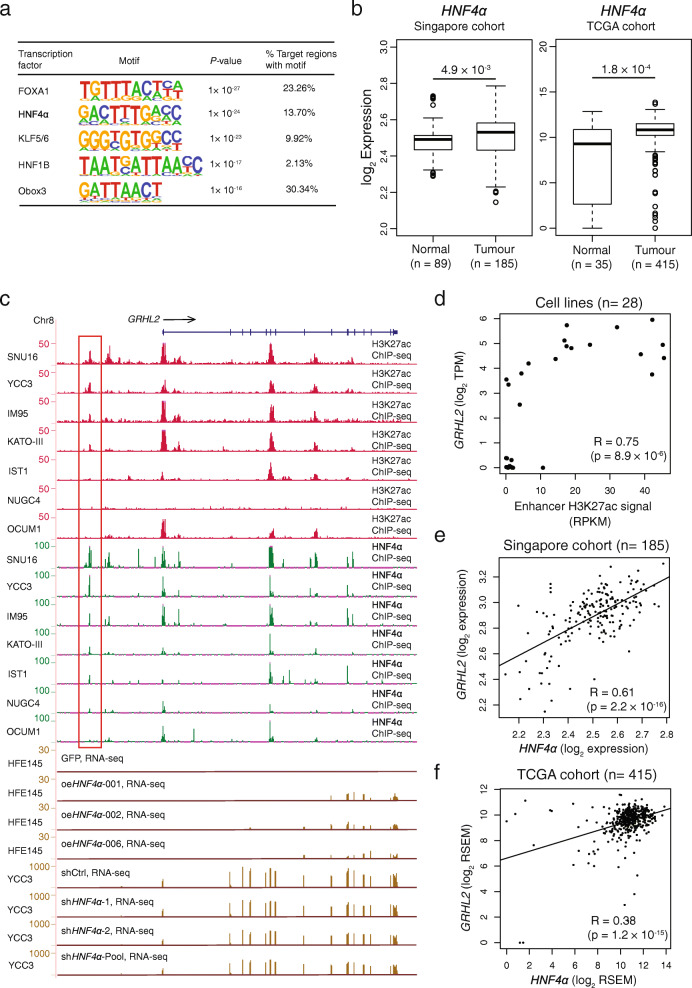
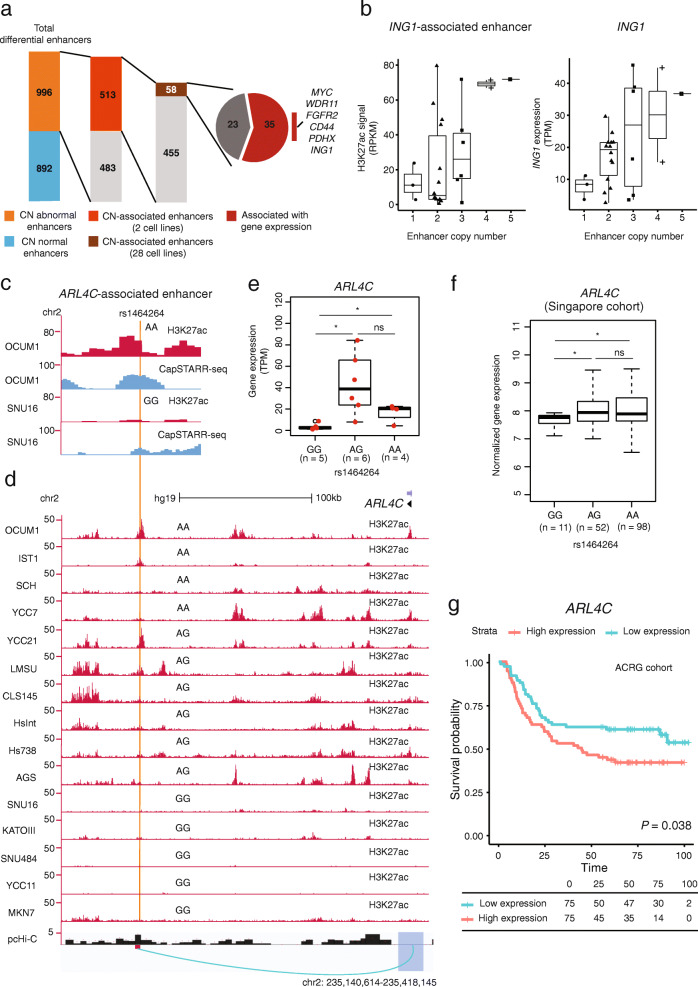
We report a comprehensive catalog of 75,730 recurrent predicted enhancers, the majority of which are GC-associated in vivo (> 50,000) and associated with lower somatic mutation rates inferred by whole-genome sequencing. Applying CapSTARR-seq to the enhancer catalog, we observed significant correlations between CapSTARR-seq functional activity and H3K27ac/H3K4me1 levels. Super-enhancer regions exhibited increased CapSTARR-seq signals compared to regular enhancers, even when decoupled from native chromatin contexture. We show that combining histone modification and CapSTARR-seq functional enhancer data improves the prediction of enhancer-promoter interactions and pinpointing of germline single nucleotide polymorphisms (SNPs), somatic copy number alterations (SCNAs), and trans-acting TFs involved in GC expression. We identified cancer-relevant genes (ING1, ARL4C) whose expression between patients is influenced by enhancer differences in genomic copy number and germline SNPs, and HNF4α as a master trans-acting factor associated with GC enhancer heterogeneity.
Our results indicate that combining histone modification and functional assay data may provide a more accurate metric to assess enhancer activity than either platform individually, providing insights into the relative contribution of genetic (cis) and regulatory (trans) mechanisms to GC enhancer functional heterogeneity.
增强子是远端顺式调控元件,对于细胞特异性基因表达和细胞命运决定至关重要。在癌症中,增强子变异被认为是导致患者间异质性的主要原因——然而,大多数预测的增强子区域仍有待功能验证。
我们使用 Nano-ChIP-seq 技术分析了 18 个原发性胃癌 (GC) 样本、18 个正常胃组织和 28 个 GC 细胞系的 132 个表观基因组组蛋白修饰图谱。我们应用基于捕获的自我转录活性调控区测序 (CapSTARR-seq) 来评估功能增强子活性。采用活性接触 (ABC) 模型来探究组蛋白乙酰化和 CapSTARR-seq 水平对增强子-启动子相互作用的影响。
我们报告了一个全面的 75730 个高频预测增强子目录,其中大多数在体内与 GC 相关 (>50000 个),并且与全基因组测序推断的较低体细胞突变率相关。将 CapSTARR-seq 应用于增强子目录,我们观察到 CapSTARR-seq 功能活性与 H3K27ac/H3K4me1 水平之间存在显著相关性。超级增强子区域的 CapSTARR-seq 信号比普通增强子更高,即使与天然染色质结构解耦也是如此。我们表明,结合组蛋白修饰和 CapSTARR-seq 功能增强子数据可以提高增强子-启动子相互作用的预测,并确定与 GC 表达相关的种系单核苷酸多态性 (SNP)、体细胞拷贝数改变 (SCNAs) 和反式作用 TF。我们鉴定了癌症相关基因 (ING1、ARL4C),它们在患者之间的表达受到基因组拷贝数和种系 SNP 增强子差异的影响,以及 HNF4α 作为与 GC 增强子异质性相关的主转录因子。
我们的结果表明,结合组蛋白修饰和功能测定数据可能提供比单个平台更准确的评估增强子活性的指标,深入了解遗传 (顺式) 和调控 (反式) 机制对 GC 增强子功能异质性的相对贡献。