Group of Catalysis Synthesis and Organic Green Chemistry, Department of Pharmaceutical Sciences, University of Perugia, Via del Liceo 1, 06122 Perugia, Italy.
Department of Pharmacy, University of Naples Federico II, 80131 Napoli, Italy.
Molecules. 2021 Oct 7;26(19):6062. doi: 10.3390/molecules26196062.
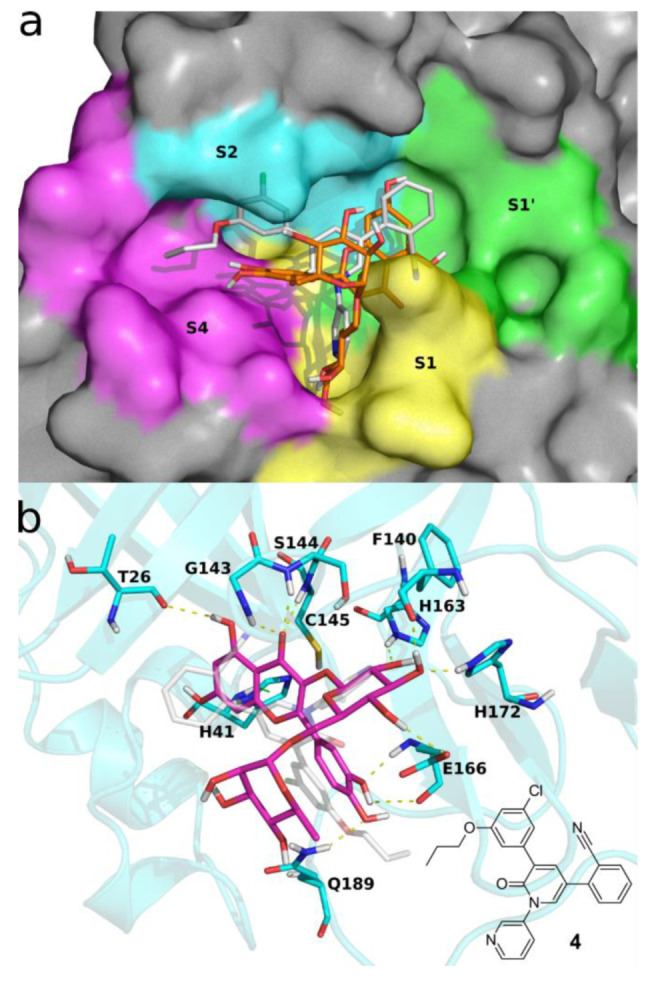
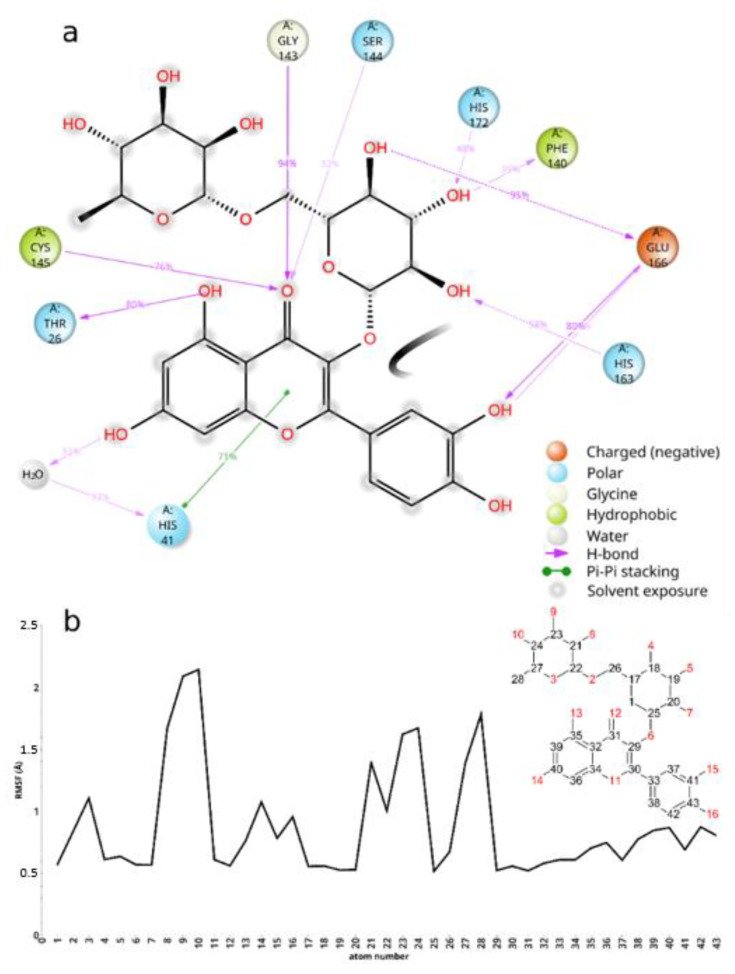
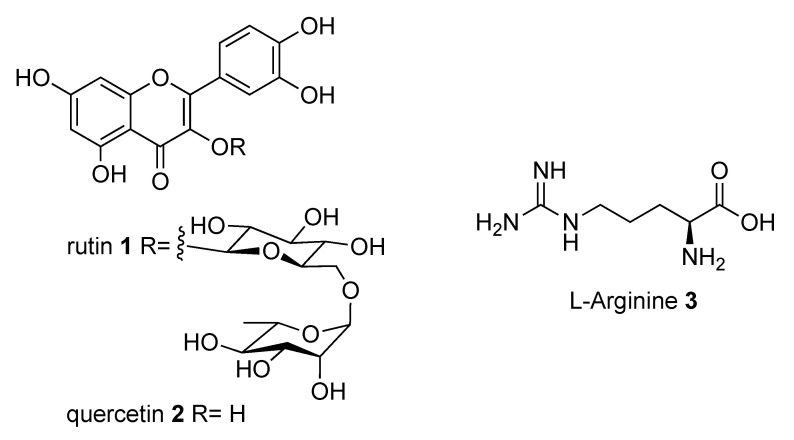
The COVID-19 pandemic outbreak prompts an urgent need for efficient therapeutics, and repurposing of known drugs has been extensively used in an attempt to get to anti-SARS-CoV-2 agents in the shortest possible time. The glycoside rutin shows manifold pharmacological activities and, despite its use being limited by its poor solubility in water, it is the active principle of many pharmaceutical preparations. We herein report our in silico and experimental investigations of rutin as a SARS-CoV-2 Mpro inhibitor and of its water solubility improvement obtained by mixing it with l-arginine. Tests of the rutin/l-arginine mixture in a cellular model of SARS-CoV-2 infection highlighted that the mixture still suffers from unfavorable pharmacokinetic properties, but nonetheless, the results of this study suggest that rutin might be a good starting point for hit optimization.
新型冠状病毒肺炎疫情的爆发迫切需要有效的治疗方法,因此广泛使用了已知药物的再利用,以期在尽可能短的时间内获得抗 SARS-CoV-2 药物。糖苷芦丁具有多种药理活性,尽管其溶解度差限制了其应用,但它是许多药物制剂的有效成分。在此,我们报告了芦丁作为 SARS-CoV-2 Mpro 抑制剂的计算机模拟和实验研究,以及通过与 l-精氨酸混合来提高其水溶性的研究。在 SARS-CoV-2 感染的细胞模型中对芦丁/l-精氨酸混合物进行的测试表明,该混合物仍存在不利的药代动力学特性,但尽管如此,本研究结果表明芦丁可能是一个很好的起点,可以进行优化。